Combine butter and corn syrup together in a small bowl.: The moment you mix these two, you will notice a glossy, cohesive base forming that smells faintly sweet and buttery. The butter adds richness while the corn syrup contributes elasticity, which is why this base sets up perfectly without baking. If you try to skip thorough mixing, you may end up with uneven streaks of butter which causes inconsistent texture in the final patties, so use a sturdy spoon or a handheld mixer to ensure they are fully incorporated.
Add 2 cups powdered sugar, food coloring, and your choice of extract and beat until well combined. Add extract 1/2 teaspoon at a time until the mixture reaches your desired flavor.: As you introduce the powdered sugar, the mixture will thicken and the texture will shift from glossy to dough like, with the food coloring dispersing into an even orange tone if you use gel. The aroma of the extract intensifies the moment it is beaten in, so the scent is a good cue for flavor strength. Go slowly when adding extract to avoid overshooting the taste, and if the mixture becomes too soft, add a bit more powdered sugar to firm it up.
Stir in an additional cup of powdered sugar.: At this stage the dough becomes more manageable and less sticky, and you will feel it pulling together as a mass. The extra sugar balances moisture and creates the denser structure you want for shaping. If you notice the dough is crumbly rather than cohesive, press and knead briefly so residual moisture binds the particles, otherwise the finished shapes may dry out and crack.
Turn bowl onto a cutting board sprinkled with last cup of powdered sugar.: Transferring the dough onto a sugared surface prevents sticking and gives you room to knead. The powdered sugar underfoot acts like a nonstick barrier and also seasons the outer layer as you work, which is why this small step matters for texture and appearance. If you skip dusting the board, the dough can cling and tear, making shaping difficult.
Knead the mixture until sugar is absorbed and is completely smooth.: Kneading transforms the mixture into a silky, uniform dough, and you will feel it soften and become elastic under your palms. The sound is quiet, but you may notice a slight tackiness that eases as the sugar fully integrates. Proper kneading ensures the patties hold together and have a creamy mouthfeel, so take a few extra minutes if needed; under kneading can leave gritty pockets of sugar.
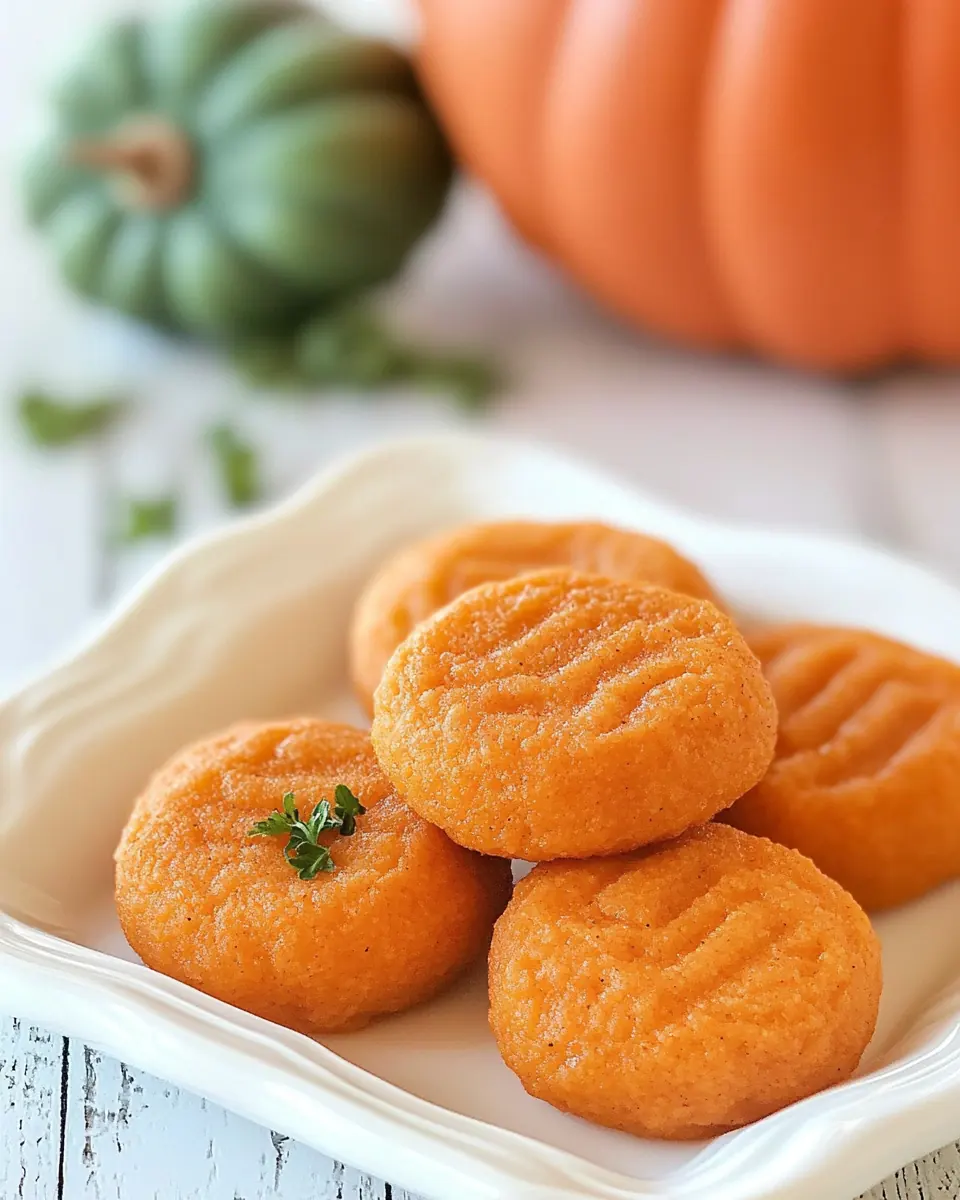
Shape into 1 inch balls and roll in granulated sugar.: Rolling forms should feel silky and slightly dense, and the granulated sugar will crunch delightfully on the first bite. Use consistent pressure to create uniform sizes so they set evenly. Avoid making the balls larger than one inch unless you want a chewier center, because size affects setting time and balance of sugar to filling.
Flatten gently with a fork.: Pressing with a fork creates subtle ridges reminiscent of a pumpkin's ribbing, and you will hear a soft tap as the fork meets the sugared surface. The gentle flatten prevents the patties from being perfectly spherical, giving them character. Be careful not to press too hard, or you will squash the interior and lose the soft center that makes them pleasant to bite into.
Gently press one half of a pretzel into the top of the pumpkin using a second pretzel to stabilize. Repeat for all candies.: When you insert the pretzel stem, the dough yields with a slight give and you should feel it secure without cracking. The salty pretzel contrasts the sweet center and helps the candy read as a pumpkin. Use a second pretzel to steady the candy as you press, because pressing unevenly can split the ball or dislodge sugar, which affects presentation.
Tear off a small piece of green candy and shape it into a leaf. Stick it on the pretzel. Repeat for all candies.: Shaping the little green leaf is tactile and satisfying, and the candy adheres when you press it gently against the pretzel stem. The green accent brings a natural pop of color and completes the motif, and working quickly prevents the sticky candies from softening too much. If a leaf refuses to stick, a tiny dab of extra corn syrup will act as edible glue.
Let candies stand, uncovered, at room temperature for 1 day.: Allowing them to rest gives the interior time to firm up slightly and the surface to dry so they hold their shape during transport. You may notice the sugar coating mattes a touch as moisture redistributes, which is normal. Storing them before they set can cause smudging or sticking, so patience here preserves both texture and look.
Store in an airtight container.: Once set, keep the candies in a sealed container to maintain texture and prevent them from absorbing moisture or odors. Layer them with parchment if you are stacking to avoid sticking, and keep them at cool room temperature for several days. A common mistake is storing them in the refrigerator which can make them overly firm and change the flavor, so airtight at room temperature is best.