Preheat oven to 350 F. Add the cubed butter pieces to the bottom of the baking pan, scattered evenly, and place it in the oven while the oven is preheating in order to melt the butter, about 10 minutes.: Warm air fills the kitchen with an anticipatory hush as the oven climbs to temp. You should notice a steady warmth when you open the door, and the right temperature is crucial because it melts the butter in the pan without overbrowning the batter too early. If the oven is cooler than expected your cobbler will bake longer and the texture may end up gummy in the center; if it is hotter, the top may brown before the interior sets. A quick oven thermometer check can save a lot of worry.
While the oven is preheating, make the batter by adding the flour, sugar, baking powder, and salt to a large mixing bowl and whisk to combine.: The sight of butter bubbling and pooling across the pan is comforting, and the sizzling sound will diminish as it fully liquefies. This technique creates a buttery base that the batter will float on, and it helps form pockets of crispness under the topping. A common mistake is starting with warm butter which will melt too fast and prevent those textural pockets from forming. Scatter the cubes evenly so the batter gets an even base of fat.
Add the milk (tip– add a teaspoon of vanilla or almond extract now too if you'd like for extra flavor) and whisk until just combined.: The dry ingredients should look uniform and slightly aerated after whisking, and you may see the aroma of the sugar mingle with the flour. This step ensures even distribution of the leavener so the topping rises consistently. If you skip proper whisking, you risk pockets where the baking powder is concentrated, producing uneven texture. Whisk until no streaks remain.
After about 10 minutes, remove the baking pan from the oven (make sure the butter is melted) and evenly pour the batter over the top of the butter. Do NOT mix, just pour the batter over the butter and let it be.: The batter should be smooth with a pourable thickness, not thin like pancake batter but not stiff either. You will hear a quiet swirl as you whisk and see the bowl glossy when combined. Overmixing can develop gluten and make the topping tough, so stop whisking once the batter is homogenous. If lumps remain, gently press them against the bowl to smooth them out without aggressive mixing.
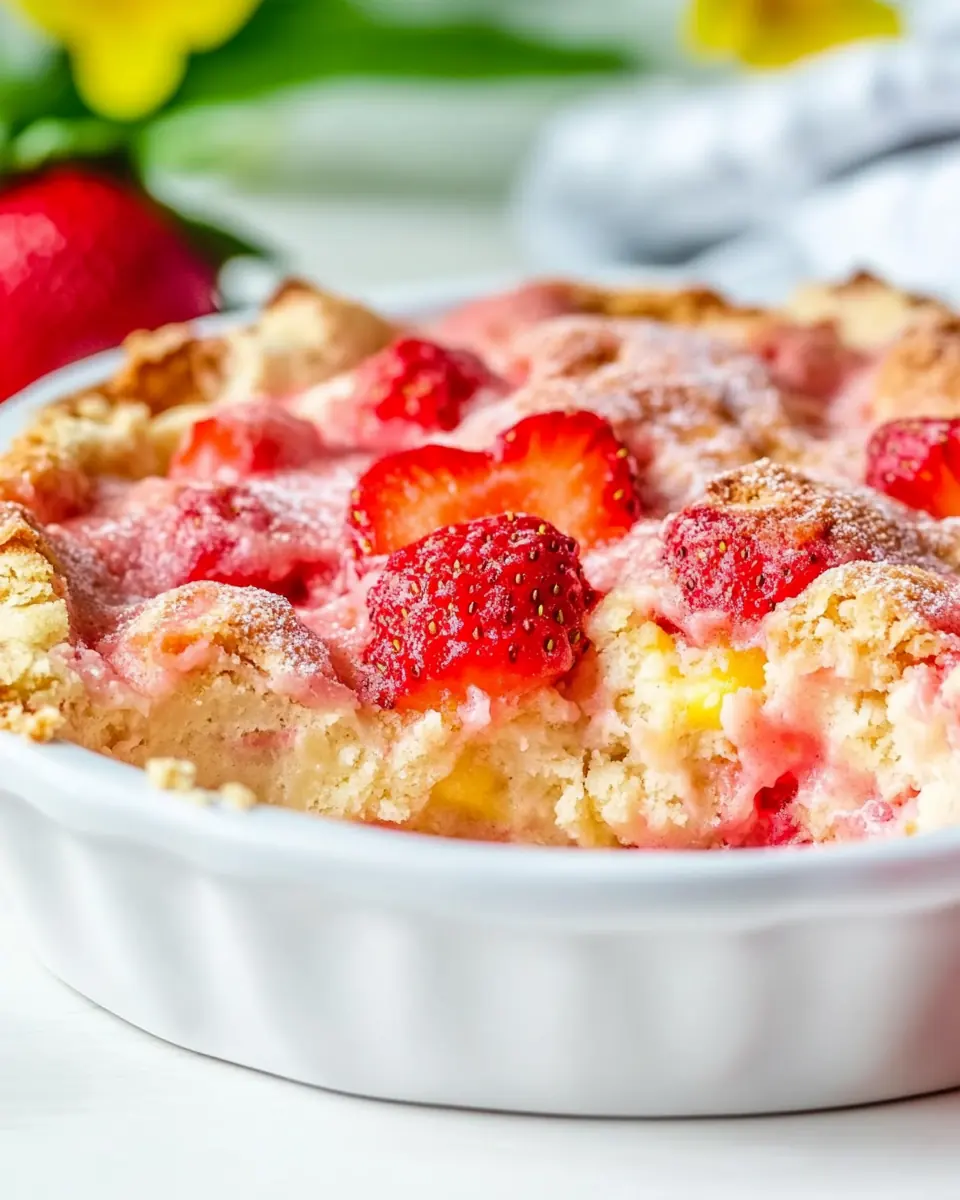
Evenly sprinkle the strawberries over the top and bake for about 45 minutes, or until the cobbler is set and done. Baking Tips– Because all fruit has and releases different amounts of natural liquids and juices, baking time will vary. Start checking about 35-40 minutes, but if your cobbler takes longer than 45 minutes to bake, that's fine. Bake it until it's done. If the top is browning more quickly than you want before it's setting up, tent the pan by loosely draping a sheet of foil loosely over the top. If you're baking in a metal pan rather than porcelain, glass, or ceramic, your cobbler will likely bake more quickly (5-8 minutes, or so is my guess) so start checking it earlier.: As the batter meets the hot butter you will notice a faint sizzle, and the batter will spread but not sink completely. This interaction is essential because the batter bakes into a tender layer that floats above the butter, creating contrast between a golden top and a moist interior. Stirring at this point collapses the structure and produces a denser result, so resist the urge to combine them.
Serve immediately plain or with ice cream, whipped topping, Cool Whip, etc.: The fruit should glisten on top of the batter before baking, and as it cooks you will smell a bright, sweet fragrance and see juices bubble up around the edges. Check the cobbler starting at 35 to 40 minutes; the top should be golden and the center set, not wobbly. If the top browns too quickly, tent loosely with foil to prevent overbrowning while the interior finishes. A common error is relying solely on time, rather than visual cues; ovens vary, so use color and set as your guide.
Storage– Leftovers will keep airtight in the fridge for up to 4 days. Reheat individual portions of leftovers in the microwave for about 10-15 seconds, if desired. While you can technically freeze this recipe for up to 3 months, it's not one I advocate freezing since the fruit texture will change and leftovers could be very soggy.: When you pull the cobbler from the oven, steam will rise and the aroma will be richly strawberry and buttery. Serve warm so the textures contrast delightfully with cold accompaniments. If you let it cool too long before serving, the texture firms and becomes less luscious, so plan to serve within 10 to 20 minutes for peak enjoyment.
Storage– Leftovers will keep airtight in the fridge for up to 4 days: Stored cobbler will soften as the fruit continues to release moisture, and the texture becomes more cohesive. Reheat individual portions briefly in the microwave for 10 to 15 seconds to regain some warmth, or warm gently in a low oven. Freezing is possible but I do not recommend it because the fruit texture breaks down and the result can be soggy. A common storage mistake is leaving the cobbler uncovered, which dries out the top quickly.