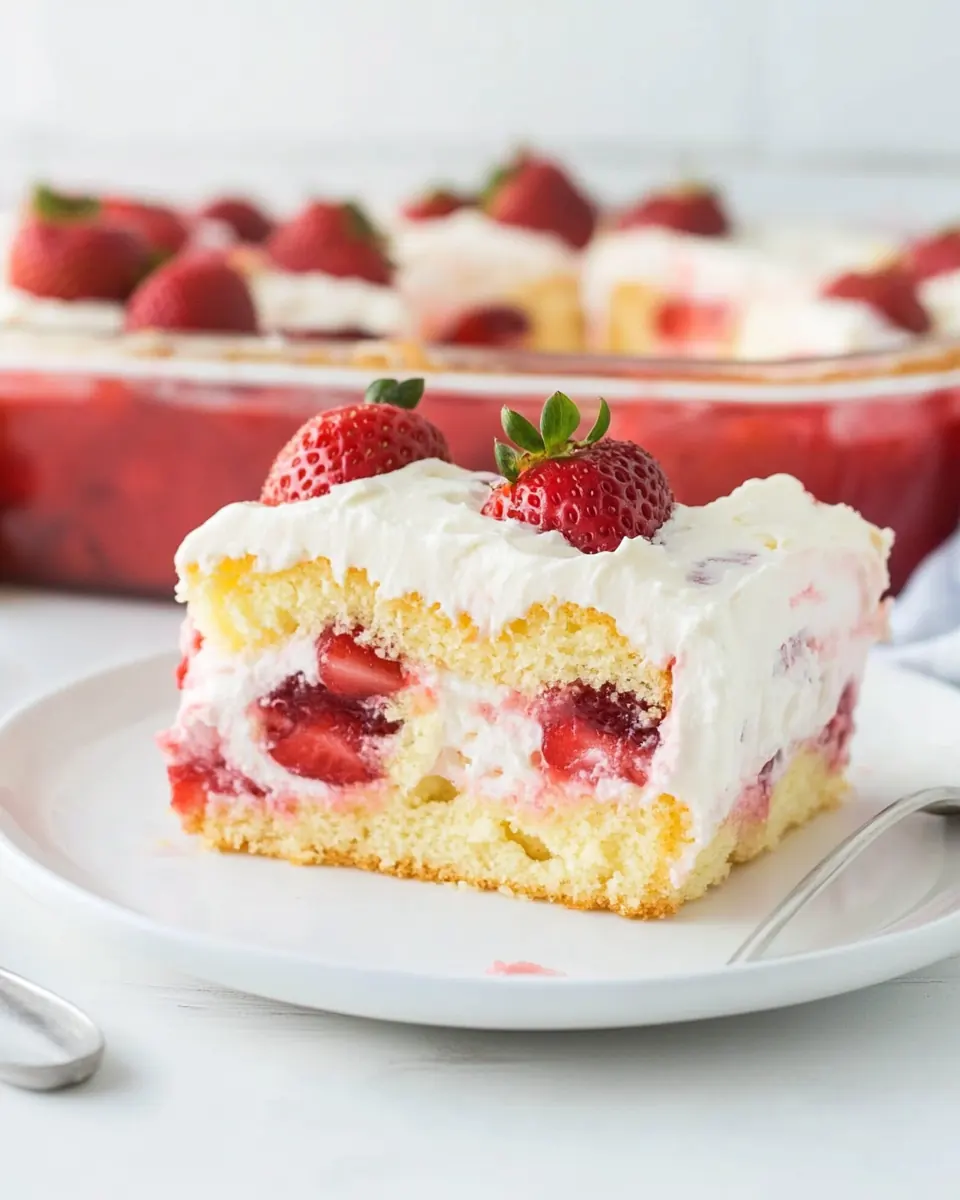
Bake the cake in a 9×13-inch pan according to package instructions.: You will notice an inviting aroma of warm vanilla filling your kitchen as the **cake** bakes, and the top should turn an even, light golden color with a slight spring when gently pressed. This step matters because overbaking dries the crumb, while underbaking yields a dense center, so use the package suggested temperature and check at the lower end of the time range for your oven. A common mistake is opening the oven too often, which lets heat escape and can cause uneven rising, so resist the urge to peek until near the end of the recommended baking time. When done, the edges begin to pull slightly from the pan and a toothpick inserted in the center comes out with moist crumbs rather than wet batter.
Cool the cake completely. Do not remove the cake from the pan.: The cake will steam slightly as it cools, creating a soft interior that accepts the juices. Leave it in the pan to capture any seepage from the **strawberries** and to keep the structure stable while cooling. Temperature matters here because warm cake makes the pudding and whipped topping slide off, whereas a fully cooled cake lets the fillings set properly. A frequent error is rushing this step and trying to poke or spread while it is still warm, which results in runny layers and a messy top, so plan ahead and give the cake at least the time the recipe suggests to reach room temperature.
After the cake has cooled, poke holes in cake (the handle of a wooden spoon works well).: When you run your spoon handle across the surface, you should hear a faint tapping and see evenly spaced indentations that reach into the crumb. These holes are essential because they become reservoirs for the thawed **strawberries** and their juices, ensuring flavor reaches every bite. Work methodically to space them uniformly, taking care not to press through to the pan, which would cause pooling underneath. One mistake I see is making holes too shallow, which leaves the fruit mostly on the surface rather than absorbed, so use a handle that creates a hole about one half inch to one inch deep depending on the cake thickness.
Pour the thawed strawberries and juice on the cake so the berries and juice go into the holes. Spread them around until the cake is covered.: As you pour, the bright pink liquid will sink into the punctures, and you should see the crumb darken slightly where it absorbs the juice. Distribute both berries and juices evenly so each section of the cake gets flavor, and press a few berries gently into larger holes to anchor them. The reason this is done after cooling is to prevent the fruit from steaming and breaking down prematurely, which could make the top soggy. Avoid dumping all the liquid in one spot, which causes uneven saturation; instead, work from one side to the other to control distribution and achieve a balanced look and taste.
Prepare the pudding according to the package instructions.: When you whisk the instant **pudding**, pay attention to the texture and aroma as it forms; it should become glossy and thick within minutes. Use cold milk as directed and whisk briskly to eliminate lumps, aiming for a creamy, uniform consistency. The pudding layer is important because it helps stabilize the fruit and creates a smooth barrier before the **Cool Whip**, so take your time to mix properly. Common pitfalls include using warm liquid, which can prevent proper setting, or under whisking, leaving small lumps that affect mouthfeel, so follow the package for exact liquid temperatures and whisking time.
Spread the prepared pudding over the berries.: As you spoon the pudding across the cake, you will feel slight resistance from the beads of juice, and the pudding will glide into any remaining crevices, creating a seamless layer. This step keeps the berries distributed while adding a creamy, slightly dense contrast. Use a spatula to smooth it evenly, aiming for a level surface so the final **Cool Whip** looks neat. A common error is spreading too enthusiastically which can push the fruit to the edges; instead, use gentle strokes to maintain even coverage and keep the berries embedded.
Spread Cool Whip over the pudding.: The **Cool Whip** brings a pillowy, light finish and should be spread gently to preserve its airy texture. Work with chilled topping, and use broad, shallow movements so you do not tear through the pudding layer. Visually, you want a smooth, slightly cloudlike surface that invites slicing. Overworking the topping can make it dense and deflate the lightness, so stop as soon as the surface is even and pleasing. If you want a decorative look, lightly swirl with the back of a spoon, but avoid excessive pressure that compresses the layers.
Keep the cake refrigerated for best flavor.: Chilling allows the pudding to set fully and the juices to further infuse the **cake**, yielding cleaner slices and a more integrated flavor. I recommend at least a few hours, preferably overnight, so the textures bond and the dessert tastes cohesive. The refrigerator scent may mingle slightly with the cake if uncovered, so cover the pan with foil or plastic wrap to keep it pristine. A mistake people make is serving it immediately after assembly, which gives you a loose structure and messy slices, so patience here produces the most attractive presentation and best eating experience.