Preheat oven to 350º.: The kitchen fills with a gentle warmth as the oven climbs to 350º , a steady temperature that ensures even baking and a tender center. You'll notice the hum of the oven fan and the soft shift from cool to cozy air. This step sets the stage for the topping to brown without drying out the filling, so do not rush it. A common mistake is putting the casserole into an oven that has not fully preheated, which can lead to uneven cooking and a soggy topping.
Butter a 2-quart baking dish. Set aside.: Rubbing the inside of a 2 quart baking dish with butter gives a glossy, nonstick surface and adds a hint of richness around the edges. As you spread the butter, you may hear a faint scrape and see the dish gleam. This gentle coating helps the casserole release cleanly after baking, and prevents the bottom from clinging. Forgetting this can cause the edges to stick and break when serving.
Combine sweet potatoes, sugar, vanilla, and milk and mix well. Pour into baking dish and smooth top.: When you stir the sweet potatoes with sugar , vanilla , and milk , you'll feel the mash relax into a glossy, homogenous filling. The aroma will be faintly sweet with a hint of vanilla warmth. Smooth the mixture into the prepared dish with a spatula so the surface is even, which helps the topping adhere and bake uniformly. If the mash feels lumpy or too dry, add a touch more milk . A usual error here is overmixing, which can make the texture gluey rather than tender.
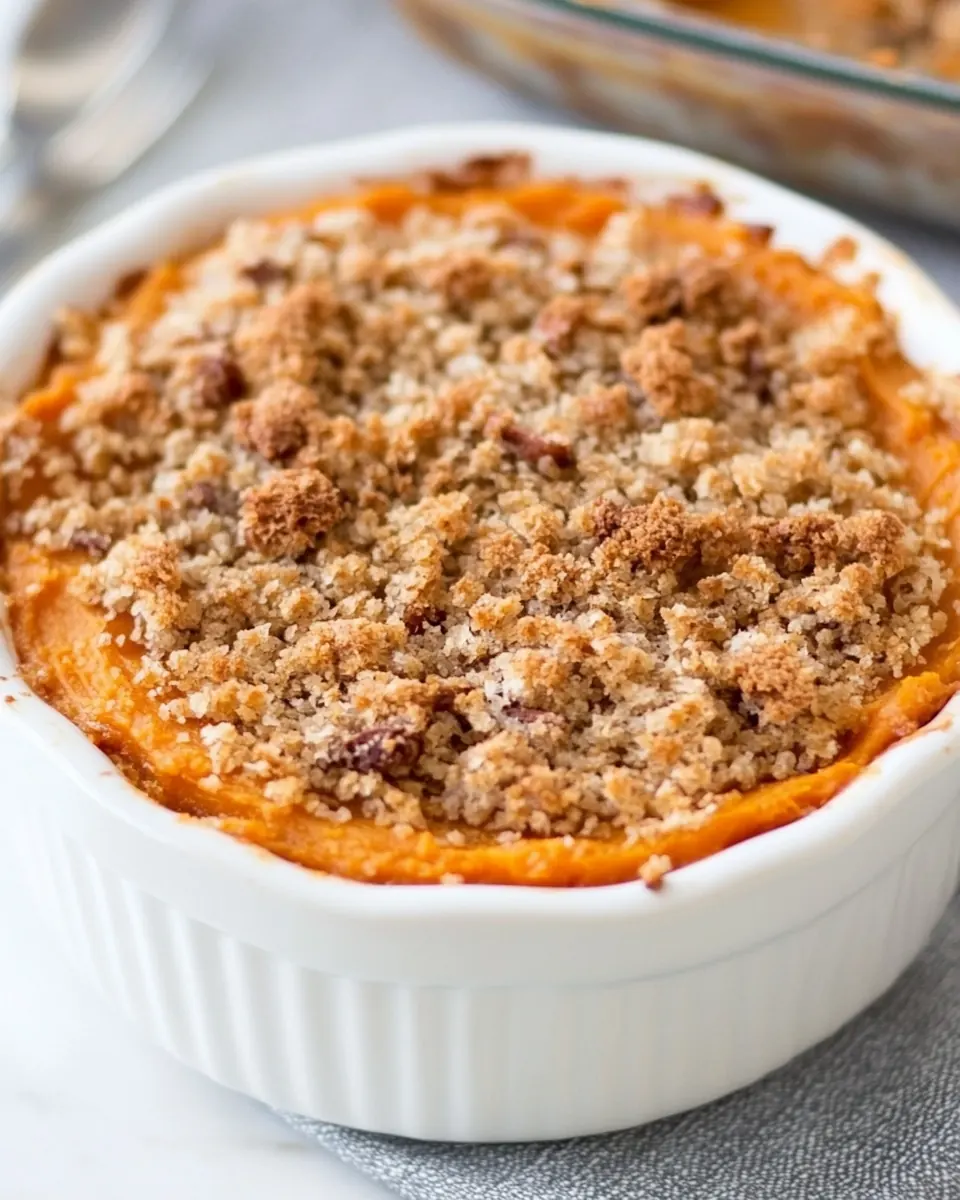
Mix the flour and brown sugar. Cut in butter until the mixture looks like coarse crumbs.: As you combine flour and brown sugar and then cut in cold butter , your fingertips will feel the buttery bits break down into pea sized lumps. The scent becomes richer, slightly caramelized from the brown sugar. This crumbly topping gives the casserole its delightful crunch and contrast to the creamy base. Keep the butter chilled and avoid melting it fully, because warm butter will yield a pasty topping instead of distinct crumbs.
Bake, uncovered, for 30 minutes.: During baking, the kitchen will be filled with a warm, sweet aroma as the top turns golden and the edges become slightly set. You should see the topping crisp and take on a deep golden brown while the filling bubbles faintly at the edges. This visual cue tells you the sugars have begun to caramelize, adding flavor complexity. A common pitfall is to cover the dish, which traps moisture and prevents the topping from crisping properly. Let it bake uncovered for the full 30 minutes to get that perfect contrast.