In a large stockpot or Dutch oven, heat the olive oil over medium heat. Chop onion, carrot, and celery; mince garlic.: The first aromas that greet you should be warm and vegetal as the oil shimmers, carrying the scent of the soon to be sautéed onion and minced garlic . You want to hear a gentle sizzle when the vegetables hit the pan, not furious popping, because that gentle sound signals even softening. This step matters because softening the vegetables releases sugars and builds the soup’s backbone, so take your time to get a silky, translucent onion rather than a browned crust. A common mistake is using high heat which quickly burns the outer edges while leaving the centers raw, so keep the temperature at medium and stir often to promote even cooking.
Add the onions to the hot oil and cook 2-3 minutes until softened.: You should notice the onion going from opaque to translucent and smelling sweetly fragrant, a soft sizzling undercurrent that tells you the pan is doing its job. This step develops a mellow base flavor that keeps the broth from tasting one dimensional, which is why you should avoid skipping it. The main trap is crowding the pot and preventing evaporation, which can lead to steaming instead of sautéing, so give the vegetables room and stir occasionally to ensure even heat exposure.
Add the garlic, carrots and celery and cook for an additional 3 minutes.: At this point the garlic will release a bright, pungent aroma that perfumes the pan; you want it to become fragrant but not browned because burnt garlic turns bitter. The carrot and celery will begin to soften while keeping a slight bite, contributing body to each spoonful. This technique matters because gentle cooking preserves fresh vegetable flavors, and the sound should be a consistent low sizzle rather than loud popping. A misstep here is leaving the garlic unattended, which can quickly overcook, so stir frequently and lower the heat if it starts to brown.
Add the broth, diced tomatoes, oregano, basil, parsley, and thyme to the pot.: When the liquid hits the pan you will hear a noticeable shift from sizzle to a bubbling simmer, and the kitchen will fill with layered herb and tomato aromas that set the mood. Adding the dried herbs now allows them to infuse the liquid as it heats, creating a cohesive flavor throughout the soup. This matters because herbs need time to rehydrate and release essential oils into the broth. Be mindful of over seasoning at this stage; you can always adjust salt and pepper later, so avoid the impulse to add too much early on which can be hard to fix.
Bring the mixture to a boil, then add the tortellini and cook according to the package instructions.: As the pot reaches a boil you will see energetic bubbling and steam rising, and the aroma will sharpen as the tomatoes and herbs concentrate. When you add the tortellini pasta the bubbling will calm to a rolling simmer, and the filled pasta will stir gently in the broth. Cooking to the package time ensures the pasta is tender through the center but still holds structure, which keeps each bite satisfying rather than mushy. A frequent error is over stirring which can tear delicate filled pasta; gently nudge the tortellini to prevent sticking instead of aggressive agitation.
One minute before the tortellini is done, stir in the kale.: The moment you add the chopped kale you will notice its color shift to a deeper, more vibrant green within seconds, and it will quickly wilt into the broth, softening without losing its presence. This timing preserves the leafy texture and prevents the kale from becoming limp and flavorless, which is why adding it at the end matters. Avoid adding it too early, because prolonged simmering can turn greens into an unappealing mush, losing both texture and color.
Remove from heat and season with salt and pepper to taste.: Once the pot is off the stove, the residual steam continues to meld flavors, and a final adjustment with salt and black pepper sharpens the whole bowl. Tasting warm allows you to layer seasoning precisely, enhancing the natural sweetness of the carrot and the savory notes of the broth. A common oversight is over salting before the pasta cooks, since the reduction can concentrate saltiness, so always taste at the end and season in small increments.
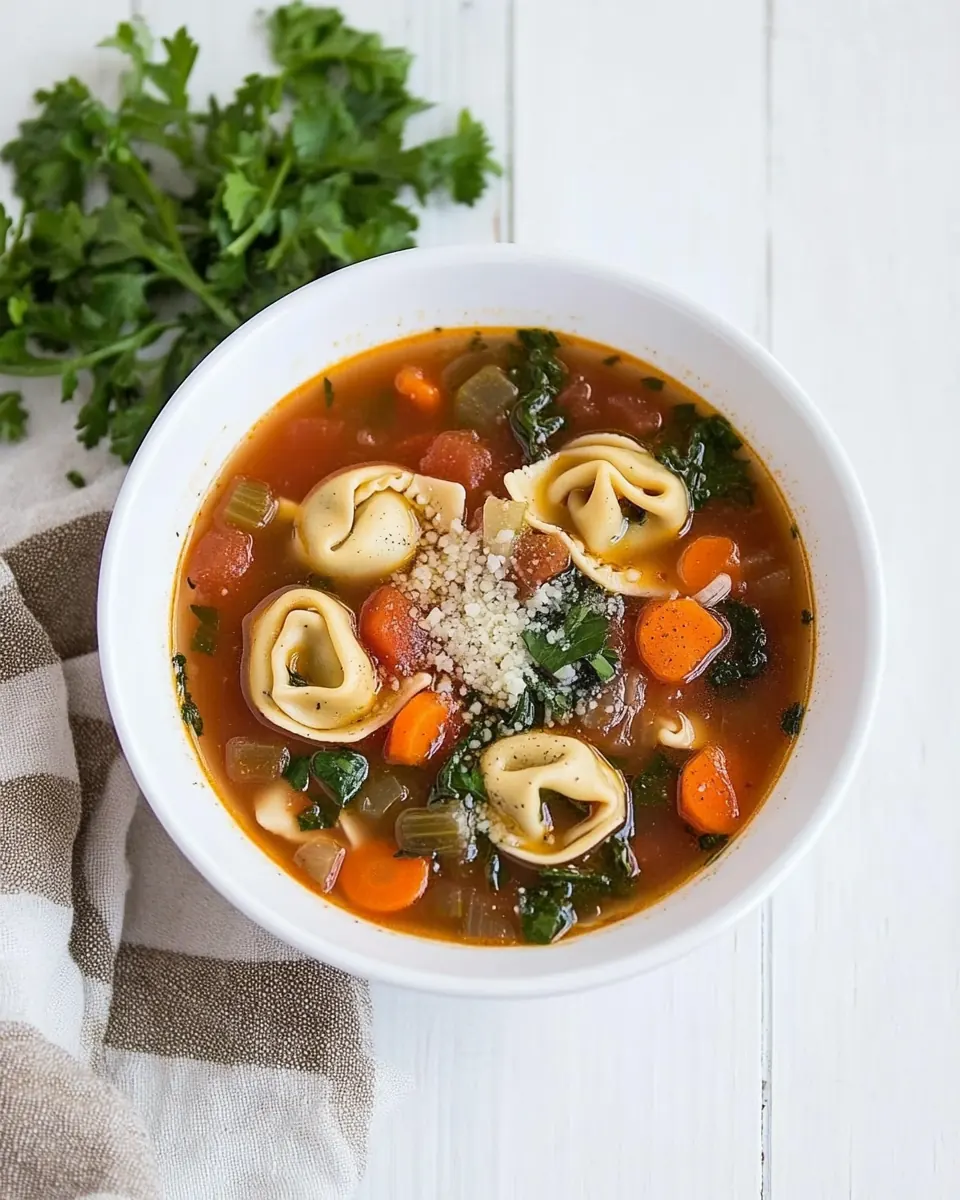
Serve immediately, topped with freshly grated Parmesan.: As you ladle the soup into bowls you should see glossy broth, tender tortellini pasta , and ribbons of wilted kale ; a sprinkle of grated Parmesan cheese will melt slightly into the hot liquid, lending a salty, umami finish that brightens each spoonful. This final touch elevates the bowl from simple to thoughtful, creating a satisfying mouthfeel and flavor lift. Avoid letting the soup sit too long before serving, because the pasta will continue absorbing liquid and can become overly soft if left to stand.