In a large pot add 3 1/2 cups of chicken broth, soy sauce, green onions, and mushrooms, and bring to a boil. In a small bowl add the cornstarch and 1/2 cup reserved chicken broth and whisk until combined. Pour into the soup. Reduce heat to a simmer.: The moment the broth warms, you will smell savory steam as the chicken broth and soy sauce mingle, creating a cozy, umami aroma. As the liquid approaches a rolling boil, watch the surface for telltale bubbling and increased steam. This high heat extracts flavor from the mushrooms and softens the green onions , releasing sweet onion notes. Why this matters: a vigorous boil concentrates flavors quickly, but you must watch carefully so the next steps happen at a gentler temperature. Troubleshooting: if the pot comes to a hard boil and you plan to add the eggs immediately, reduce the heat a touch first, since boiling can shred the eggs into tiny bits rather than letting them form silky ribbons.
Slowly stir in the beaten eggs as you are stirring the soup. The eggs will start spreading out like ribbons in the soup. Garnish with additional chopped green onions if desired.: As you whisk the cornstarch into the reserved cool broth, you will see it dissolve into a glossy slurry with a smooth sheen. This slurry is the secret to a lump free broth, and it thickens the soup just enough to give it a slightly velvety mouthfeel without becoming heavy. Why this matters: dissolving the starch first prevents clumping and allows the soup to achieve a balanced body that carries the egg ribbons. Troubleshooting: if you notice specks of undissolved starch, strain the slurry before adding to the pot, because undissolved bits will become gummy as they cook.
Pour into the soup: When you add the glossy slurry to the simmering pot, you will hear a soft hiss as cooler liquid meets warm broth. The soup will visually change, becoming a touch thicker and taking on a slightly more lustrous surface. Stir gently and watch for the way the liquid clings to the spoon, that signals an ideal body. Why this matters: achieving the right viscosity helps the eggs suspend and form long, elegant ribbons instead of sinking or breaking apart. Troubleshooting: if the soup thickens too much, stir in a little extra reserved chicken broth until you reach the desired consistency.
Reduce heat to a simmer: Lowering the flame to a gentle simmer calms the pot, producing little steady bubbles and a soft steam rise, which is perfect for forming delicate egg ribbons. The surface will move in slow ripples rather than vigorous bubbles. Why this matters: a simmer is the ideal temperature for coagulating the eggs slowly so they set into silky strands. Troubleshooting: if the heat is too low the eggs may hardly set and the texture can stay streaky, but if too high they will flocculate into small curds.
Slowly stir in the beaten eggs as you are stirring the soup: As you start to pour the beaten eggs in a thin stream, keep a gentle, continuous stirring motion with a fork or chopstick. You will see the eggs immediately transform into ribbons and wisps that curl through the broth, creating ribbons that feel almost featherlike. The sound is subtle, a soft movement, and the surface will appear laced with pale threads. Why this matters: slow pouring and consistent stirring control how the eggs set, producing tender strands rather than clumps. Troubleshooting: pouring too quickly or stopping the stir will produce larger, uneven curds instead of elegant strands.
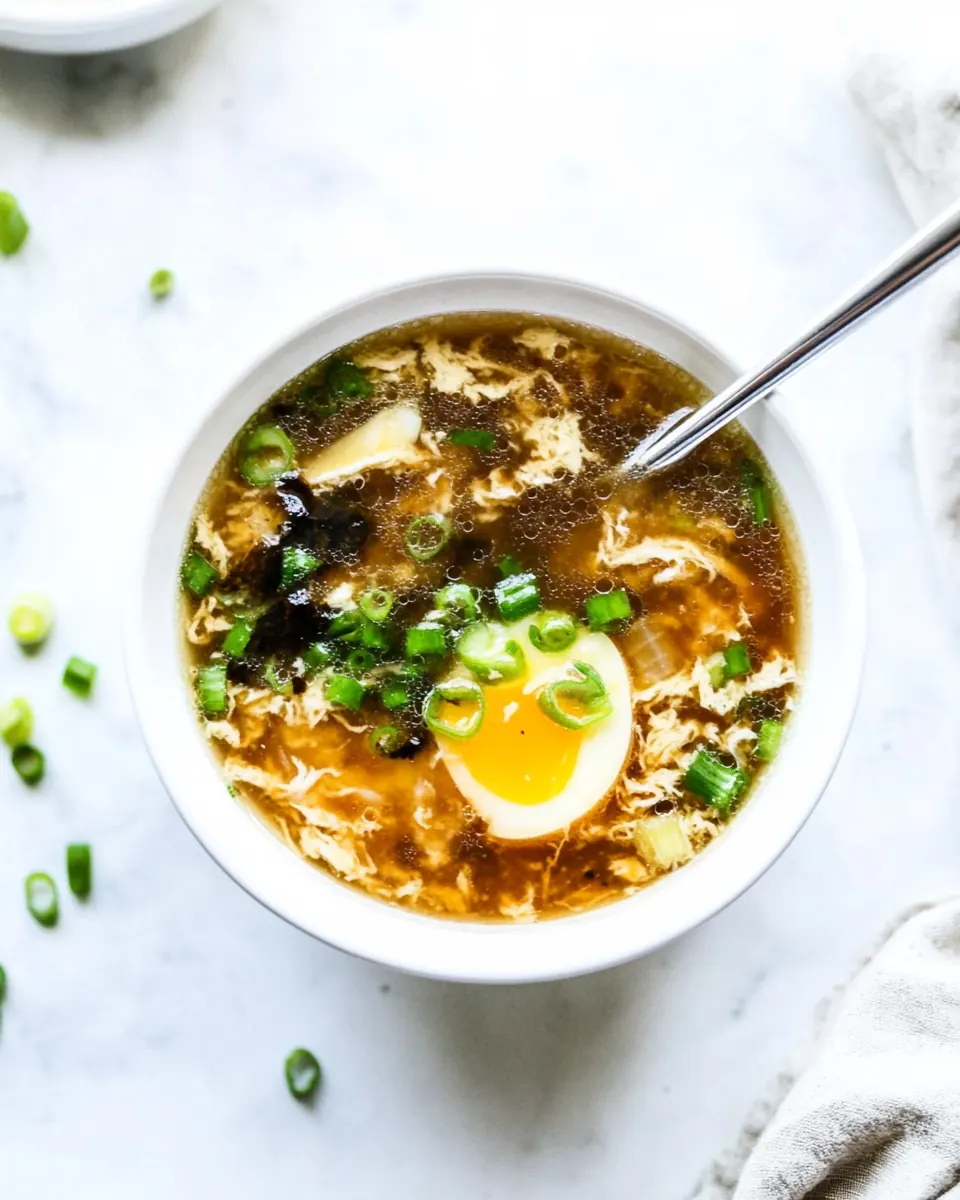
The eggs will start spreading out like ribbons in the soup: Watch as the ribbons unfurl and float, changing the broth visually with delicate, cloud like swathes of pale color. The texture should be silky and light, with the eggs barely set, not rubbery. Why this matters: that soft texture is key to the signature mouthfeel, and it is achieved by gentle heat and correct timing. Troubleshooting: if the ribbons look overcooked or rubbery, remove the pot from heat immediately and let residual warmth finish setting the eggs slightly; high heat is often the cause of overdone strands.
Garnish with additional chopped green onions if desired: Finishing the bowl with a scattering of fresh green onions adds a crisp, bright contrast and a fresh onion aroma that lifts each spoonful. The small pops of green make the dish look inviting and provide a textural counterpoint to the soft eggs . Why this matters: the garnish balances the warm, savory broth with a burst of freshness. Troubleshooting: add the garnish at the end to avoid losing its bright color and crunch from overcooking.