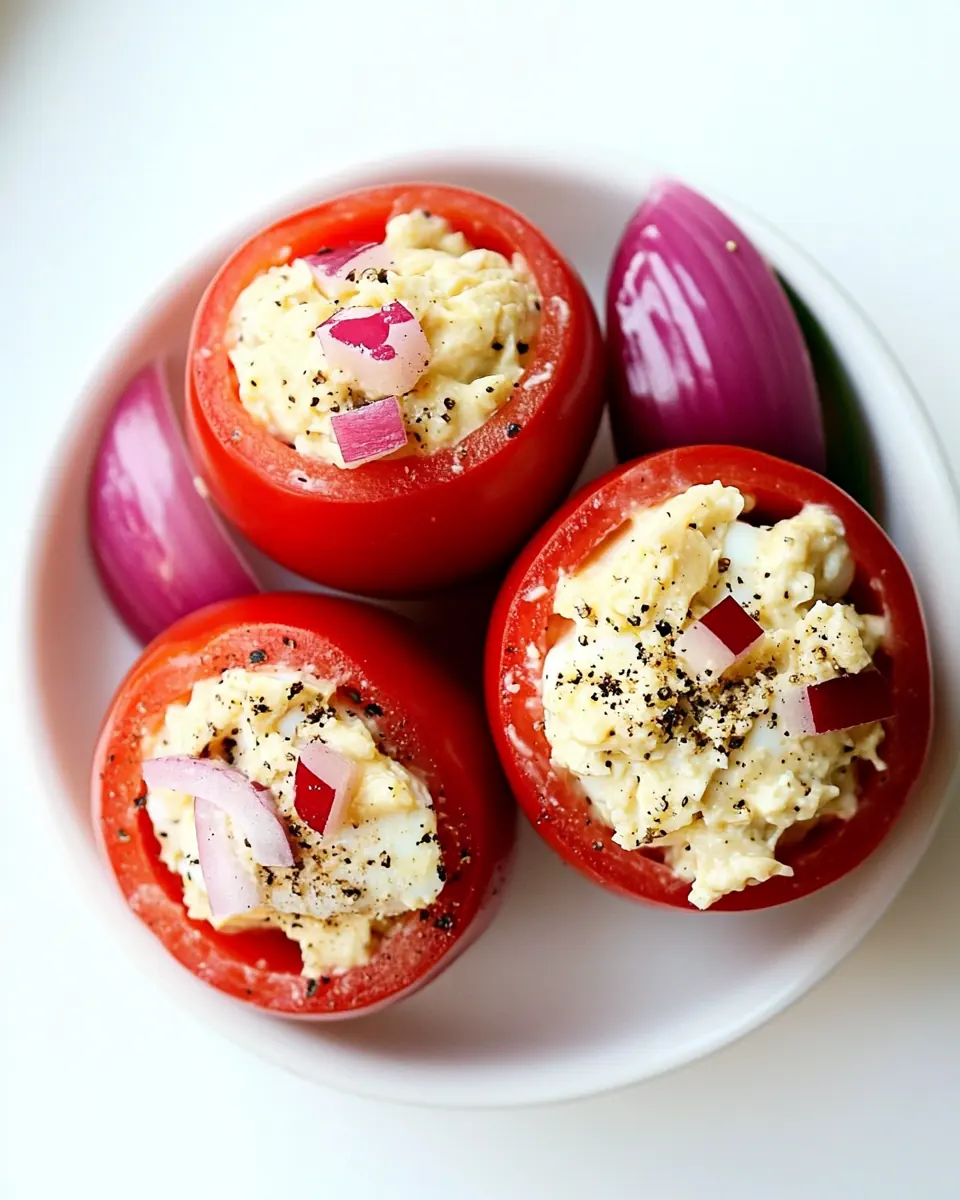
Use a knife to cut off the tops of the tomato and carve out the seeds and pulp. A spoon may be necessary to help scoop out the center.: Reach for a sharp paring knife so you can slice the top cleanly, the sound should be a crisp slice through the skin and flesh, not a squishing noise which signals an overripe fruit. As you carve, aim for a smooth internal cavity, rotating the tomato to keep the walls intact, and scrape gently to remove seeds and watery pulp that can make the filling soggy. You should see firm, slightly matte inner walls once the core is removed, which means the tomato will hold the egg salad without leaking. A common mistake is cutting too deep and creating thin walls that collapse when filled, so stop carving once the center is cleared and the remaining flesh is at least a quarter inch thick. This technique preserves structure, helps the tomato maintain its shape, and prevents juices from seeping into the container.
Fill the tomato with the egg salad, top with black olives, and place it into a lunch container.: The first sensory cue you’ll notice is the coolness and creaminess of the egg salad when you spoon it in, contrasting with the slightly cool tomato interior. Aim to mound the filling so it sits neatly above the rim without overflowing, which helps the tomato look tidy in the box. If you choose to add a garnish like black olives, place them gently so they nest in the salad rather than rolling away. A common error is overfilling, which causes spills and sogginess; leave a bit of headspace to keep the salad contained and to allow for a clean closure of the container. The visual should be appealing, with creamy white and yellow tones of the egg salad against the red tomato and dark olive accents, signaling a balanced, appetizing lunch.
Add the berries and veggies to the empty compartments and close the container.: As you pack the berries , cucumber slices, and carrot chips into their compartments, listen for the gentle clink as firm pieces settle, a reassuring sign they are not overcrowded. Arrange items to avoid squashing delicate berries , and place crunchy carrot chips where they won’t rub against moist components. The contrast in textures should be obvious when you open the container later, with crisp slices and chips alongside juicy berries . Packing too tightly can bruise fruit or make crunchy elements soggy, so give each component room to breathe. This careful placement retains texture and flavor integrity until lunchtime.
Pack the lunch box into a lunch bag with an ice pack, or refrigerate it until lunchtime.: The final step is about temperature and safety, the tactile sensation of a cold ice pack pressed against the container helps keep the egg salad chilled and fresh. If refrigerating, make sure to place the container on a stable shelf where it won’t tip; you should hear nothing but the quiet hum of the fridge, not a sliding clatter. Transport with an insulated bag and ice pack for the best results, as warmth can soften the tomato and increase spoilage risk. A common oversight is skipping the chill component, which can lead to a mushy texture or food safety concerns, so always aim to keep the assembled meal cool until you eat it.