In a shallow dish with sides combine the milk, cornstarch, vanilla, and cinnamon. Whisk until everything is combined and the cornstarch is dissolved.: The aroma at this stage is subtle, mostly sweet notes of vanilla extract with a faint whisper of cinnamon . Whisk vigorously until the mixture looks smooth and slightly thickened, it should feel silkier than plain milk. If you see specks or small lumps, keep whisking until they disappear, because lumps will create uneven pockets in the batter when you toast. A common mistake is under whisking, which leads to gritty spots, so take an extra 30 seconds here to ensure a perfectly smooth base.
Place one slice of bread into the milk mixture long enough to soak the side then flip the bread and allow it to soak for an additional 3 seconds.: When you lay the bread in, you will see it darken as it absorbs the batter, the edges will look moistened but not falling apart. The second side only needs a few seconds to pick up the coating, otherwise the slice can become saturated and tear when you lift it. Avoid over soaking, which results in a gummy interior and difficulty flipping; if the bread feels floppy, it was in the liquid too long.
Heat a large, nonstick pan over medium heat.: Listen for the slight hiss as the pan warms, and hold your hand a few inches above to sense the radiant heat. It should be hot enough to sizzle faintly when you add butter, but not so hot that the butter smokes. If the pan is not hot enough, the toast will soak up fat and become greasy, and if it is too hot you will burn the exterior before the center sets. Patience here ensures an even golden crust and a tender middle.
Melt 1 tablespoon butter in the pan and place 2 slices of bread into the center of the pan. Cook for 3 to 4 minutes or until golden brown.: The butter will foam and begin to take on a nutty scent as it browns slightly, which adds fantastic flavor. Place the prepared slices carefully to avoid splatter, then you should hear a gentle sizzle. That sound tells you the exterior is starting to set. If the butter smokes immediately, reduce the heat, because burning will impart a bitter note to the toast.
Using a spatula, flip the french toast pieces and brown the other side for an additional 3 to 4 minutes or until golden brown. Remove from the pan and repeat with remaining bread slice and butter.: Visually monitor the underside, you want a warm golden brown, not dark or charred. As it cooks, the surface will firm and slightly crisp while the interior becomes custardy. If you press gently with the spatula the center should feel springy, not soggy. Flip too soon and you risk tearing, flip too late and the color will be uneven; aim for the moment when the edges lift easily from the pan.
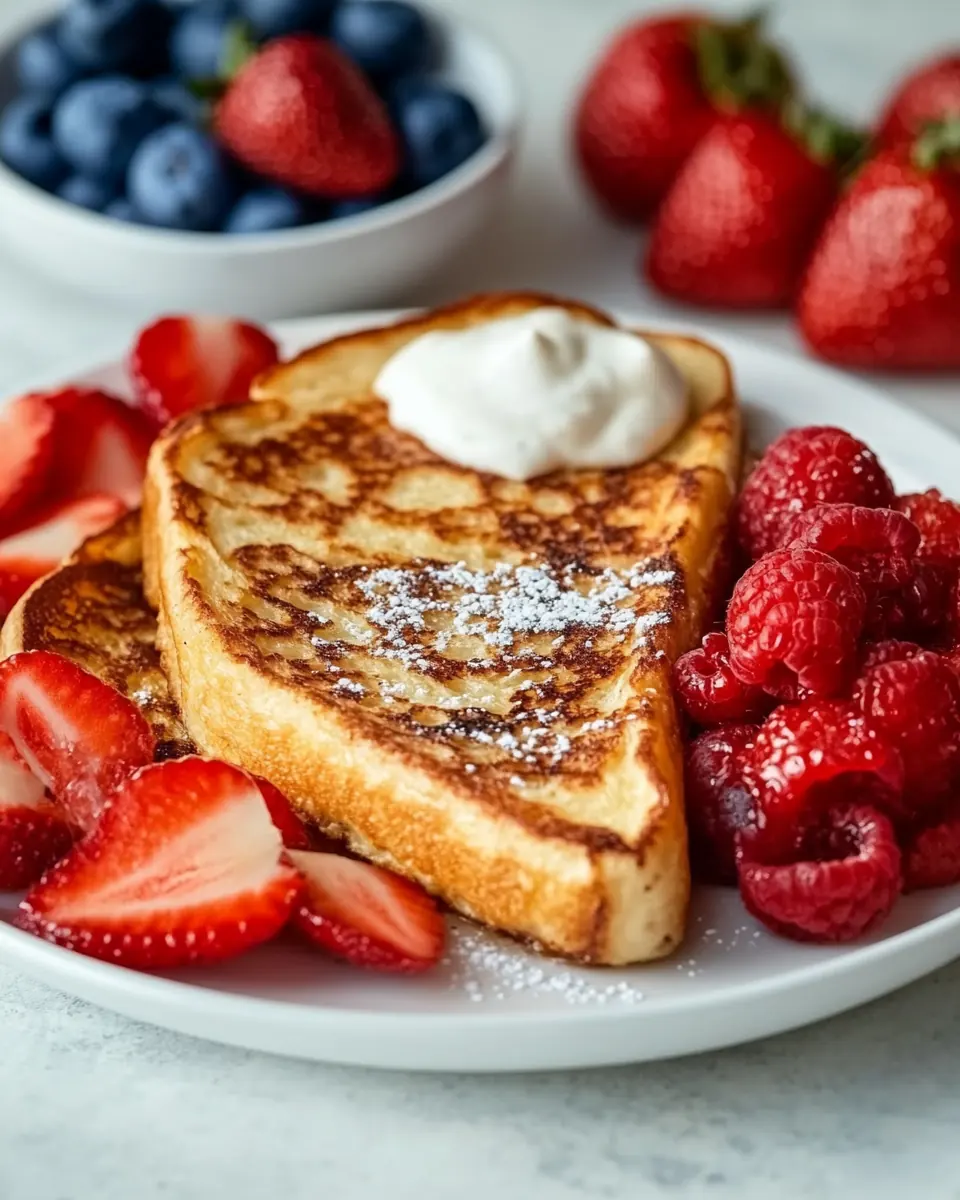
Top the french toast with berries, syrup, or your favorite toppings.: After flipping, pay attention to the aroma, which should be richer and more toasted, and the color should match the first side. The interior is finishing its set, and any residual wetness should evaporate. If the interior is still cold or overly soft after browning, reduce heat and cook a bit longer, because a rushed high heat finish often leaves the center undercooked.
Remove from the pan and repeat with remaining bread slice and butter: Move finished slices to a warm plate to rest briefly while you cook the rest. Resting lets the interior settle so each bite holds its shape when cut. Keep the pan at medium and add more butter as needed, watching that it does not burn between batches. A frequent mistake is crowding the pan, which causes uneven browning and steam, so cook in small batches for best results.
Top the french toast with berries, syrup, or your favorite toppings: The finishing touch is all about contrast, the juicy strawberries and viscous Maple syrup complement the warm, slightly crisp toast. Spoon the berries gently so their juices mingle with the syrup and create little pools of flavor on the plate. If toppings feel too sweet, a squeeze of fresh citrus or a scattering of sliced fruit can add bright acidity to balance the richness.