Preheat oven to 400 degrees. Spray 9×13 glass baking dish with nonstick cooking spray and set aside.: Warm air fills the kitchen as the oven approaches 400 degrees , and you may notice a faint metallic hum from the heating elements. This temperature jump is important because it helps set the batter quickly, encouraging a pleasantly puffed and lightly golden shell. Avoid opening the oven frequently while it heats, because losing heat can change how evenly the shell bakes. A common mistake is not giving the oven enough time to reach the full temperature, which can result in an under risen base that feels dense instead of tender.
In a medium pot, bring butter and water to a boil. Remove from heat and whisk in flour, salt and sugar until a dough forms. Cool 10 minutes.: When you spritz the 9×13 glass baking dish , the surface becomes glossy and ready to release the baked shell easily once it cools, which is essential for neat slicing. The glass will retain heat and encourage even browning along the edges, so I like using it for consistent results. A slip up is forgetting to coat the dish fully, which can lead to sticking at the corners when you try to lift or slice the cake; take a moment to cover every area.
Stir in eggs, 1 at a time, incorporating each time to make a smooth mixture that will seem half way between a dough and a batter.: As the butter melts into the water , you will hear a soft bubbling and smell warm butterfat; when it reaches a lively boil the mixture will shimmer. This step creates the moisture and steam that helps the flour bind correctly, producing the right shell texture. Be careful not to let the butter brown, because that would change the flavor profile of the base. A frequent error is boiling too aggressively, which can cause rapid evaporation and alter the dough consistency.
Once all eggs are incorporated, pour into prepared baking dish and spread evenly across the bottom and up the sides 3/4 inch or so. Bake for 25 minutes or until puffed and lightly golden. Cool completely.: Off the heat, add the all purpose flour , salt , and sugar , then whisk until the mixture pulls away from the pot as a smooth dough. You will notice a slight glossy sheen and a springy texture when you stir; that signals proper hydration and gluten development for this laminated style shell. If the flour is not fully incorporated you can end up with lumps or a crumbly base, so work quickly and decisively to ensure a uniform dough.
In a large bowl, whisk vanilla pudding mix with egg nog 2 minutes to thicken. Stir in cream cheese and mix until smooth. A stand mixer or hand held mixer is best for this!: Letting the dough cool for about ten minutes prevents the eggs from cooking when you add them, which keeps the mixture silky and manageable. During this pause the dough relaxes and becomes easier to beat in the eggs without curdling. Rushing this step risks scrambled bits in the dough, and that will affect the final texture of the shell.
Spread over the bottom of the baked shell.: As you add each large egg , the mixture will change from dense to glossy and slightly flowing, and the rhythm of incorporation is crucial to reach the correct balance. The sound becomes quieter as the batter smooths, and the look shifts to a satiny, cohesive mass. Adding eggs too quickly can give you a separated texture, so pause and fully blend each one before adding the next.
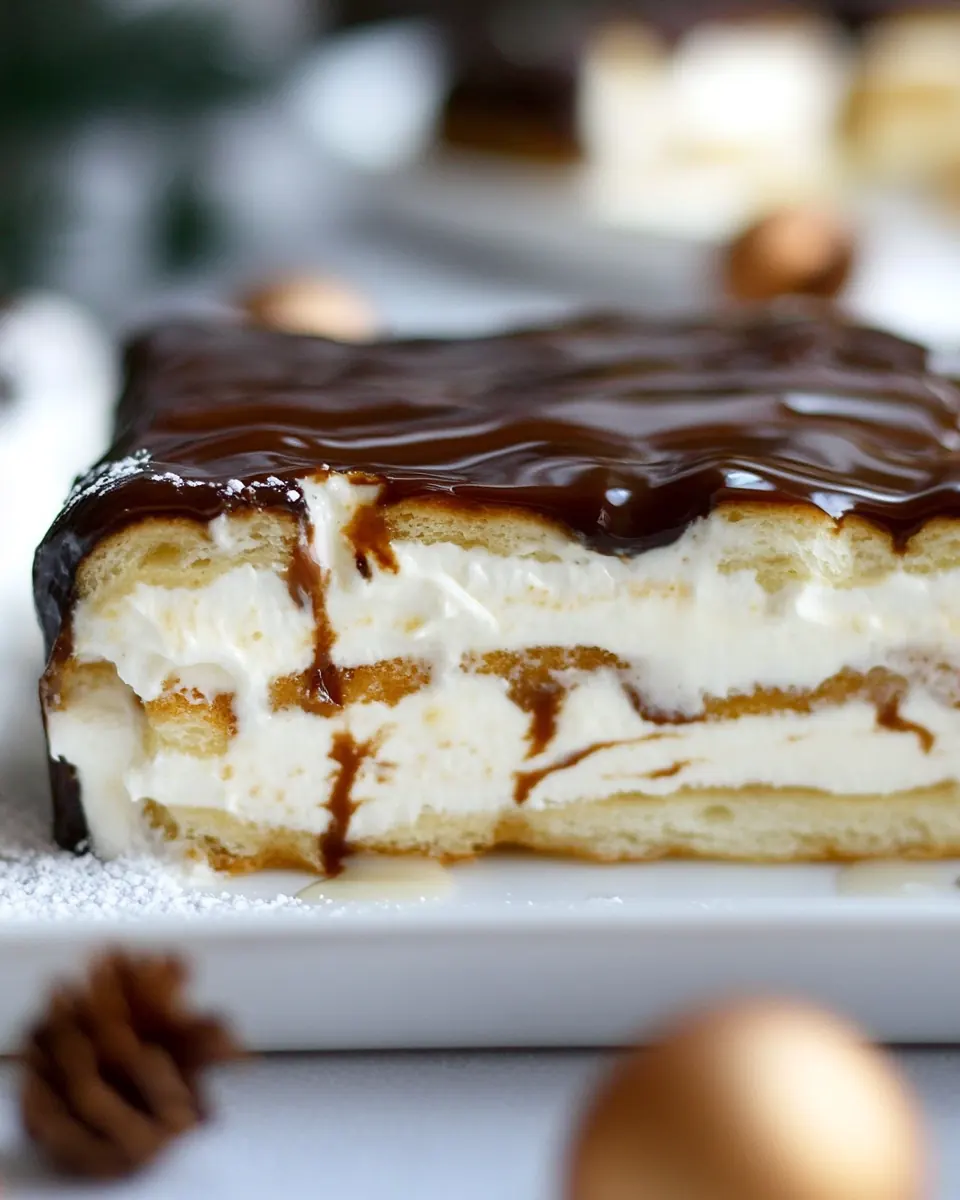
For the topping, whip heavy whipping cream with vanilla and powdered sugar until stiff peaks form. Spread over filling. Refrigerate up to 3 days {covered completely with plastic wrap}. To serve, cut into squares and drizzle with chocolate syrup.: The batter should be thick yet spreadable, and as you smooth it across the 9×13 glass baking dish you will see gentle ribbons level out. Building the edges a bit helps create that classic eclair rim for holding the filling. If you press too heavily or make the layer uneven, the baked shell can brown unevenly or form thin spots that soak the filling, so aim for an even, moderate thickness.
Bake for 25 minutes or until puffed and lightly golden.: The oven will fill with a warm, buttery scent, and you will see the shell puff and take on a light golden tone around the edges. The texture should be springy to the touch and set in the center, not wet or doughy. Opening the oven too soon can cause the structure to collapse, so rely on visual cues and the recommended time. A common mistake is underbaking, which leaves a gummy interior that clouds the texture once chilled.
Cool completely.: Cooling lets the shell firm so the filling will sit neatly without sinking. The surface will lose its initial warmth and return to room temperature, and you may notice the aroma mellow slightly. If you try to assemble while the shell is still warm, the filling may soften too much and migrate, making slices messy; patience here pays off.
In a large bowl, whisk vanilla pudding mix with egg nog 2 minutes to thicken.: As you whisk the instant vanilla pudding mix into the egg nog , the mixture will turn glossy and begin to thicken within minutes, forming the custardy backbone of the filling. The whisking rhythm builds structure and prevents lumps, producing a smooth, spoonable consistency. If you under whisk you might end up with a runny filling that will not set properly in the shell.
Stir in cream cheese and mix until smooth.: Adding room temperature 8 oz cream cheese transforms the pudding into a richer, tangy filling; mixing until homogenous ensures there are no pockets of unblended cream cheese . Using a stand mixer or handheld mixer helps achieve a perfectly smooth texture, but you can also beat by hand with elbow grease. A common pitfall is working with cold cream cheese , which leads to lumps and an inconsistent mouthfeel.
Spread over the bottom of the baked shell.: The filling should glide over the cooled shell in a thick, even layer, forming a creamy plane that will contrast with the whipped topping. Smooth it to the edges so each slice has a balanced ratio of shell to filling. If the filling seems too thin, chilling briefly will help it firm; if it is too stiff, a gentle stir can soften it without sacrificing structure.
For the topping, whip heavy whipping cream with vanilla and powdered sugar until stiff peaks form.: As you beat cold heavy whipping cream with vanilla and powdered sugar , the volume will rise and the texture will shift from liquid to billowy peaks that hold their shape. The sound becomes lighter and the beater leaves visible trails, signaling readiness. Over whipping can turn the cream grainy and eventually into butter, so stop as soon as firm peaks appear and you see glossy lift.
Spread over filling.: The whipped topping should sit like a cloud over the filling, smoothing into soft peaks and sealing the dessert. This layer not only adds visual appeal but also a light counterpoint to the rich filling. If you spread too forcefully, you might disrupt the filling beneath, so work gently with broad strokes.
Refrigerate up to 3 days covered completely with plastic wrap.: Chilling solidifies the layers and lets flavors meld, and covering completely prevents the surface from drying or picking up odors from the fridge. Over time the layers integrate and the texture becomes ideal for slicing, though after a few days the shell may soften slightly. A typical error is storing it uncovered, which can lead to a skin forming on the whipped cream and a less appealing presentation.
To serve, cut into squares and drizzle with chocolate syrup.: When you slice chilled squares, the clean edges and layered cross section are satisfying, and a light drizzle of chocolate syrup adds shine and flavor contrast. Use a sharp knife and wipe it between cuts for neat portions. Cutting too soon, or with a dull blade, can create ragged pieces that hide the cake s elegant layers.