In a medium bowl or a shallow casserole dish, whisk together the eggs, eggnog, vanilla, cinnamon and salt.: The moment you begin whisking you will notice the aroma of vanilla and cinnamon rising, signaling that the custard is taking shape. The sound is gentle, a steady swish as the eggs and eggnog combine into a glossy, uniform mixture, which is what you want so the liquid absorbs evenly into the challah bread . Whisking well matters because it distributes the flavors and ensures there are no pockets of raw egg. If you skip thorough whisking, the custard can be uneven, leaving some bites underseasoned or with bits of cooked egg when they hit the hot pan. Aim for a smooth, slightly frothy texture, and test a spoonful to confirm the seasoning is balanced.
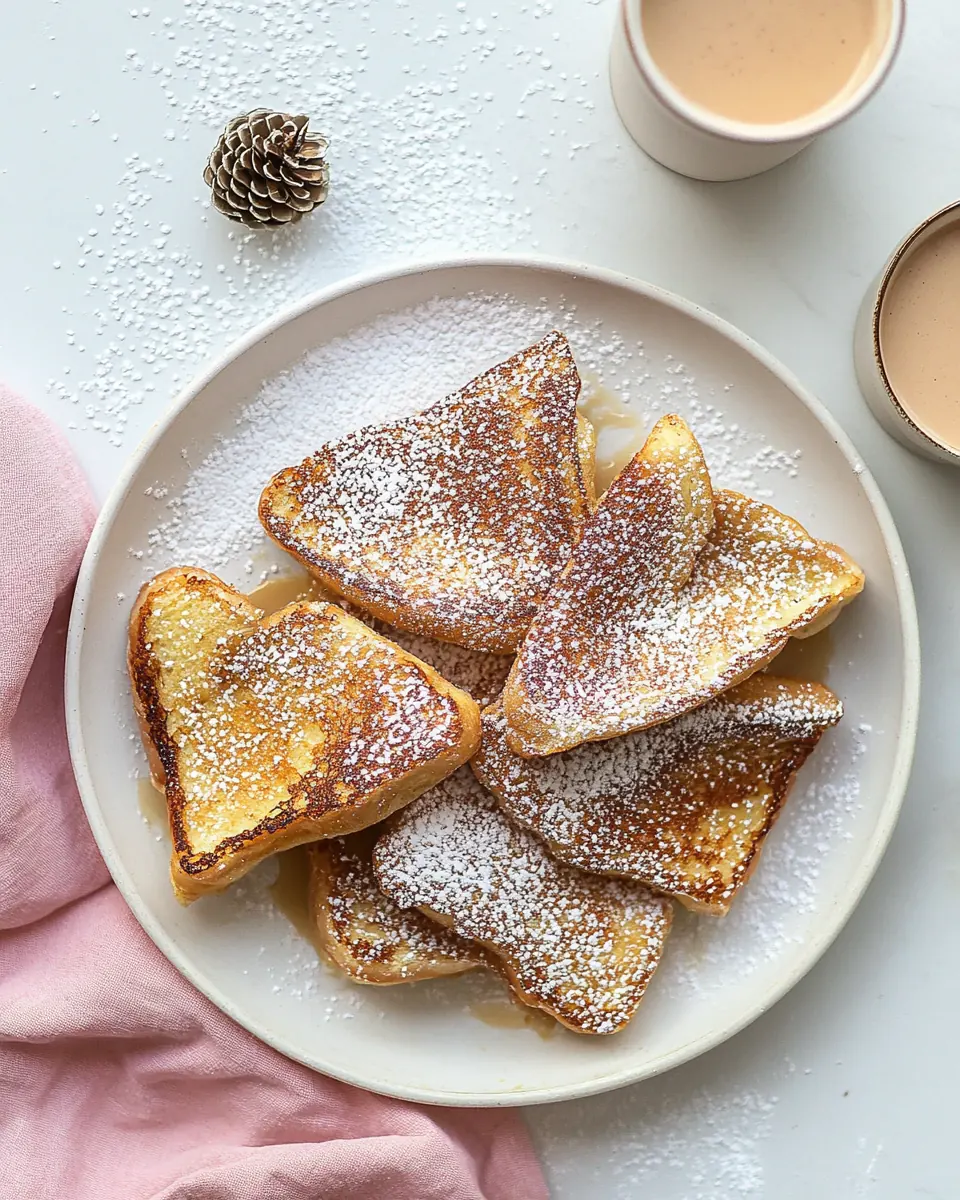
In a medium skillet, set over medium heat, add a tablespoon of butter. When the butter has melted, dip a few slices of the challah bread into the eggnog mixture and then flip them to the opposite side. Transfer to the skillet to cook for about 2 to 3 minutes on each side, until golden brown. Place the cooked French toast on a sheet pan in a warm oven. Repeat with the remaining slices of challah French toast, adding more butter as needed.: As the butter melts you will hear a quiet sizzle and see it foam briefly, then settle into a clear, glossy fat which is your cue the pan is ready. Medium heat gives a controlled sear without burning, producing that appealing golden brown color on the toast edge. Using too high heat will brown the exterior too fast while leaving the center undercooked, so adjust the flame if the butter darkens quickly. If the butter begins to smoke, reduce the heat and wipe the pan with a paper towel to remove burnt solids before continuing.
Serve with warm whipped cream and warm maple syrup.: When you dunk the challah bread , listen for a faint drip and watch how the liquid clings, saturating the crumb. The bread should absorb but not collapse; if it becomes soggy, you soaked it too long. Flip each slice once so both sides develop an even coating, aiming for a brief soak that allows the center to stay tender. A common pitfall is holding the bread in the custard too long, which produces a mushy interior. Use thicker slices and a quick, thorough dip to preserve structure.
Transfer to the skillet to cook for about 2 to 3 minutes on each side, until golden brown.: As the slices hit the warm skillet, the sound will change to a gentle crackle, and a fragrant caramelized aroma will develop. Watch for a deep golden color at the edges and listen for a steady sizzle rather than a vigorous pop, which indicates the heat is balanced. This caramelization builds flavor, producing a slightly crisp exterior while the interior becomes tender and custardy. If you flip too early, the crust will be pale and miss that toasty depth, so wait until you see that even golden hue before turning.
Place the cooked French toast on a sheet pan in a warm oven.: Moving slices to a warm oven keeps them from cooling while you finish the batch, and the residual heat helps maintain the interior texture. You will notice the steam easing off the surface, a sign the internal custard is settling. This resting step prevents the toast from becoming soggy when stacked, and it allows flavors to meld subtly. A mistake some people make is piling slices directly; that traps steam and softens the crust, so give each piece a bit of space on the pan.
Repeat with the remaining slices of challah French toast, adding more butter as needed.: As you continue cooking, the pan will accumulate browned bits that deepen flavor; a little extra butter replenishes the fat and prevents sticking. Keep an eye on the butter color, adding more when the fat looks clear rather than brown, to avoid carrying burned flavors over to new slices. The rhythm of dipping and cooking will become familiar, and you can tweak timing if your pan runs hotter or cooler than expected. Avoid overcrowding the skillet, which lowers the temperature and yields soggy rather than crisp results.
Serve with warm whipped cream and warm maple syrup.: When plated, the first sensory cue is the aroma of warm maple syrup and the soft, cool cloud of whipped cream beginning to melt into warm crevices. The contrast of temperature and texture lifts the whole bite. Warm the syrup slightly so it pours smoothly, and dollop freshly whipped cream for a light, airy counterpoint. A common misstep is using cold syrup straight from the fridge, which can congeal on the toast and diminish the silky mouthfeel; gentle warming fixes this easily.