Line a 9×5 loaf pan with plastic wrap and set aside.: You will notice the cool, slick feel of the plastic under your hands as you press it inside the pan, which will make unmolding painless later. This step prevents sticking and preserves neat layers, which is important for presentation. A common mistake is to skimp on coverage, so ensure excess plastic wraps over the edges to lift the cake out easily.
Using a hand mixer or stand mixer with the whisk attachment, whip the cream cheese until smooth.: As you whip the cream cheese , the texture changes from slightly grainy to glossy and supple; this visual cue means you have eliminated lumps. You should hear the motor ease as the block loosens, and the bowl will look satiny. If you skip proper softening, the mixer will strain and lumps will remain, so allow the cream cheese to reach room temperature first.
Add in the Instant vanilla pudding, eggnog, and nutmeg and mix on low until fully combined. I found that sometimes hand mixers are too fast for this step so I like to combine them with a whisk or use a very slow mixer.: With whisking, you will hear a quieter, consistent sound as the powders and liquids marry into a thick custard. Visually, the mixture will thicken and cling to the whisk, and you will smell warm spice from the nutmeg . I find slower mixing helps prevent pockets of dry pudding mix, and a common error is mixing too fast which creates air bubbles rather than a smooth set.
Fold in the Cool Whip gently with a spatula.: Folding transforms the filling into something fluffy, and you will see soft peaks soften into a unified cloudlike texture. Use a gentle scoop and rotate motion to maintain air, because aggressive stirring will deflate the mixture and yield a heavier set. If the filling becomes too loose, chill it briefly to firm up before layering.
Layer the bottom of the prepared pan with cinnamon graham crackers and top with 1/3 of the eggnog mixture.: As you place the first row of cinnamon graham crackers , notice how they create a flat, even base for the filling. Spoon the first third of filling dollop by dollop and spread lightly so the crackers remain visible. Pressing too hard will compact the crackers and reduce the delicate texture, so keep motions light and even.
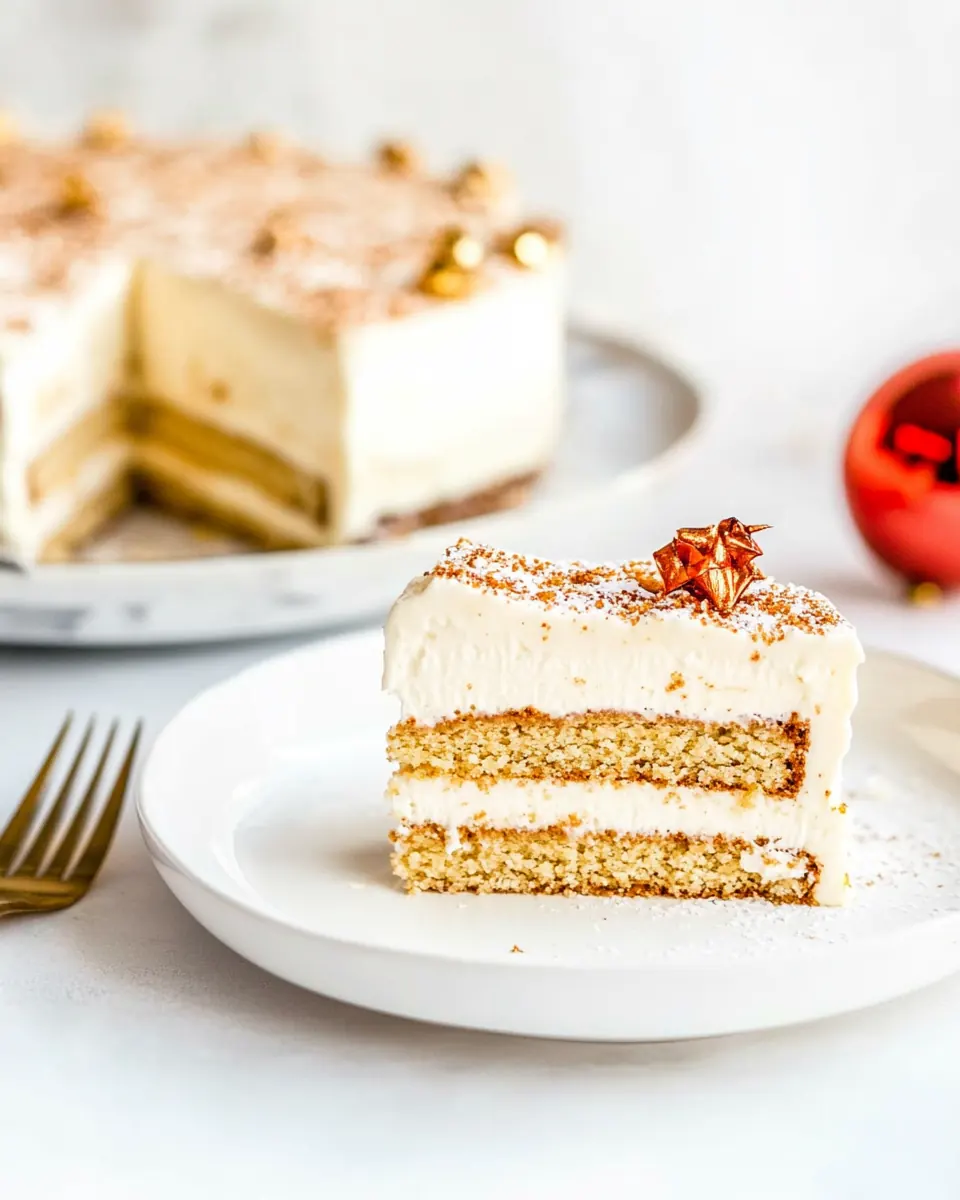
Repeat the graham cracker and eggnog layers 2 more times. You should have 3 layers of crackers and 3 layers of eggnog mixture.: Layering creates rhythm and ensures every slice has balance, and you will watch the loaf start to look substantial as layers build. Maintain consistent thickness for each layer to guarantee even freezing. A frequent slip is uneven layering which causes the cake to tilt when sliced; take a moment to level each layer.
Cover the pan with plastic wrap and freeze for at least 6 hours.: In the freezer, the filling firms and the crackers soften just enough to become cake like. You will notice a faint frosting forming on the wrap as moisture migrates, and after several hours the texture will be slice ready. Trying to slice too early will result in collapse, so resist the urge and allow the full six hours.
When you're ready to serve simply remove it from the freezer, pull it out of the pan, remove the plastic wrap, slice and serve frozen.: The moment you unmold you will feel the satisfying snap of a clean release, and the exposed cross section shows stratified layers for beautiful presentation. Use a warm knife for clean slices by running it under hot water and drying between cuts. Cutting while partially thawed is a common mistake that results in squashed slices.
Optional, top the icebox cake with whipped cream or nutmeg.: If you choose to garnish, the final touches amplify aroma and visual appeal; a light dusting of nutmeg releases fragrance at the table. Keep toppings minimal to preserve the cake's crisp silhouette, and avoid heavy syrups that can seep and soften the outer crackers prematurely.