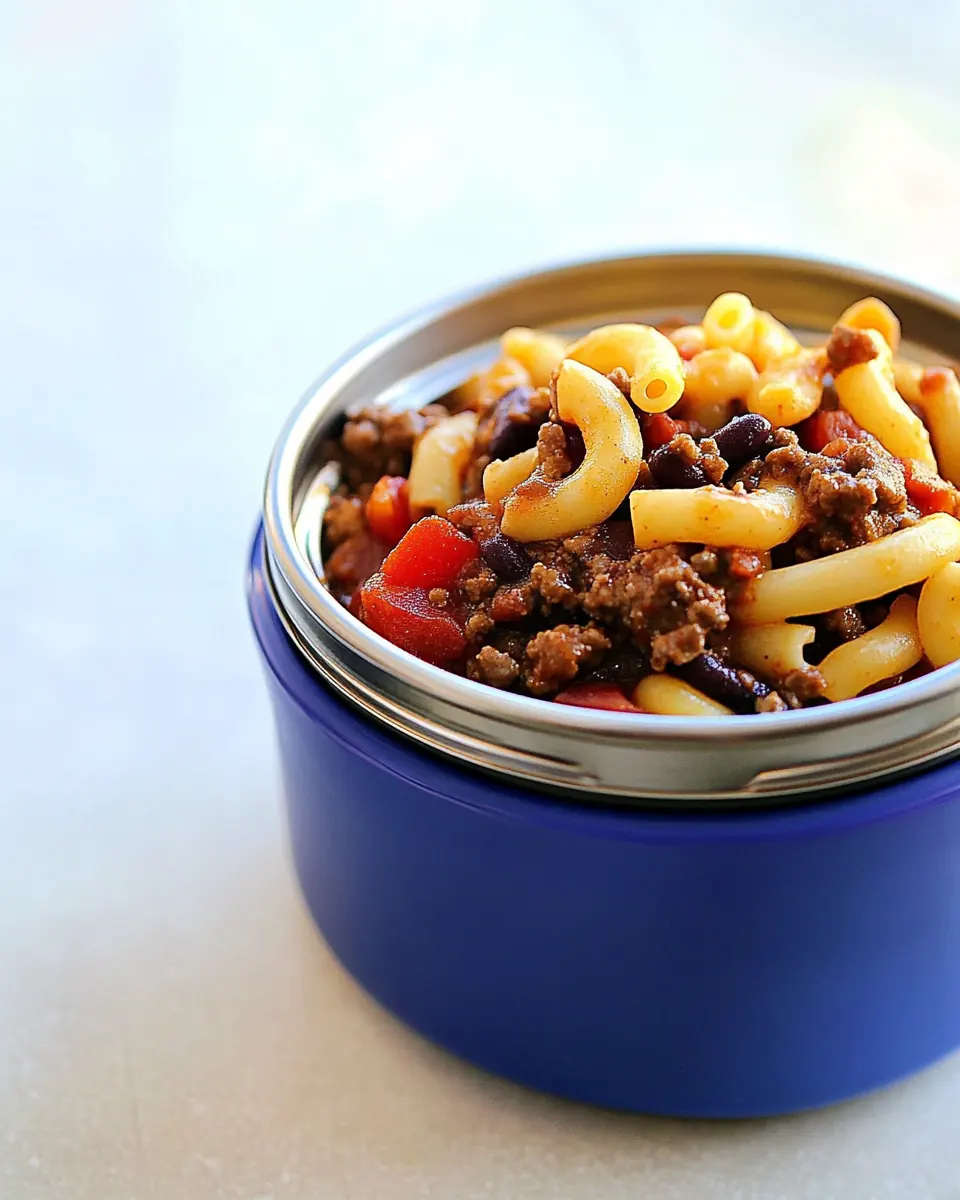
In a large skillet, brown the beef over medium-high heat. Add the onions, spices, salt, and garlic. Sauté until fragrant, and the onions are translucent.: As the meat hits the hot surface you should hear a lively sizzle, and small brown bits will form on the pan, releasing deep, savory aromas. Browning creates Maillard flavors that are essential for a robust final dish, because those caramelized edges provide complexity that plain boiled meat cannot match. Use a spatula to break the meat into bite sized pieces as it cooks, and watch for a change from pink to rich brown with just a slight crust. A common mistake is crowding the skillet, which traps steam and prevents proper browning, so work in batches if the pan is too full. If you see large pools of liquid, raise the heat briefly to evaporate it, then lower the heat to finish. Aim for complete color change without overcooking, which makes the meat dry rather than juicy.
Add the tomatoes, sauce, chilis, beans, macaroni, and broth, and stir to combine. Bring to a boil, then reduce heat to medium and simmer for 12 to 15 minutes or until the macaroni is al dente.: At this point the aroma will shift as the onion softens and the spices bloom, releasing warm, fragrant oils. The onions should turn translucent and slightly glossy, and the minced garlic will become fragrant without taking on color. Toasting the chili powder , cumin , and oregano briefly in the pan intensifies their character, helping them infuse into the meat rather than sit as an isolated layer. Stir frequently to ensure even distribution, and reduce heat if the garlic starts to brown too quickly, which can introduce bitterness. Taste a small bit after a minute to check salt balance, because early seasoning helps all other tastes read correctly in the final dish.
Remove from heat and stir in 1/2 cup of cheese until it's completely melted.: Once the pan holds a chorus of savory notes, adding the diced tomatoes and tomato sauce introduces bright acidity while the green chilis add vegetal heat. Pour in the rinsed red kidney beans and black beans for body, then scatter the elbow macaroni and measure in the broth . The mixture should look well united and slightly soupy, so the pasta has room to cook. Stirring helps prevent pasta sticking and ensures the beans heat through evenly. If the liquid seems sparse, add a splash more broth; too much will make the dish thin and require longer simmering. A frequent misstep is adding pasta to insufficient liquid, which yields undercooked centers and a gluey texture.
Preheat the thermos container with boiling water. This step is optional, but it helps.: You will see a rolling bubble when it first reaches boil, then switch to a gentle simmer so the elbow macaroni cooks through while absorbing sauce flavors. Stir occasionally to keep pasta separate, and watch for visual signs of doneness, like the center losing its opaque dot when pinched between fingers. The aroma will deepen and the sauce will slightly thicken as water reduces. Overcooking will lead to a mushy texture, which is especially noticeable after sitting, so aim for a slightly firm bite. If the sauce thickens too much before the pasta is done, briefly add a splash of hot broth to maintain proper consistency.
Heat the chili mac in the microwave or stovetop to a piping-hot temperature.: Taking the pot off the burner prevents the Cheddar cheese from overheating and separating, while stirring ensures a smooth, creamy finish. The melted cheese should create a glossy sheen that binds sauce and pasta together, and the heat from the pot will be enough to coax the cheese into a silky texture without graininess. If the cheese seems stringy or oily, it was likely added to water that was too hot; allow the pan to cool slightly next time. This step enhances mouthfeel and adds a satisfying richness to every spoonful.
Drain the water from the thermos.: Pouring near boiling water into the thermos and letting it sit for a few minutes warms the interior so the chili mac loses less heat when transferred. After a minute or two, drain the water and dry the rim to prevent dilution. This simple ritual prolongs the hot window and helps keep the meal piping when you open it hours later. Skipping preheating is not catastrophic, but you will notice faster temperature drop. Be careful handling boiling water to avoid burns, and use a towel or oven mitt if the thermos gets hot.
Fill the thermos with about 1 1/2 cups of chili mac, and top with additional cheese.: Before packing, make sure the mixture is pleasantly hot to the touch, emitting steam and releasing the full aroma of spices. Piping-hot ensures the thermos starts with maximum heat retention, which is crucial for many hours of warmth. On the stovetop, brief reheating brings the sauce to a gentle simmer; in the microwave use short bursts and stir in between to avoid uneven hot spots. Overheating can break down texture and make the cheese separate, so aim for a steady, even warmth rather than a rolling boil.
Close the thermos container and pack it inside a lunch bag with your choice of snacks.: After preheating, carefully pour out the warming water, ensuring the thermos is dry inside. A dry interior prevents dilution of your chili mac and keeps the consistency intact. Check the seal and rim for moisture, and wipe briefly if needed. Leaving water can change the sauce thickness and cool the food faster, which reduces the effectiveness of preheating. Handle the thermos lid with care, as residual heat will be present.
Include an ice pack to keep the other ingredients chilled if needed.: Spoon the hot mixture into the wide opening thermos so it sits snugly and retains heat without large air pockets. Leaving a little headspace helps you close the lid without pressing out steam, and extra Cheddar cheese on top will soften into a tempting finish. The contrast between the melted layer and the warmed interior is satisfying. Overfilling can make closing difficult and increase the risk of spills, so aim for the suggested portion size.
Close the thermos container and pack it inside a lunch bag with your choice of snacks.: Seal the thermos tightly to trap heat, then nestle it in an insulated lunch bag to add thermal protection. Packing thoughtfully keeps the meal intact and prevents jostling that could cause leaks. Include napkins or utensils for convenience. A common oversight is putting cold items directly against the thermos interior, which draws away heat; keep cold packs separate if you must include chilled snacks.
Include an ice pack to keep the other ingredients chilled if needed.: If you pack sides that must remain cool, place an ice pack away from the thermos so the hot container does not warm the chilled items. This separation preserves both hot and cold components effectively. I like using a small insulated compartment to keep temperatures distinct. Avoid putting the ice pack against the thermos exterior, which reduces its ability to keep the rest of the bag cool and shortens the thermos heat retention.