Preheat oven to 350ºF. Lightly spray a 9×13-inch baking dish with cooking spray. Set aside.: The moment you step into the kitchen you should notice the warmth from the oven as it comes up to temperature, a gentle hum and faint mechanical clunk that signals readiness. Preheating ensures the casserole starts baking immediately and the cheeses melt evenly rather than slowly which can make the dish soggy. A light spray on the dish prevents sticking and encourages those crisp edges that I love, and the 9×13 inch size gives the layers room to spread. One common mistake is putting the casserole into a cold oven which changes the bake time and may leave the cheese rubbery; always preheat first.
Cook spaghetti according to package directions. Drain.: As the water reaches a rolling boil you’ll hear the vigorous bubbles and smell the faint wheat aroma of the pasta, signals that it’s time to add the spaghetti . Cook until just tender, then drain promptly so the strands do not soak up too much sauce and become limp. The goal is slightly firm pasta because it will continue to soften in the oven while absorbing sauce. A typical error is overcooking the pasta, resulting in a mushy texture in the finished casserole; check a strand a minute or two before the package time.
While spaghetti cooks, cook Italian sausage in a skillet over medium-high heat until no longer pink. Drain fat. Stir in spaghetti sauce and tomato sauce. Check seasoning. Add salt and/or pepper to taste. Set aside.: As the Italian sausage sizzles you’ll hear pops and little crackles as the exterior browns, releasing savory aromas. Browning renders flavorful fats and creates browned bits that deepen the sauce, so let the meat develop color before breaking it up. After draining excess fat, folding in the jarred spaghetti sauce and tomato sauce creates a balanced, cohesive meat sauce. Taste for salt and pepper because jarred sauces vary, and adjust gently. A common pitfall is skipping the drain which can make the sauce greasy; remove excess fat for a cleaner finish.
In a large bowl, whisk together eggs, parmesan cheese and melted butter. Add cooked spaghetti and toss to coat.: When you whisk the eggs with parmesan cheese and warm melted butter you’ll create a glossy, emulsified mixture that clings to the pasta, giving each strand a silky sheen. Tossing the hot, drained spaghetti with this mixture helps the pasta absorb some of the flavored fat, which keeps the bake creamy and prevents dryness. The texture should be glossy and slightly sticky, not greasy. Avoid under mixing which can leave some strands dry, and also avoid over mixing which can break the pasta into fragments.
Place half of spaghetti mixture in bottom of baking pan. Top with half of cottage cheese, half of meat sauce and half of mozzarella cheese. Repeat layers.: As you layer, you should see distinct strata of pale spaghetti , speckled white cottage cheese , rich red meat sauce, and shredded mozzarella cheese . This alternation creates pockets of creamy and saucy texture, so every portion has balance. Press lightly to compact each layer but do not smash, preserving some air space for the cheese to bubble. A frequent misstep is piling everything unevenly which leads to slices that fall apart; distribute ingredients evenly across the pan.
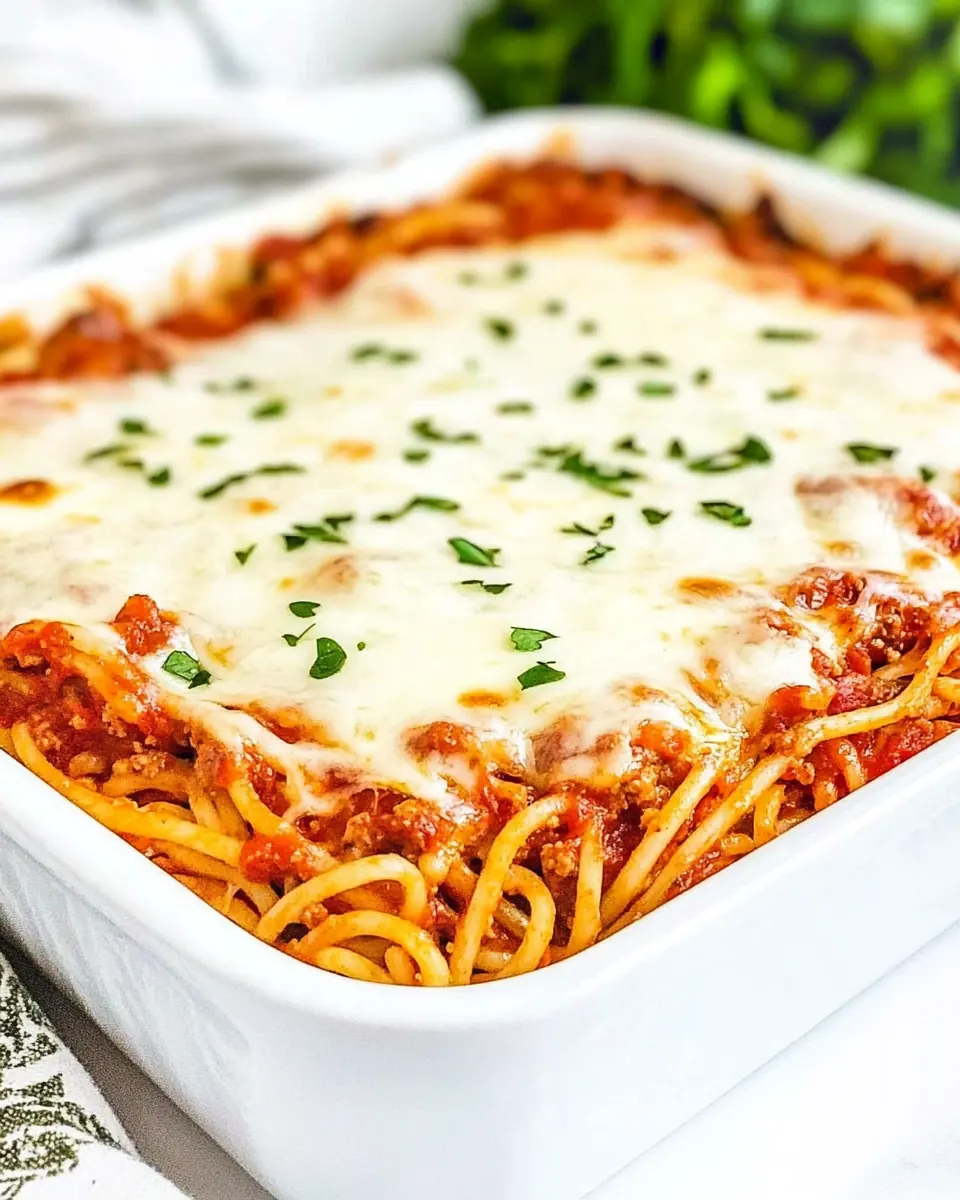
Cover with aluminum foil. Bake for 30 minutes. Uncover and bake an additional 20 to 25 minutes. Garnish with parsley, if desired.: The first covered stage traps steam and lets flavors meld, producing a tender interior while the uncovered finish encourages the top mozzarella cheese to brown and bubble. As it bakes you’ll hear a low, steady bubble and smell melted cheese and seasoned tomato lifting through the kitchen. Watch for the edges to brown and for a gentle boil near the center; that indicates doneness. One common error is removing the foil too early, which can dry out the top, or leaving it on too long which keeps the cheese pale; time the uncovered finish carefully.
Garnish with parsley, if desired.: The final garnish adds a fresh, herbaceous note that contrasts the rich, cheesy casserole. A sprinkle of chopped parsley brightens the aroma and provides a visual pop against the golden top. If you skip the garnish the dish is still flavorful, but this small addition elevates the presentation. Avoid over garnishing because it can look messy and distract from the golden crust you worked to achieve.