Mix sugar and water and cook in a heavy saucepan over low heat until thick dark caramel forms. Make sure it does not burn! Pour carefully into a 5-cup baking pan and spread all over. Cool to room temperature, by then the caramel should have hardened. A simpler way, if your mold allows for it, just heat the sugar directly in the mold, and once it melts and turns a dark color, remove from the heat and spread on the bottom and sides of the pan.: As the sugar dissolves you will first notice a glossy syrup, then a gentle toffee scent will develop, and finally a rich amber color will appear; this is when the caramel flavor is most complex. Use a heavy saucepan to distribute heat evenly, which reduces the risk of hot spots that burn sugar. Never walk away from this step, because the color can change in seconds, and burnt caramel tastes bitter and sharp. If your caramel looks grainy, a few drops of water and gentle warming can help dissolve remaining crystals, but avoid stirring vigorously as that can crystallize the sugar again. Transfer the caramel immediately into the baking pan so it sets while you prepare the custard, and tilt the pan to coat the bottom and sides evenly for a glossy finish that will become the syrup when inverted.
Mix together egg yolks, sweetened condensed milk, vanilla, and evaporated milk, stir to combine. Sieve to get rid of undissolved egg parts. Pour carefully into the baking pan, trying not to disturb the caramel layer.: As the molten sugar meets the cooler pan you will hear a soft hiss, and the caramel will flow and settle into a glassy layer. Work quickly but safely, using oven mitts to steady the pan, because the caramel cools and hardens fast. If you notice uneven coverage, gently tilt and rotate the pan to coat the surfaces before the sugar sets, otherwise you may have bare spots once the custard is unmolded. Avoid touching the caramel with utensils while it is hot, because it retains heat and can stick painfully to fingers.
Bake in a hot water bath (bain Marie) in preheated oven to 320 ºF [160ºC] for one hour or until a toothpick inserted in the center comes out clean.: As the caramel cools it firms into a slick, brittle sheet that will later melt back into syrup when the flan is inverted. Cooling stabilizes the layer so it does not mix into the custard. If you rush this and pour custard onto very warm caramel, the sugar can dissolve unevenly and sink; patience ensures a distinct caramel ribbon under the custard. If the room is very warm and the caramel remains tacky, a brief rest in a slightly cooler spot helps it set properly.
Remove from the oven and the water bath and cool to room temperature. Chill in the fridge. Loosen the edges of the flan with a toothpick. Place a serving plate on top of the mold (one which will retain the syrup) and invert. Serve still chilled.: Doing this in the actual baking mold reduces transfers and limits handling of hot sugar, you will see the sugar liquefy and bubble before settling into a smooth film. The visual cue to stop heating is a rich amber that smells toasted but not burnt. One common mistake is keeping the heat too high, which causes uneven browning and scorching; keep the flame low and rotate the mold if needed. Remember that the sugar continues to darken off heat, so take it off a touch early if you are nervous about burning it.
Mix together egg yolks, sweetened condensed milk, vanilla, and evaporated milk, stir to combine: When you combine these elements, the aroma becomes sweet and milky, with the gentle perfume of vanilla rising. Stir gently to incorporate without whipping in air, because air can create bubbles and holes in the finished custard. I like to whisk just enough to dissolve the yolks into the milks until the mixture is homogenous and silky. Overmixing leads to a lighter, less dense texture, so aim for smoothness rather than volume. If you spot any streaks of egg white, strain them out to keep the texture uniform.
Sieve to get rid of undissolved egg parts: Passing the custard through a fine mesh strainer removes any coagulated bits and ensures a satin finish. You will notice the liquid becoming exceptionally smooth and glossy after straining, and this small step often separates decent custards from remarkable ones. A typical error is skipping the sieve, which can leave tiny cooked fragments in the flan; straining is quick insurance for a pristine surface and uniform mouthfeel.
Pour carefully into the baking pan, trying not to disturb the caramel layer: As you pour, the custard should glide over the caramel, and you may hear a soft settling sound as the two layers meet. Pouring down the side of the pan or using a ladle helps avoid splashing and mixing the layers. If the custard causes the caramel to bubble up, that is usually fine, but violent mixing can create pockets of syrup within the custard rather than a single top layer. If you see bubbles on the surface, skim them gently or tap the pan to release trapped air.
Bake in a hot water bath (bain Marie) in preheated oven to 320 ºF [160ºC] for one hour or until a toothpick inserted in the center comes out clean: The water bath provides gentle, even heat, which helps the custard set without curdling, and you will notice the edges pulling slightly away from the pan as it nears doneness. The top should be set but still slightly wobbly in the center, the jiggle indicating a creamy interior. Insert a clean toothpick or thin knife in the center, if it comes out clean or with very slight custard clinging, it is ready. A common pitfall is overheating, which causes curdling and a grainy texture; maintain steady oven temperature and ensure the water in the bath is hot but not boiling vigorously.
Remove from the oven and the water bath and cool to room temperature: Once out of the oven the flan will continue to set as it cools, and you will see steam fade and the surface become less glossy. Cooling gradually prevents sudden contractions that can cause cracking. Avoid placing the hot pan in a cold environment, which can cause thermal shock and affect texture. Allow the flan to come to room temperature before chilling to prevent water condensation from forming on the surface.
Chill in the fridge: Chilling firms the custard and allows flavors to meld; I usually let mine rest overnight for the best texture. The cold also helps the caramel relax back into a syrupy form that will flow over slices when inverted. Skipping adequate chilling can result in a custard that is too soft to unmold cleanly, so give it time to rest.
Loosen the edges of the flan with a toothpick: Running a thin tool around the rim releases any suction between the custard and the mold, making inversion easier without tearing the flan. You will feel slight resistance break as the seal loosens, which is the cue to proceed. Be gentle to avoid gouging the custard, and avoid using metal tools that could scratch the mold.
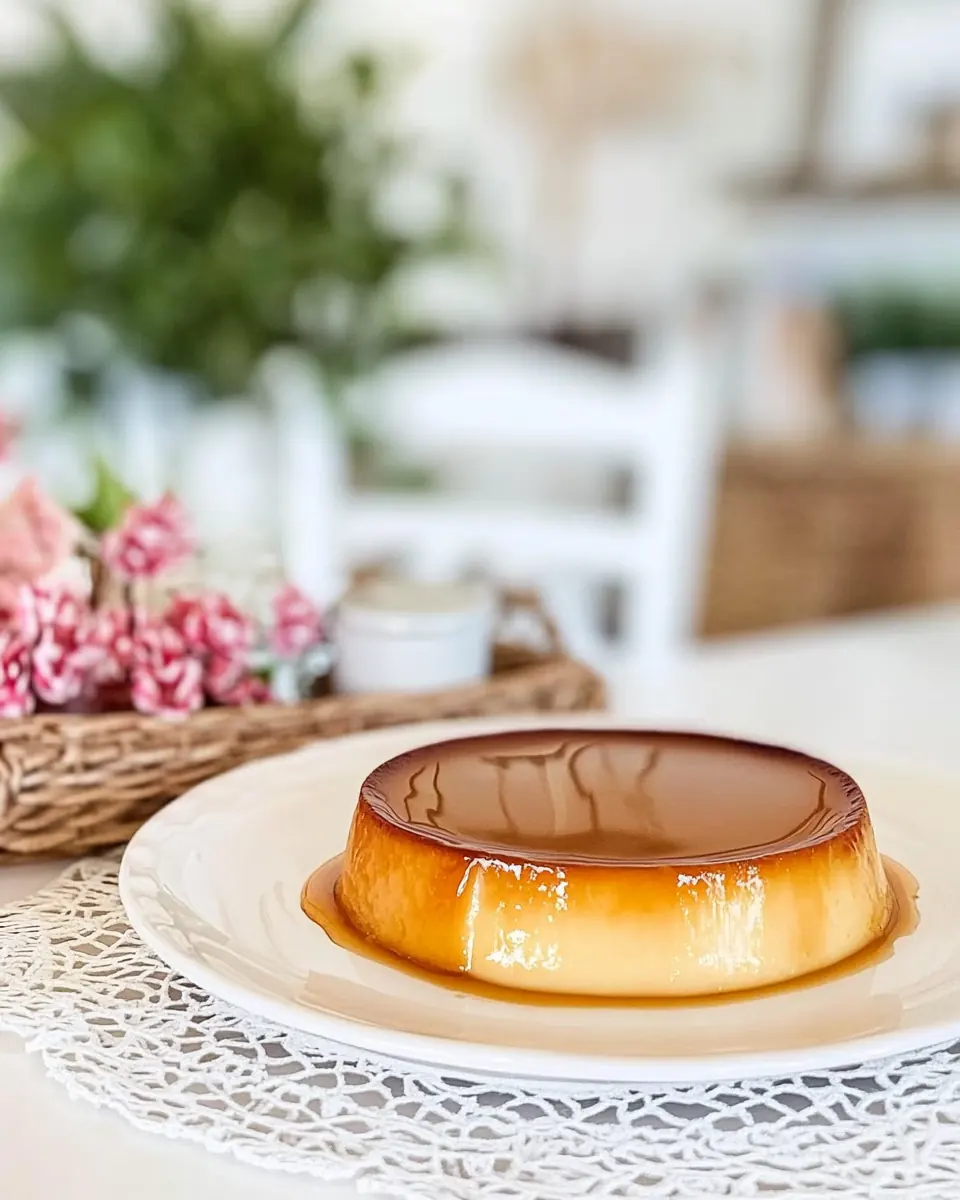
Place a serving plate on top of the mold (one which will retain the syrup) and invert: When you flip the mold, the syrup will cascade over the custard, creating a beautiful glaze and shiny photo worthy surface. Listen for the soft slide as the flan releases, and lift the mold carefully to avoid drips. If it sticks, tap the bottom or run a warm towel briefly around the pan to loosen the caramel’s hold. Serve immediately or keep chilled until plating.
Serve still chilled: The cold temperature enhances the custard’s texture and holds the syrup in place, each forkful offering a cool, creamy contrast to the warm memory of caramelization. Place slices on plates that can catch excess syrup, and enjoy the combination of textures and flavors. If the syrup has become too hard in the fridge, let the plated slice sit a minute so the caramel softens into a luscious sauce.