Preheat oven to 375°F. Grease and flour the bottom and all the way up the sides of an 8-inch cake pan. Use a parchment round or cut parchment to fit the bottom of the cake pan and then grease and flour that.: Warmth from a correctly heated oven creates the rapid set that yields the cake’s crisp top and fudgy center, you should notice a gentle steady heat when you open the oven, not a blast of heat that will shock the batter. The smell of a properly preheated oven is faintly warm and clean, not hot or smoky. Greasing and flouring the pan and lining it with parchment prevent sticking, ensuring smooth release when you invert; if you skip this you risk tearing the delicate crust when unmolding. A common mistake is using too much flour on the pan which can leave a sandy edge, so tap out excess flour after turning the pan. Also make sure the parchment sits flat so the cake bakes evenly.
Place eggs in a small bowl and whisk to lightly beat them. This is just to break up the yolks so it’s easier to mix into the cake batter. Set aside.: You will feel the eggs become slightly frothy and glossy as air incorporates, and the aroma is neutral but fresh; this small step helps integrate them smoothly into the warm chocolate emulsion. Whisking briefly prevents streaks of egg white or yolk in the batter which can affect texture, and it shortens the time needed to combine, reducing the risk of over mixing later. Avoid overbeating until they are fluffy, which would change the cake’s intended dense profile; a quick whisk to homogenize is all that is needed. If you notice any fragments of shell, remove them now to avoid unpleasant crunchy bits in the finished cake.
We’re going to melt the chocolate over a double boiler. Fill a small or medium saucepan with 2-3 inches of water. Cover and bring to a boil over medium heat.: The steam under the bowl will gently warm the chocolate and butter , producing a glossy melt without scorching, and you may smell the warm, faintly sweet aroma of chocolate as it softens. Using a double boiler gives you precise control versus direct heat, which can burn chocolate and ruin texture. A typical error is letting steam condensate drip into the chocolate, which causes seizing; keep the bowl clear of water and lower the heat if the water boils too vigorously. You want a steady simmer, not a rolling boil, to maintain stable heat transfer.
Break up the baking chocolate and add it to a large heat-safe bowl (be sure your bowl will fit on top of the pan that’s boiling on the stove). Add the butter with the chocolate and place the bowl on top of the pot of boiling water. Be careful not to burn yourself and not to get any water into the chocolate mixture.: As the chocolate warms, you will see it soften then glide into a thick, glossy pool with the sliced butter melting into it, emitting a richly roasted cocoa scent. Stirring encourages even melting and helps the butter emulsify with the chocolate, creating a silky base for the batter. If any water sneaks in, the chocolate can seize into a grainy mess, so wipe the bowl rim and watch for steam. Also be mindful of the bowl touching the water, which concentrates heat and may scorch the mixture where it contacts the bowl.
Reduce heat to medium low and stir almost constantly until the chocolate and butter are smooth and melted.: The mixture will transform from lumpy to completely smooth with a mirror like shine, and the sound is a light, steady whisper of the spoon moving through viscous chocolate. Continuous stirring keeps temperature even and prevents hot spots, producing a uniform emulsion that influences both mouthfeel and crumb. If you stop stirring for long, the chocolate near the bowl bottom may darken and grit can form; keep a gentle, regular motion. If you see any oil separation, remove from heat and whisk vigorously to bring it back together before adding other ingredients.
Remove from the heat and stir in the sugar.: Once off the heat, the warm chocolate absorbs the sugar , lending a faint glossy graininess before it dissolves fully into the mix; you can see the sugar disappear as the batter smooths. Adding sugar while the chocolate is warm helps it integrate without gritty texture and promotes the light crust that characterizes this cake. A common oversight is not stirring enough after adding sugar, leaving undissolved granules that change mouthfeel; stir until the surface appears uniform. Letting the mixture cool slightly before adding eggs prevents them from cooking on contact.
Stir the eggs into the chocolate mixture and stir until the eggs are completely mixed in.: At this stage the batter takes on a silkier sheen and a slightly thinner viscosity as the eggs incorporate, and you may notice the aroma become richer and more rounded. Eggs provide structure and a bit of lift, while also contributing to the fudgy center; even mixing ensures no streaks of white remain and that the emulsion is stable. Avoid adding eggs while the chocolate is very hot because that can scramble them, producing a curdled texture. If you sense any small cooked bits, you can pass the batter through a fine sieve, but prevention by cooling the chocolate a touch first is best.
Add the instant espresso and vanilla; stir.: The tiny bit of espresso amplifies the chocolate notes so they feel deeper and more layered, and the vanilla offers a floral warmth that brightens the whole batter. You will see the batter’s color deepen slightly and the aroma become more complex and inviting. These accents are subtle but crucial for a balanced profile; skipping them makes the flavor flatter. Stir just until uniform, and avoid over mixing which can introduce excess air and change the cake’s dense texture.
Place the cocoa in a sifter and sift it onto the cake batter. Stir until completely mixed. Pour cake batter into prepared pan.: Sifting cocoa over the batter prevents lumps and ensures a uniform chocolate intensity in every bite; you will see a fine dusting fall and then melt into the batter as you stir. The batter should appear glossy and evenly colored before you transfer it to the pan, and pouring it should produce a slow ribbon that settles evenly. If you see streaks of unmixed powder, continue folding gently until smooth. Pour carefully to avoid air pockets which can cause uneven rise; tap the pan lightly on the counter to settle the batter.
Bake for about 25 minutes, or until the top looks solid. Mine took 25 minutes exactly at every test, but know that ovens all bake differently.: The oven transforms the batter, forming a thin set crust while leaving the interior tender and slightly jiggly; you may hear a soft, quiet little crack as the top firms. Look for a top that is matte and feels set when you gently press near the center, not a dry crumb. Opening the oven too early can cause the cake to sink, so trust the visual set over an exact time stamp. If your oven runs hot, reduce minutes a bit, and if it runs cool, allow a little more time while watching the top to avoid overbaking.
Cool 5 minutes, then run a butter knife around the edge carefully to loosen. Invert serving plate over the cake pan and carefully flip over to remove the cake from the pan (be careful not to burn yourself). Remove pan and parchment. Allow cake to cool completely.: The cake will release a faintly baked chocolate scent as it cools, and the initial warmth makes it easier to separate from the pan cleanly. Running a knife around the edge prevents the crust from sticking and tearing, which preserves presentation. Inverting while still slightly warm helps the cake come out intact, but handle carefully to avoid steam burns. Allowing it to cool fully sets the interior texture; cutting too soon can cause the center to smear and lose shape.
Store covered at room temperature for up to 4 days.: Stored properly, the cake keeps its fudgy interior and the flavors meld, developing a more cohesive mouthfeel. The smell of stored cake is subtly richer the next day, and small slices are ideal because the cake is intensely flavored. A common mistake is refrigerating it, which can dry the outer crumb and slightly mute flavor; room temperature storage is preferred unless your kitchen is very warm. Keep it covered to protect from drying and from absorbing other odors.
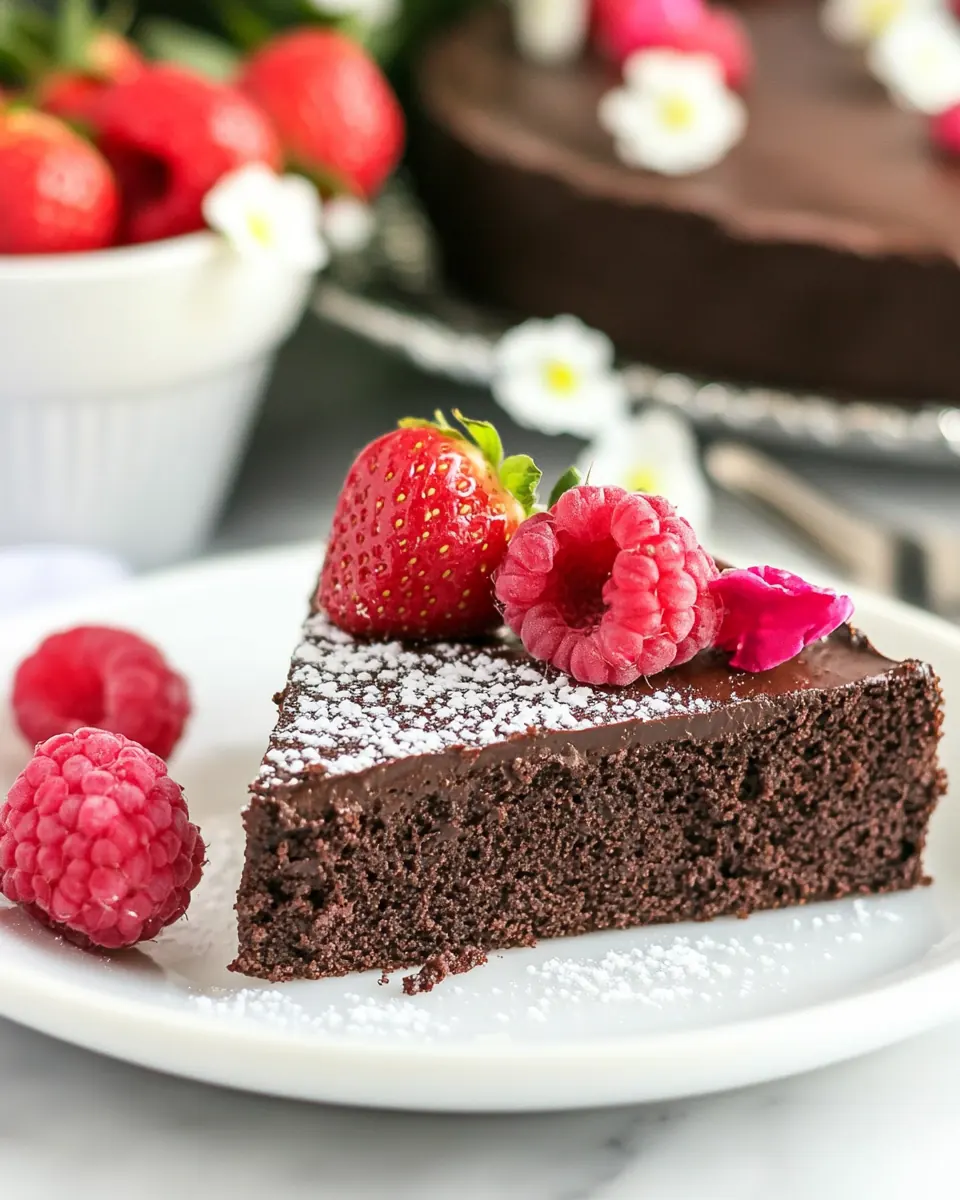
Serving suggestions: dust with powdered sugar and/or cocoa, serve with raspberries or whipped cream.: dust with powdered sugar and/or cocoa, serve with raspberries or whipped cream. : A light dusting of powdered sugar or cocoa adds visual contrast and a whisper of extra sweetness, while fresh raspberries or whipped cream introduce acidity or creaminess that balances the cake’s richness. The textures contrast beautifully, the berries offering a pop and the cream a soft counterpoint. Avoid overpowering toppings; small additions highlight rather than hide the chocolate. If you are serving warm, allow the cake to rest a few minutes so slices hold their shape when plated.