For filling: Peel, core, and cut apples into 1-inch pieces (about 4 cups). Place apples in medium saucepan; add 1/4 cup water, 3 tablespoons sugar, and lemon juice. Bring to boil, stirring occasionally until sugar dissolves. Cover; reduce heat to medium-low and simmer until apples are very tender, stirring frequently, about 12 minutes. Remove from heat. Gently mash apples with fork or potato masher until mixture is very soft but still chunky. Cool completely. DO AHEAD: Filling can be made 2 days ahead. Cover and refrigerate.: Peel, core, and cut apples into 1 inch pieces (about 4 cups) : As you peel and chop, notice the fresh, crisp aroma of the apples , and aim for uniform pieces so they cook evenly. The even size helps them break down at a similar rate, producing a cohesive filling. A common mistake is cutting some pieces too large, which leaves hard centers; keep them around 1 inch. Use a sturdy knife and a steady cutting board to keep the process safe and efficient.
Position 1 rack in top third and 1 rack in bottom third of oven and preheat to 400 degrees F. Line 2 baking sheets with parchment paper.: When the apples hit the saucepan with the water and sweeteners, you will hear a gentle hiss as the moisture warms. The small amount of liquid prevents sticking while the sugar begins to dissolve into the fruit. Stir briefly to combine, and ensure the lemon juice coats the pieces to keep color and lift acidity. Avoid adding too much water, which can make the filling watery instead of tender and concentrated.
For pastry: If using 14-ounce package (1 sheet), roll out pastry on lightly floured surface to 15-inch square. If using 16-ounce package (2 sheets), stack sheets together and roll out on lightly floured surface to 15-inch square. Cut pastry into nine 5-inch squares. Place 1 generous tablespoon filling in center of each of 8 squares (reserve remaining square for another use). Lightly brush edges of 1 pastry with beaten egg. Fold half of pastry square over filling, forming triangle. Press and pinch pastry edges with fingertips to seal tightly. Lightly brush pastry with beaten egg. Sprinkle lightly with superfine sugar, if desired. Repeat with remaining squares. Using thin, sharp knife, make 3 small slits on top of each triangle to allow steam to escape. Place triangles on prepared baking sheets. Refrigerate until firm, about 15 minutes.: As the mixture reaches a boil, the scent of heated apples and caramelizing sugar will start to fill the kitchen. Stirring helps the sugar dissolve evenly and prevents scorching at the bottom. Reduce the heat promptly after boiling begins; leaving it at a hard boil can cause the edges to brown unevenly. Watch for a steady stream of steam and small bubbling, which signals you can move to the next stage.
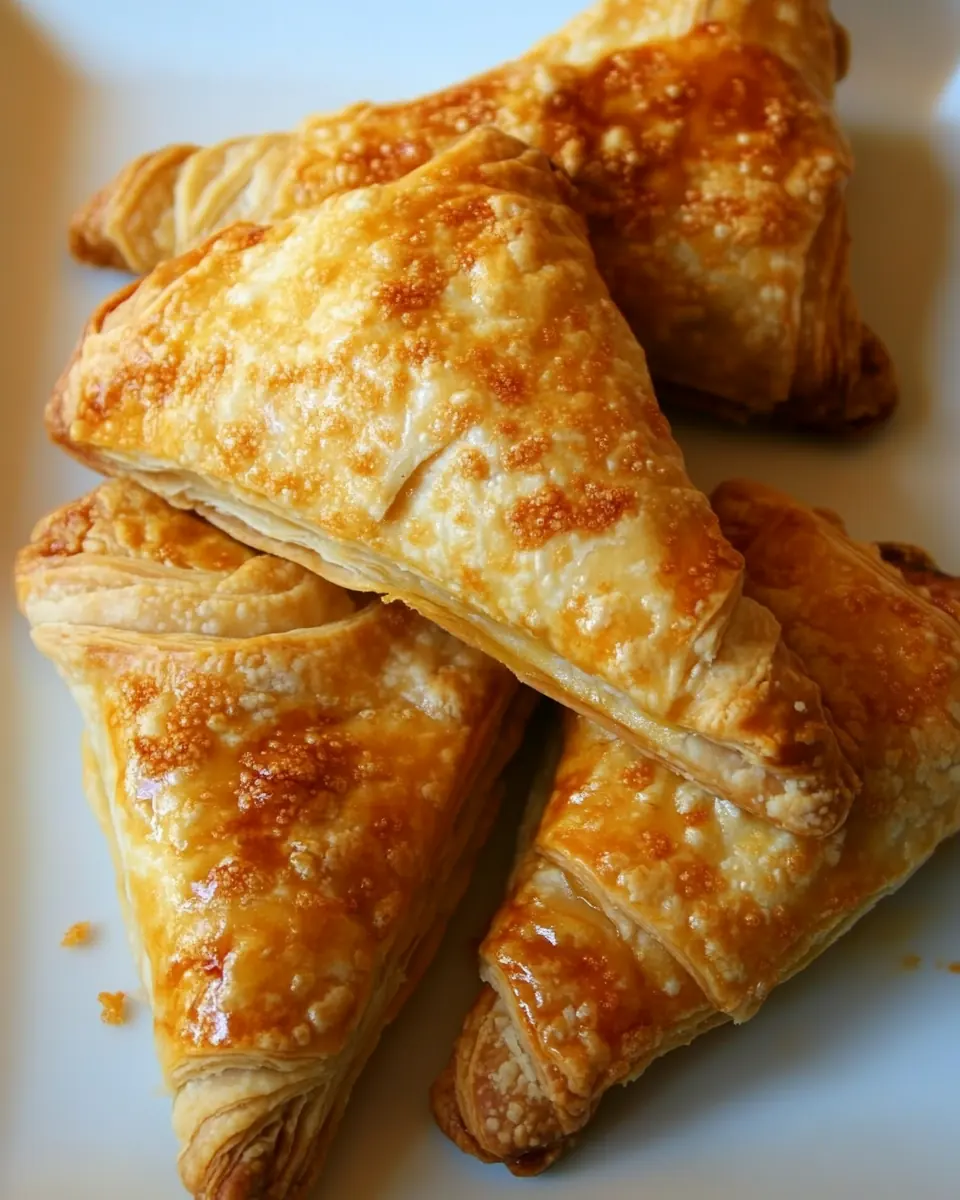
Bake turnovers until beginning to color, about 15 minutes. Reverse baking sheets from top to bottom. Reduce oven temperature to 350 degrees F; continue baking until turnovers are firm and golden, 10 to 15 minutes longer. Cool at least 15 minutes before serving. Serve warm or at room temperature.: During the simmer, the apples soften and the sugars concentrate, creating a jam like texture with visible apple pieces. Stirring frequently prevents sticking and helps the filling develop a uniform tenderness. A pitfall here is leaving the pan unattended, which can lead to hot spots and burning. Trust the timer and the spoon, and aim for a soft, yielding texture rather than complete puree.
Remove from heat: Pulling the pan off the heat stops the cooking instantly and preserves the integrity of the apple pieces, preventing them from becoming gluey. You will notice the steam rise and the mixture settle. Letting it sit too long without cooling can continue residual cooking, so move promptly to the next step of mashing or transferring to a bowl.
Gently mash apples with fork or potato masher until mixture is very soft but still chunky: The gentle mashing creates a filling that is soft enough to scoop yet retains pleasant chunks. Use a fork or masher and press just enough to break down the largest pieces, leaving small bites of apple . Overmashing will yield a paste like filling with less texture, which some people do not prefer. Aim for a balance of smoothness and small fruit bits.
Cool completely: Cooling the filling before assembly prevents steam from making the pastry soggy and helps it hold shape while you fold. Set the bowl in a cool spot or briefly in the refrigerator until it reaches room temperature. A common oversight is assembling while the filling is warm, which makes sealing harder and can lead to soggy layers; cool thoroughly for best flakiness.
DO AHEAD: Filling can be made 2 days ahead. Cover and refrigerate : This make ahead option is a lifesaver for busy mornings. Chilled filling firms slightly, making it easier to portion onto each pastry square. Be aware that refrigeration can tighten the texture, so bring it back to near room temperature if it feels rock hard before assembly. Labeling the container avoids any confusion in the fridge.
Position 1 rack in top third and 1 rack in bottom third of oven and preheat to 400 degrees F: Setting racks in these positions promotes even browning across two sheets and helps the turnovers color and puff uniformly. The initial high temperature encourages lift and a flaky top. A frequent error is using a single middle rack for both sheets, which can cause uneven baking; use the specified positions and rotate sheets as directed.
Line 2 baking sheets with parchment paper: Parchment gives a nonstick surface and makes transferring turnovers easier while preventing bottoms from overbrowning. The paper also collects any tiny spills without sticking. Skip waxed paper, which can smoke or stick under high heat. Proper lining keeps cleanup simple and protects the delicate pastry bottoms.
For pastry: If using 14 ounce package (1 sheet), roll out pastry on lightly floured surface to 15 inch square : Rolling evens the thickness and aligns the layers for consistent puff. Light dusting of flour prevents sticking without absorbing too much butter from the dough. Overworking the dough warms the butter and collapses layers, so roll with gentle, deliberate strokes and chill if it becomes too soft. Keep the surface and rolling pin lightly floured for control.
If using 16 ounce package (2 sheets), stack sheets together and roll out on lightly floured surface to 15 inch square: Stacking and rolling unifies the sheets into one consistent thickness, which simplifies cutting into equal squares. Handle the stacked sheets with care to avoid compressing the layers too much. If the dough feels tacky, chill briefly; a cooler dough yields better lift. Avoid overflouring which can dry the pastry.
Cut pastry into nine 5 inch squares: Precise squares ensure even portions and tidy triangles when folded. A ruler or a bench scraper helps you measure quickly. Too small squares will yield scant filling, while squares that are too large change baking time, so aim for even 5 inch pieces. Keep the scraps chilled to reroll later if desired.
Place 1 generous tablespoon filling in center of each of 8 squares (reserve remaining square for another use): Centering the filling prevents leaks and keeps edges free for sealing. A generous tablespoon gives a satisfying pocket without overstuffing, which could cause bursts while baking. Overfilling is a common cause of leakage, so measure portions to maintain tidy turnovers.
Lightly brush edges of 1 pastry with beaten egg: The egg acts as glue and gives a beautiful golden sheen, promoting a strong seal. Use a small brush and a light coating to avoid runoff into the filling. Too much egg can make the edges soggy, so a thin, controlled application is best for a reliable seal.
Fold half of pastry square over filling, forming triangle: Folding into a triangle traps steam and creates a neat pocket. Align corners carefully so the pastry layers meet cleanly. Press with fingertips to start the seal, then crimp as directed. Misalignment can cause uneven baking or leaking, so take a moment to match the layers precisely.
Press and pinch pastry edges with fingertips to seal tightly: A tight seal keeps the filling contained and helps the turnover rise evenly. Use firm, even pressure along the seam, and check for any gaps. If steam escapes through gaps, the turnover may flatten or leak, so double check the edge for a continuous seal.
Lightly brush pastry with beaten egg: A second light egg wash adds shine and encourages a deep golden color on the pastry surface. Brush with smooth strokes and avoid pooling along seams. Overbrushing can create burnt shiny spots, so aim for an even finish that enhances browning during the bake.
Sprinkle lightly with superfine sugar, if desired: A dusting of superfine sugar gives sparkle and a tiny crunch on the surface, especially nice when serving warm. Use sparingly to prevent excessive caramelization and potential burning in the oven. If you prefer a more rustic look, omit the sugar for a plain golden finish.
Repeat with remaining squares: As you repeat the process, the rhythm becomes quick and efficient, and your turnovers will look uniform. Keep the assembled pieces on the prepared sheets with space between them for expansion. A common misstep is crowding the pans, which can inhibit proper airflow and lead to less even browning.
Using thin, sharp knife, make 3 small slits on top of each triangle to allow steam to escape: The slits act as vents so steam leaves without tearing the pastry, and you will see gentle wisps of steam escape during baking. Place slits in a consistent pattern for a professional look. Avoid cutting too deep which can let filling run out, instead make shallow, confident cuts.
Place triangles on prepared baking sheets: Arrange the turnovers with space around each so they can puff without touching. If you have two sheets, place them on the two racks prepared earlier to manage heat distribution. Overlapping or crowding will inhibit rise and cause uneven baking.
Refrigerate until firm, about 15 minutes: A short chill firms the butter in the pastry and helps the turnovers hold shape when they hit the hot oven, encouraging better lift and flakiness. Fifteen minutes is usually enough; longer chilling is okay if your kitchen is warm. Do not skip chilling, as warm dough can spread too much and produce a denser crust.
Bake turnovers until beginning to color, about 15 minutes: In this stage you will notice the pastry expanding and the edges taking on a pale golden hue. The initial high heat jumpstarts the rise, creating layered flakiness. Keep an eye on the edges for the first signs of color, and be ready to rotate sheets to ensure even browning. Leaving them too long at this stage risks overdarkening before the centers finish.
Reverse baking sheets from top to bottom: Swapping sheet positions evens out heat exposure, especially when baking on two racks. This small rotation prevents one tray from browning faster than the other. Do this carefully to avoid jostling the turnovers, and use an oven mitt to protect your hands from the hot pans.
Reduce oven temperature to 350 degrees F; continue baking until turnovers are firm and golden, 10 to 15 minutes longer: Lowering the temperature allows the pastry centers to cook through gently while the exterior reaches a rich golden color. You will hear a faint, steady crackle as the layers set and smell the caramelized apples. A pitfall is keeping the oven too hot, which browns the exterior before the interior sets; the reduced temperature helps prevent that.
Cool at least 15 minutes before serving: Cooling lets the filling finish setting so it is less likely to spill when bitten. The pastry will crisp slightly as it cools, and flavors mellow into a perfect balance. If served too hot, the filling can be runny, and the pastry may tear; patience here rewards you with tidy, delicious turnovers.
Serve warm or at room temperature: These turnovers taste wonderful both ways, warm for maximum comfort and at room temperature for easy transport or buffet style. Warm turnovers offer a softer filling and an irresistible aroma, while room temperature ones are firmer and travel friendly. Choose based on your occasion and enjoy the flaky layers with the soft fruit inside.