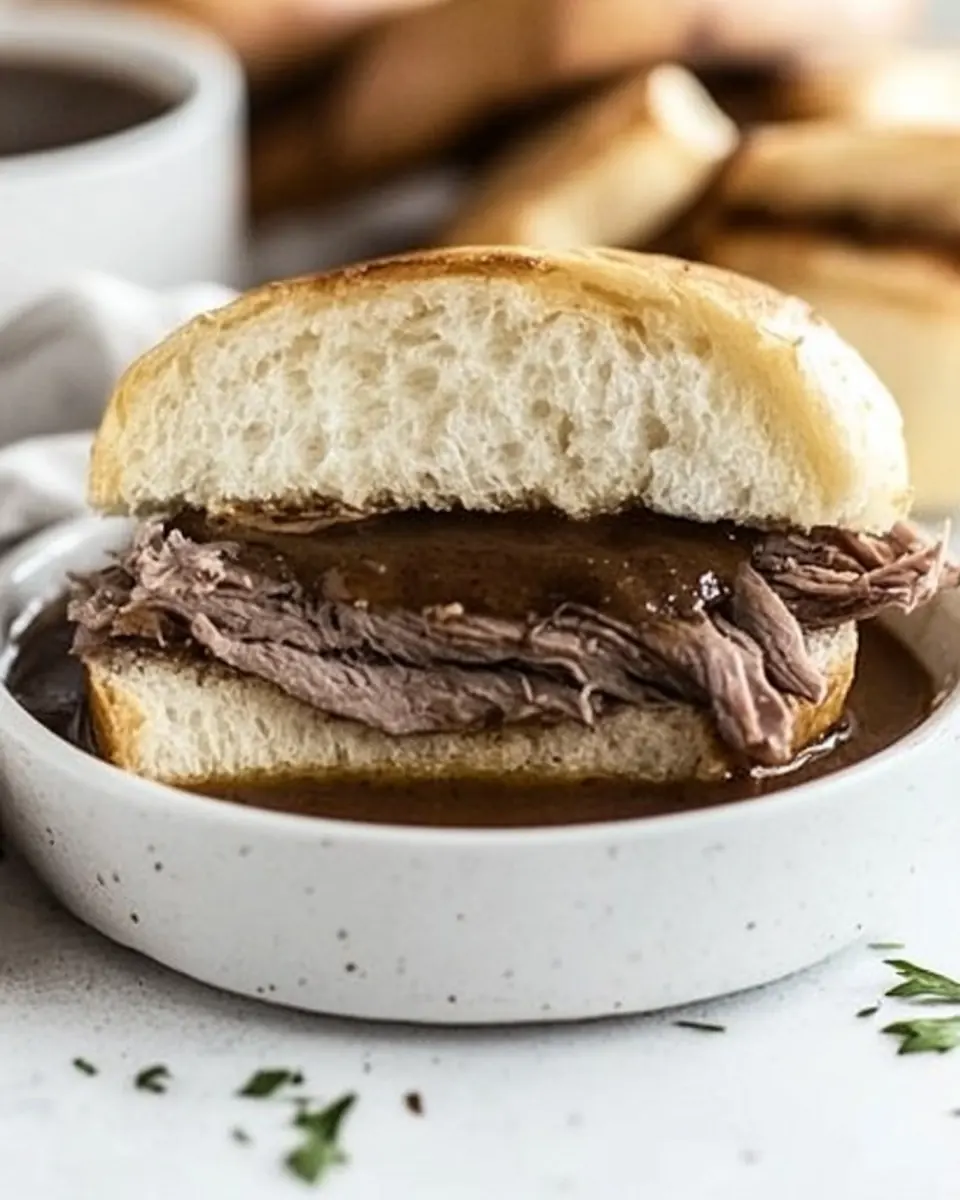
Start by heating the au jus in a saucepan over low to medium heat until hot.: The moment the au jus begins to shimmer and you see wisps of steam rising, the kitchen will smell intensely savory, almost meaty and comforting. You want a gentle movement on the surface, not a rolling boil, so the flavors concentrate without evaporating too quickly. This gentle heat keeps the juices glossy, and when you dip bread they will cling rather than run off in a thin stream. A common mistake is overheating to a boil, which can reduce the depth and become watery, so keep the flame moderate. The reason for this technique is to preserve the body and seasoning of the au jus so every dip yields a concentrated flavor hit, and if bits of fat rise, spoon them off to keep the surface clean.
If you are slicing the roast beef yourself, you can use a sharp knife, a mandolin, or a meat slicer. I prefer the roast beef to be thickly sliced for this sandwich.: When you slice, there is an audible, clean sound as the blade moves through the meat, and the edges should look smooth rather than ragged. Thick slices offer a meaty bite that holds up to dipping, making the texture more interesting against the soft roll. Always chill the roast beef slightly for cleaner slices if you are using very thin blades, and remember a blunt knife will tear fibres, producing a less pleasant chew. The 'why' here is simple, thicker slices retain juiciness and give the sandwich presence, and a frequent error is slicing too thin which causes the meat to lose its character when warmed.
The sliced beef should be warm before serving. However, if it is cold, then you will want to add some slices to the hot au jus to heat it up until warm.: The warming step releases meaty aromas and creates a steam that blends with the au jus , signaling readiness. As the slices meet the hot liquid they soften slightly and take on extra flavor, and you will notice a small shimmer on their surface as they reheat. A practical trick is not to leave the meat in the liquid too long, or it will over soften. The purpose is to ensure the meat is inviting and melds with the dipping juices, and the main pitfall is leaving cold slices on the counter which deliver a discordant temperature in the sandwich.
Dip the bottom part of the French roll into the hot au jus.: As you lower the roll into the au jus , you should see the liquid soak in and darken the interior crumb, and a faint steam will rise from the bread edge. The roll should absorb just enough to be savory without collapsing, so watch for the moment the surface becomes glossy but still holds structure. Pressing too long will make the interior mushy, so a quick dip often does the trick. This rapid dunk is crucial for flavor layering, and many novices either under-dip for lack of taste or over-dip and end up with a soggy, unpleasant texture.
Next, drop the top sliced part of the French into the au jus.: Dipping the top creates a uniform flavor profile and gives each bite a balanced mix of bread and savory liquid. You will hear a small sigh as the liquid soaks into the soft interior, and the crust darkens slightly. Make sure you are gentle to avoid tearing the roll, and time the dunk so both halves are warm together when stacked. The reason behind this step is harmony, ensuring both sides of the sandwich carry the same depth of flavor, and a common error is warming only one side which yields an uneven taste experience.
Stack several slices of the hot beef onto the sandwich. At this point, you can also add on your condiments, sauce, or cheeses.: Layering multiple slices creates that luxurious, meaty bite that defines a great French Dip . As you build the stack, the heat from the meat will begin to gently melt the provolone , which should gloss and drape across the edges of the meat. Pay attention to balance so the sandwich does not become top heavy, and consider placing cheese adjacent to the meat rather than directly on the roll to encourage even melting. A frequent mistake is over stuffing, which makes the sandwich hard to manage and can mask the nuanced flavor from the au jus . This step matters because layering creates mouthfeel contrast and lets each element play its role in every bite.
Slice the sandwich and serve with assorted toppings, cheeses, sauces, and hot au jus.: When you slice, the interior should look steamy and inviting, with melted provolone pulling slightly between layers. Serve quickly while the steam is still rising, and present the warm au jus beside the sandwich for dipping. The cut should be clean and the roll should hold the filling without collapsing, offering a satisfying presentation. A common oversight is letting the sandwich sit too long after assembly, which cools the components and flattens the textural contrasts. The objective is to serve at peak warmth so the flavors and textures are at their most compelling.