Heat oven to 425° (F). Line a large baking sheet with parchment paper; set aside.: As the oven comes to temperature you can notice a faint warmth spreading through the kitchen, and the ready baking sheet gives you a place to set the scones without delay. Preheating is important because a hot oven encourages immediate steam and lift, producing a tender interior with a golden exterior. A common mistake is putting scones into an oven that is not fully preheated, which can make them dense. Make sure the oven reaches the full 425° (F) before you slide the tray in.
In a large bowl, mix flour, salt, baking powder, baking soda, sugar, and zest.: The dry mix should look uniform, and when you stir in the lemon zest you'll catch its citrus aroma, which is a good sign that flavor is distributed. Mixing the leavening and dry ingredients evenly ensures even rise and consistent texture. Avoid overworking the dry ingredients with vigorous beating, which can make the final scones tough.
Cut the butter into small cubes then work it into the mixture (using your fingers) until it resembles a coarse meal.: When you rub the cold butter into the flour, aim for a texture like coarse cornmeal with some pea sized bits. Those small chunks melt during baking and give flakiness. If the butter warms too much, it will dissolve and the scones will lose their layered texture. A frequent error is using room temperature butter , which prevents proper flakiness.
In a small bowl, whisk together the egg, cream, and lemon juice, then add to flour and butter. Use the fork to stir everything together until just moistened.: This wet mixture should look glossy and slightly thick, and when folded into the dry ingredients it will bring the dough together without becoming sticky. You're aiming for pockets of dry crumbs amid a moistened dough, which helps keep the texture tender. Overmixing here will activate gluten and yield denser scones, so stop as soon as the dough holds together.
Add strawberries and gently stir into dough. Don’t worry if some of the berries break up a bit or don't stick in the dough; just shove them back in.: As you incorporate the strawberries , you will smell their sweetness and see flecks of pink spread through the dough. Gently folding prevents the berries from turning to mush and keeps bright bursts of fruit. A common misstep is stirring too vigorously, which can bleed color and moisture into the dough, making it soggy.
Empty the loose dough out onto a clean, floured work surface, then shape the dough into an 8-inch circle.: As you press the dough into a circle, you should feel it come together under gentle pressure; it should be slightly shaggy but cohesive. Light flour prevents sticking and helps you shape without compressing the dough. If you press too firmly while shaping, the scones will become compacted and lose tenderness.
Cut the dough into 8 wedges and carefully transfer to the prepared sheet.: When you cut the wedges, use a sharp knife and press straight down to keep edges tidy. Transferring with care preserves the rise and avoids distorting the wedges. If you drag or twist the wedges, edges can smear and the scones may bake unevenly, so lift each piece gently onto the sheet.
Lightly brush each scone with the egg wash, then sprinkle the top of each scone with sugar.: The egg wash should be thin and glossy; brushing it on gives a golden sheen and helps the sparkling sugar adhere. You'll notice the surface become satin smooth before the sugar adds sparkle. Brushing too much egg wash can cause pooling and an overly dark crust, so use a light hand.
Bake for about 18 to 20 minutes, or until light golden brown.: As they bake you'll hear a faint hush from the oven and then the scent of butter and lemon will fill the room. Look for lightly golden edges and firm tops; an internal tenderness should remain. Underbaking leaves a raw center, while overbaking dries them out, so check toward the end of the time and trust the color and a gentle press for doneness.
Cool for about 10 minutes, then make your glaze.: Cooling allows the crumb to set and juices from the strawberries to redistribute, which helps the scones hold their shape when glazed. Ten minutes is enough to be warm but not hot, perfect for glazing. Glazing too soon can cause the icing to melt and run off, so let them rest a bit before drizzling.
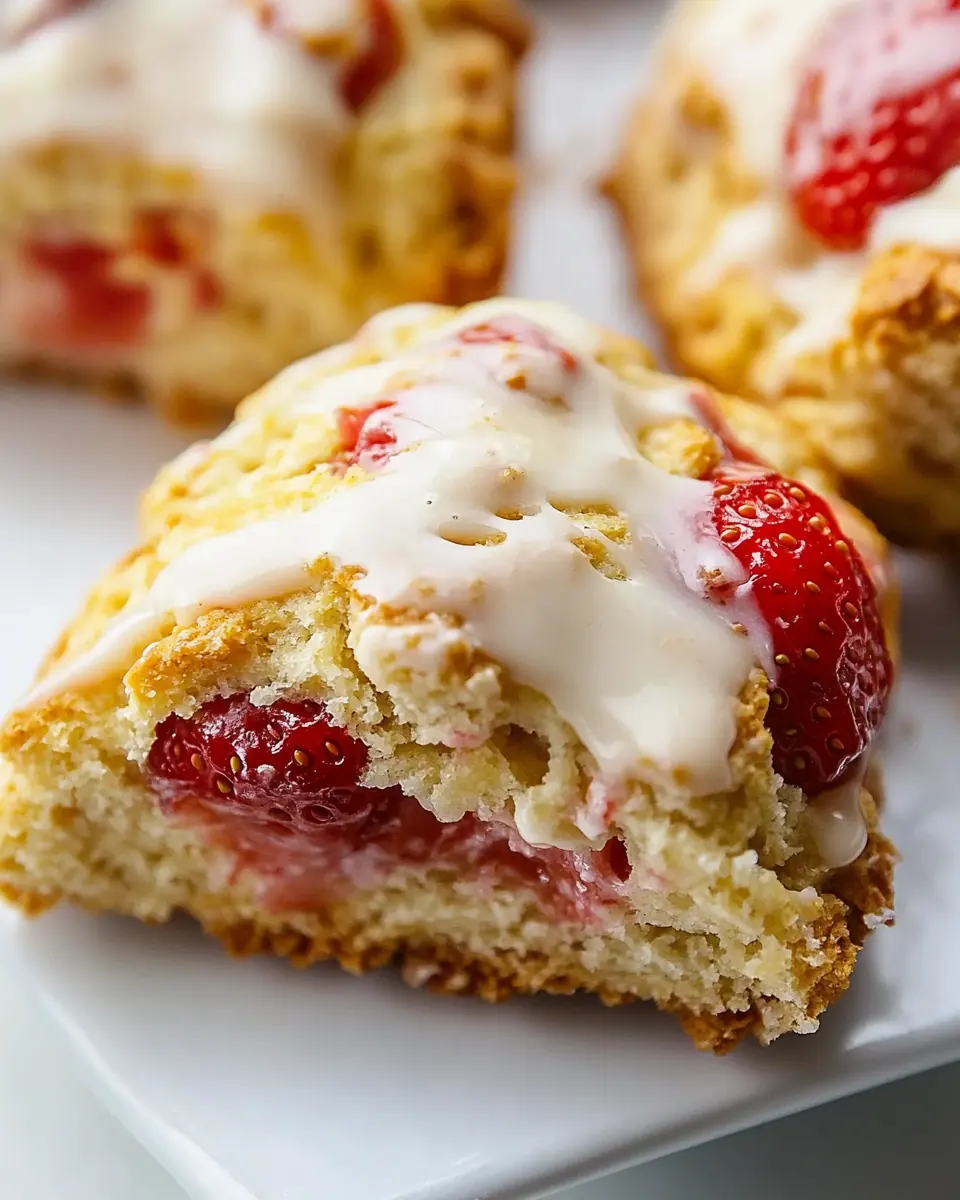
In a small bowl whisk together the lemon juice and confectioners sugar. Drizzle over warm scones and serve at once.: The glaze should be smooth and pourable, clinging to the scones and leaving a glossy sheen with a bright tang. Whisk until lump free and drizzle in thin ribbons for a pretty finish. If the glaze is too thin, add more confectioners sugar , and if too thick, add a touch more lemon juice . A common issue is adding too much liquid, which makes the glaze runny and pale in flavor.