Cook quinoa: Rinse and cook the quinoa according to package instructions. I combine 3/4 cup rinsed quinoa with 1 1/4 cup water in a small saucepan. Then lightly simmer (covered) for about 15 minutes or until water is absorbed.: The pan releases a gentle steamed scent as the quinoa simmers, with tiny pearls swelling and separating. You will notice the surface become still when the water is absorbed, and the grains should look translucent with a thin white ring on each one. This method yields light, distinct grains that hold dressing rather than turning mushy, which is why rinsing before cooking is important to avoid any residual bitterness. A common mistake is overcooking, which creates gummy texture; keep the heat low and resist stirring too much. If the quinoa seems underdone, keep it covered off heat for a few minutes to finish steaming.
Make the sauce: While the quinoa cooks, make the peanut sauce. (Use more or less water to thin it to your desired consistency for this salad.): Warm, nutty aromas open up as you whisk the Peanut Sauce , and the texture should be smooth and glossy. Adjusting the water changes mouthfeel, so thin gradually until it coats ingredients lightly. The reason this matters is a thinner sauce penetrates the grains and vegetables more evenly, while a thicker sauce sits on top for bolder bites. One trap to avoid is adding too much liquid at once, which can leave the dressing too runny; add water slowly and taste as you go. If the sauce tastes flat, a touch more acid brightens it instantly.
Prepare veggies: Thinly slice or shred cabbage, grate carrot, thinly slice or dice bell pepper, slice green onions, and roughly chop cilantro (stems removed). Place in a large mixing bowl.: The act of slicing and shredding releases crisp, vegetal scents, and you will see a pleasing rainbow of color build in your bowl. Thin ribbons of red cabbage and slivers of red bell pepper give visual contrast and a satisfying snap, while grated carrot offers small sweet bursts. Prepare them uniformly so every forkful combines the textures, which is key to balanced bites. A frequent error is cutting pieces unevenly, which leads to uneven textures; take a moment to slice consistently. If the vegetables seem watery, pat them dry to avoid diluting the dressing.
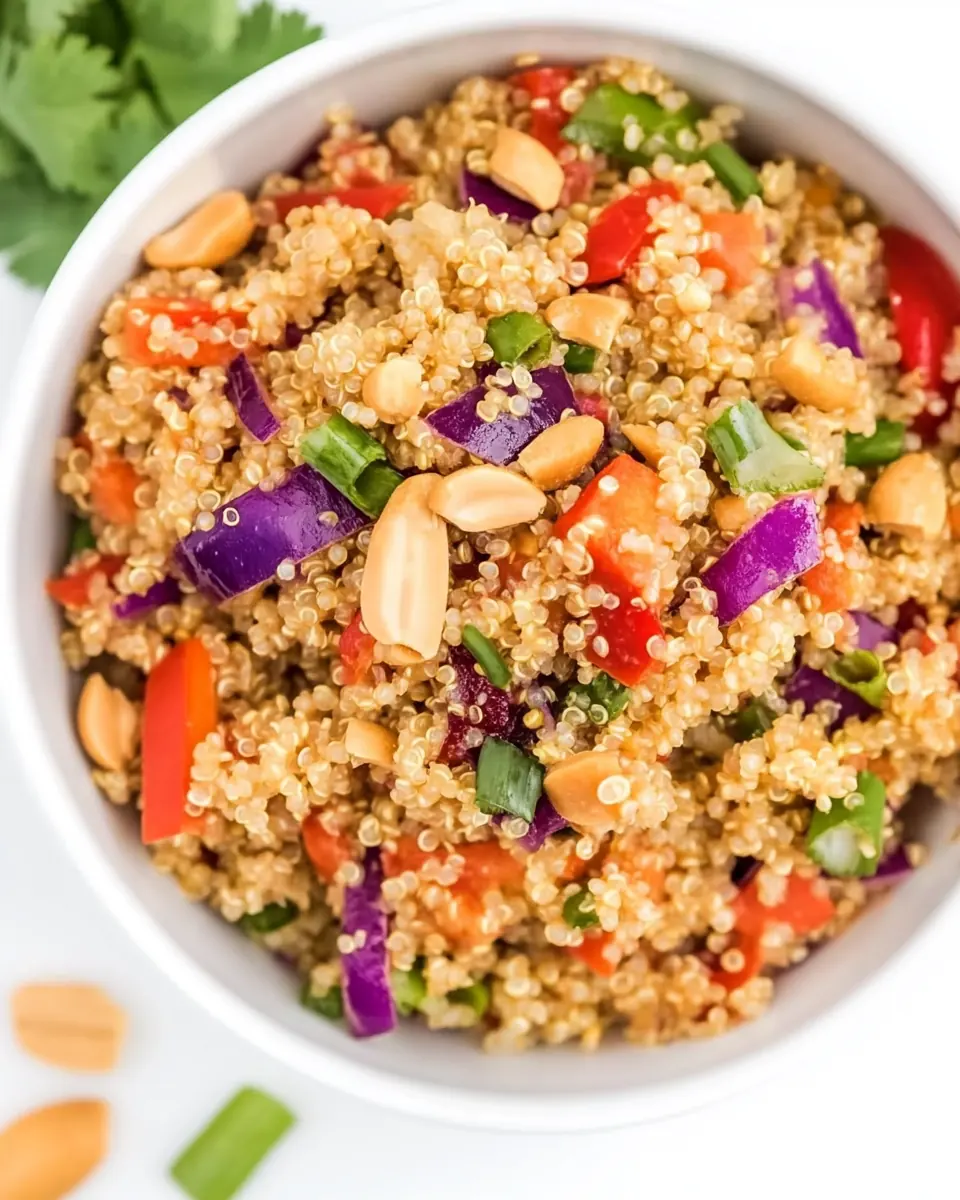
Assemble: Add cashews (and/or peanuts) and cooked quinoa to the large bowl. Add dressing and toss well to combine. Top with more nuts or cilantro if desired.: Warm, nutty notes from the quinoa mingle with the bright aromatics as you add the cashews and pour in the Peanut Sauce . Tossing should be gentle so the grains remain separated while the dressing coats each piece, and you will notice the salad glint slightly where the sauce meets the surface of the vegetables. This step matters because even distribution ensures each bite is harmonious, rather than some bites being dry and others overwhelmed. Avoid overdressing, which makes the salad soggy; instead, start with less and add more if needed. If the salad tastes flat after tossing, a squeeze of lime or a pinch of salt can lift the flavors right away.