Remove the ends and peel the onion.: The aroma at this stage is clean and vegetal, with a faint sulfur edge that fades as you slice. Properly trimmed onions give even rings that separate easily, which matters for uniform frying. A common error is leaving root ends intact, which holds layers together and prevents the slices from separating into individual strands.
Thinly slice it using a mandolin. They should be almost translucent.: The sound of the blade is steady and precise, and the resulting slices look delicate and paper thin. Translucent slices fry quickly and develop a lacy, crisp texture. If the slices are uneven, they will cook at different rates, so steady, consistent pressure on the mandolin is key. Keep fingers safe with the guard to avoid injury.
Next, in a deep bowl or cake dish, whisk together the buttermilk, egg, salt, and pepper until combined. Set it aside.: The wet mixture smells tangy and rich once the buttermilk and egg come together. This bath helps tenderize the onion edges slightly and ensures the flour adheres. If you skip the rest period you risk uneven adhesion, so let it rest briefly for cohesion.
In a separate deep bowl or cake dish, mix the flour with the southwest seasonings. Set it aside.: The aroma of the spices blooms when combined with the flour , promising a savory crust. This dry mix needs to be well blended so every piece gets consistent seasoning. Pockets of unblended seasoning will cause some bites to be overpowering, so whisk thoroughly.
Fill a medium-sized pot of oil filled to the halfway mark to 350°.: When heated to about 350° , the oil gives a steady sizzle and a faint shimmer on the surface. This temperature crisps the coating quickly without burning it. Use a thermometer to maintain accuracy because oil that is too hot will darken the crust while leaving the inside undercooked, and oil that is too cool will create greasy, oillogged pieces.
Take a handful of the sliced onions and place them in the buttermilk-egg mixture pan and mix until coated.: The slices should glisten and feel slightly heavier as the wet mix clings. The buttermilk bath adds tang and helps the surface become tacky enough for the flour to adhere. If you crowd the bowl you can end up with clumps, so work with small portions for even coating.
Shake off any excess buttermilk and transfer them to the pan with seasoned flour and thoroughly mix until the onions are breaded on all sides.: The tactile feedback is important here, you will feel the flour cling and a faint dustiness on the fingers. Properly dusted slices look evenly pale and slightly textured. Overworking them into the flour can create a thick, cakey layer; instead, gently toss until each slice is coated.
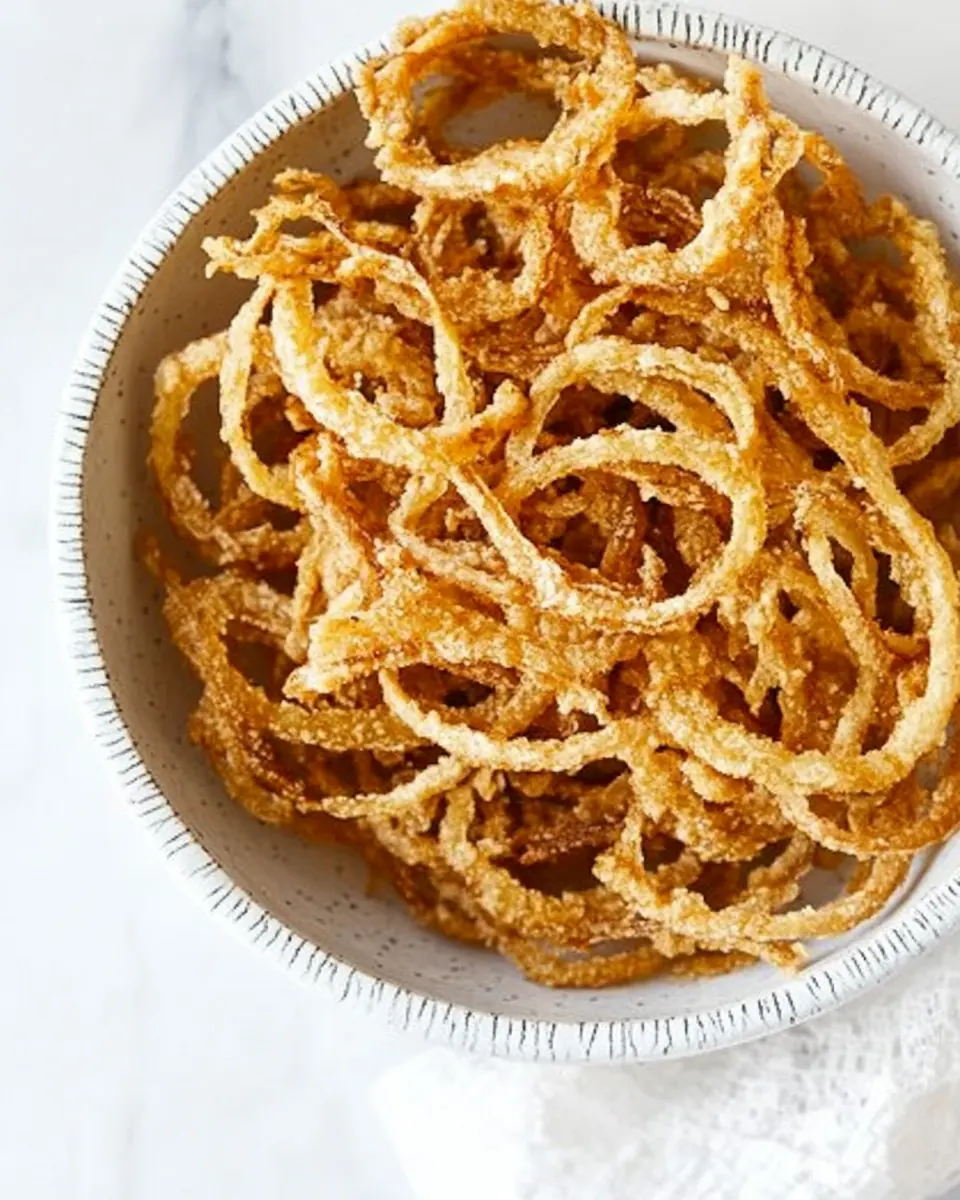
Remove any excess flour and place in the hot oil and fry them for 2 to 4 minutes.: As the slices hit the oil you will hear an eager, lively sizzle, and tiny bubbles will race up the edges. Watch for a golden, amber color as the cue to pull them; this usually appears within about 2 to 4 minutes depending on thickness. Leaving them longer risks a bitter, overly dark crust, so monitor closely.
Using a slotted spoon move the onions around so they don’t clump together and cook evenly.: Gentle stirring prevents clusters and encourages even contact with hot oil. The sound softens as moisture leaves and the pieces separate, and you will notice edges curling and darkening uniformly. If you skip this step the batch may form glued clumps that cook unevenly and trap steam, making them soggy rather than crisp.
Place on a sheet tray with a rack or paper towels and drain any excess oil. Cook in batches.: The moment they leave the oil you will smell caramelized sugars and toasted notes, and the coating sets quickly as they cool. A rack preserves the underside crispness while paper towels absorb excess oil. Crowding the tray will steam the onions and ruin the texture, so arrange in a single layer.
Serve hot or keep warm.: Fresh from the oil the surface crackles beneath your fingers, and the aroma is strong and inviting. To keep them crisp for serving, hold them in a warm oven on a rack rather than stacking them, which causes steam and sogginess. A typical mistake is covering the tray tightly, which traps steam and softens the crust.