Preheat oven to 300 F.: As the oven warms you will notice a faint scent of dry heat, and that steady, gentle temperature encourages a long bake that sets the bars evenly without over browning. Using an oven thermometer helps because many ovens read high or low. A common mistake is setting the oven hotter which leads to edges that overbake before the center sets.
In a bowl, whisk together the flour, baking powder and salt.: You will see the dry ingredients blend into a uniform pale mixture, and whisking aerates the flour slightly which supports an even texture. The small pockets of air created here help create a tender crumb. Avoid overworking or sifting too aggressively, which can add too much air and create a drier result.
In the bowl or a standing mixer, cream together the butter and sugar until light and fluffy, about 3 minutes. Add eggs and vanilla and mix to combine.: When creaming, watch for the butter to become pale and almost whipped, a visual cue that air has been incorporated; you will also hear a smoother, lighter mix. Adding the eggs gradually prevents curdling and creates a cohesive emulsion, resulting in a silkier batter. If you overbeat after adding eggs you may incorporate too much air and the bars can crack or become uneven.
Gradually add the flour mixture to the butter mixture until combined. Fold in the fruit and nuts.: The batter will change from glossy to thicker and more matte as the dry ingredients are integrated, and you should switch to gentle folding when you add the fruit and nuts so they stay suspended without breaking down. Folding preserves the air and avoids overdeveloping gluten, which keeps the bars tender. A common error is mixing too vigorously, causing the fruit to shred or the batter to become tough.
Pour batter into a greased 8 x 8 inch baking dish and bake until golden and set, about 45-50 minutes.: As the pan goes into the oven you will sense the house warming with a sweet, toasty aroma emerging around 25 to 35 minutes, and near the end the top will take on a warm golden hue and a toothpick in the center should come out with a few moist crumbs but not wet batter. Baking low and slow yields even color and prevents the edges from becoming overly crisp while the center finishes. A mistake to avoid is pulling the pan too early; the center will firm as it cools, so err on the side of a few extra minutes if unsure.
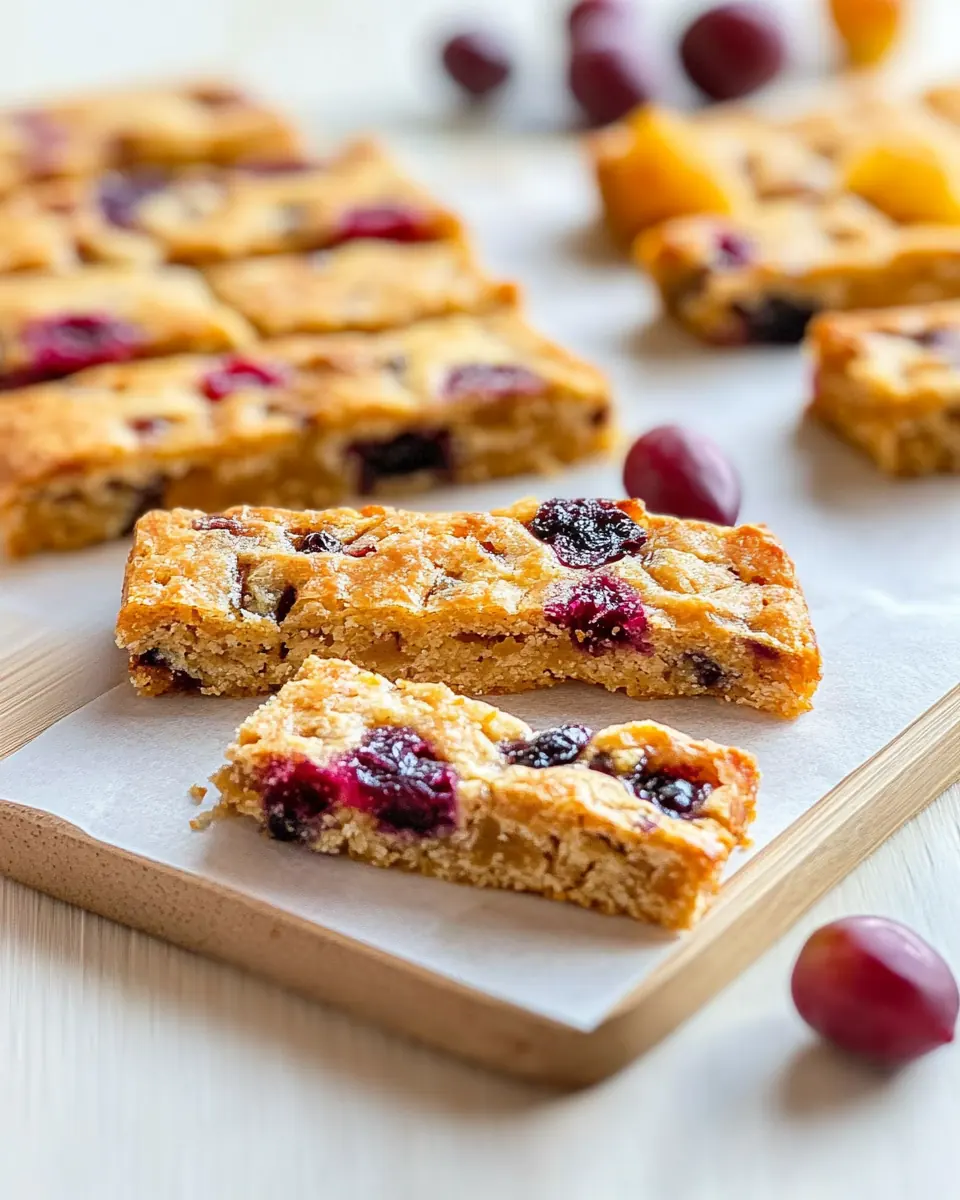
Let cool completely then cut into bars.: Cooling allows the crumb to set and the fruit to redistribute moisture, so slices will be cleaner and the texture will be stable. When the pan is at room temperature, run a knife around the edge if needed and press gently to loosen, then slice with a sharp knife. Cutting while warm can cause the bars to crumble and smear, so patience here yields much neater results.