Thaw bag of hash browns.: The potatoes should be soft to the touch and cold but not frozen, giving a neutral, slightly earthy scent; this ensures they blend smoothly into the creamy matrix without large ice pockets that can make the casserole watery. If the hash browns feel very wet after thawing, gently press them in a colander or between paper towels to remove excess moisture, because too much water prevents the filling from setting. A common mistake is trying to bake frozen potatoes directly, which leads to uneven cooking and a soggy interior. When thawed properly, the pieces separate easily and incorporate uniformly with the other ingredients.
Preheat the oven to 350 degrees F and lightly grease a 9 x 13-inch baking dish.: As the oven warms, you will notice a neutral heat that readies the environment for even browning; greasing the dish adds a subtle buttery aroma and prevents sticking along the edges. Ensuring an accurate oven temperature is important because too hot can brown the top before the center is warmed through, while too cool yields limp topping. One trap is skipping the preheat, which extends bake time and can dry out the edges; wait until the oven reaches the correct temperature before inserting the casserole.
Melt 2 tablespoons of butter in a small skillet over medium heat.: The butter will foam and release a warm, nutty fragrance as the milk solids toast slightly, providing a flavor base for the onion; medium heat gives gentle, even melting without burning. Watch the butter closely, because it can go from browned to burnt quickly, which would introduce bitter notes; if you see brown specks, reduce heat or remove from the pan. This step matters because the butter carries aromatic compounds into the onion, enhancing the overall savory profile.
Add the onion. Sauté for 3-5 minutes until translucent and fork tender.: As the onion softens, it releases sweet, caramel like aromas and loses its sharp edge, producing small, glossy pieces that blend into the potatoes. Stir occasionally so the pieces cook evenly and pick up a faint golden tint; uneven sautéing leaves some raw, crunchy bits. Avoid rushing this step at high heat, because the outsides might brown before the interior softens, giving inconsistent texture and flavor.
Transfer onion to a bowl with the thawed hash browns, soup, cream, shredded cheese, dry mustard powder, garlic powder, salt, and black pepper and stir.: At this point you will notice a creamy, savory mixture coming together, the aromas of cheese and mustard mingling with the softened onion; stirring ensures each potato piece is coated and seasoned. The reason for combining in a bowl is to create an even distribution so the casserole sets uniformly during baking. A frequent error is under stirring, which leaves pockets of unseasoned potatoes or clumps of cheese; mix until the ingredients form a cohesive, slightly glossy mixture that holds together when scooped.
Transfer potatoes to 9×13 dish and spread in an even layer.: Gently pressing the filling into the dish creates contact with the bottom for steady heat transfer, and an even top ensures uniform browning and bubbling; the surface should look smooth but not overly compacted. Avoid piling too high in the center, which can slow cooking and leave the middle softer than the edges. If the layer is uneven, rotate the dish during baking to promote consistent heat exposure and an even finish.
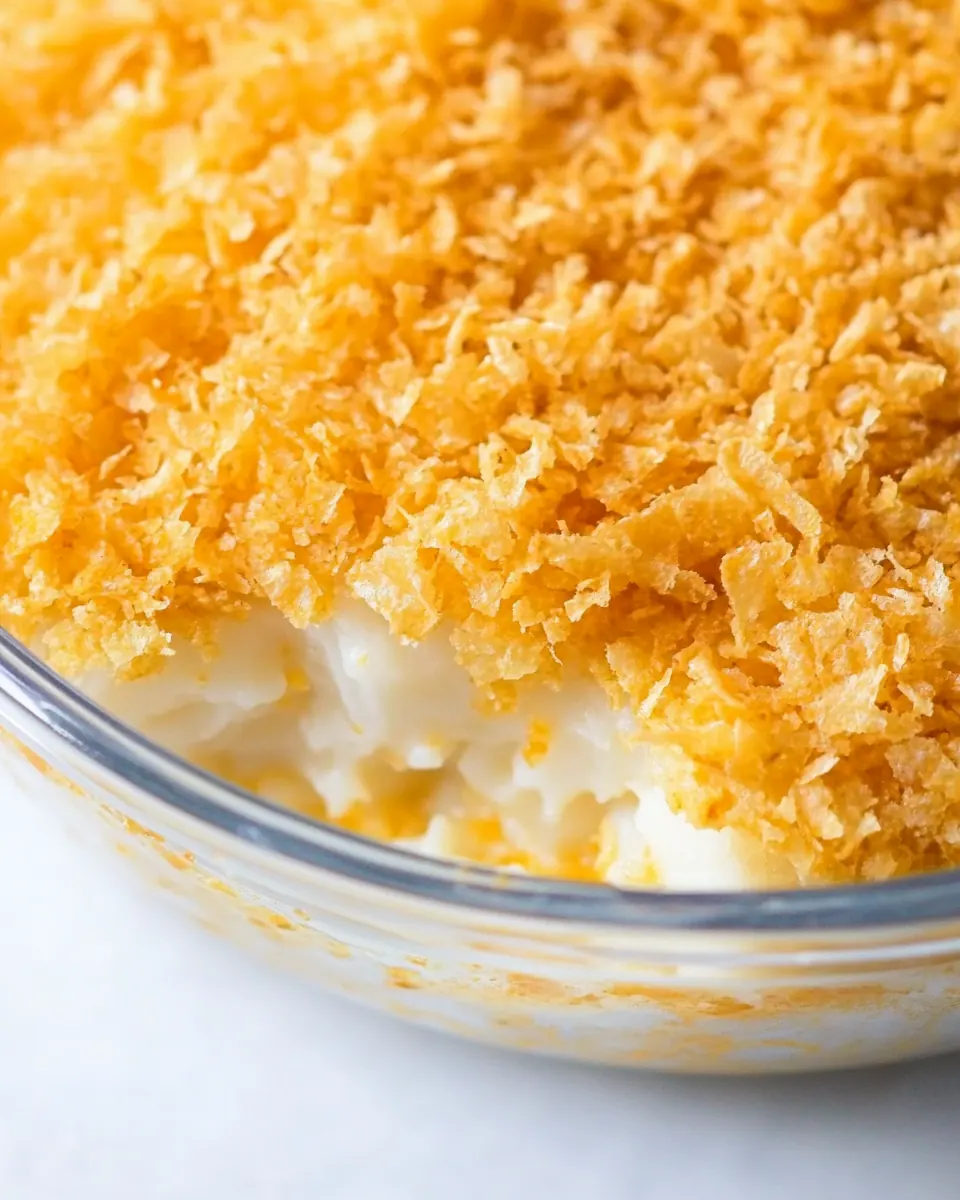
Melt the remaining 3 tablespoons butter. Mix with the corn flakes cereal and sprinkle on top of the potatoes in an even layer.: When the cereal meets warm butter, it soaks up the fat and starts toasting, creating an irresistible toasty scent and a crunchy finish after baking. Toss until each flake is lightly coated and then scatter across the surface so every serving gets some crisp texture. A mistake is adding dry cereal, which will not brown or adhere; ensure the flakes are uniformly moistened to achieve a golden, cohesive crust.
Bake for 30-40 minutes or until golden brown and bubbly.: You will watch the casserole transform, with juices beginning to bubble at the edges and the topping turning a warm golden color; the oven will fill with a rich, savory aroma that signals readiness. Baking long enough allows the filling to thicken and the cheese to melt evenly, producing a creamy interior. Avoid opening the oven frequently, which lowers the temperature and can extend bake time; instead check visually near the end, aiming for an evenly browned top and bubbling sides as cues of doneness.
Best when served warm.: Serving right from the oven offers the ideal contrast between the crisp topping and silky inside, releasing the most aroma and yielding the best mouthfeel as cheese pools gently in each scoop. Let the casserole rest for a few minutes to set slightly, which aids slicing and serving without collapsing. A common oversight is cutting and serving immediately, which can cause the filling to run; a short rest preserves structure while still providing that warm, comforting experience.