Preheat the oven or air fryer to 400ºF/200ºC: As your appliance heats, you should notice a faint warm metallic scent from the oven or a gentle hum from the air fryer, signaling it is reaching temperature. Preheating ensures the surface of the salmon begins to cook immediately, helping the topping set rather than melt away. If you skip this, the fish can cook unevenly and the Furikake may not crisp. One common mistake is not allowing the oven to fully reach temperature; use an oven thermometer if you suspect your unit runs cool.
Let the salmon come to room temperature while the oven heats up.: The salmon will feel slightly cool but not icy when it is ready, and the flesh yields gently to the touch. Bringing it closer to room temperature shortens cooking time and promotes even doneness from edge to center. The sensory cue is a uniform, slightly springy feel across the fillet. Avoid leaving fish out for too long; fifteen to twenty minutes is plenty. A typical error is starting with cold fish, which can lead to an overcooked exterior and underdone center.
Mix the mayonnaise, wasabi, and soy in a small bowl.: As you whisk, the aroma will brighten with a mild tang from the wasabi and a savory note from the soy sauce . This emulsion spreads smoothly and forms the adhesive base for the Furikake . The 'why' is simple, it binds the seasoning and seals moisture in the salmon . A common mistake is adding too much liquid which can make the mixture runny, so measure carefully and taste for balance.
Spread the mixture over the salmon fillets.: When you apply the mixture, the texture changes from glossy to matte as it forms a thin coating. Use the back of a spoon to create an even layer; this ensures consistent browning and seasoning distribution. Proper application prevents bare spots where the Furikake might not stick. Avoid piling it on too thick, which can insulate the fish and hinder proper cooking.
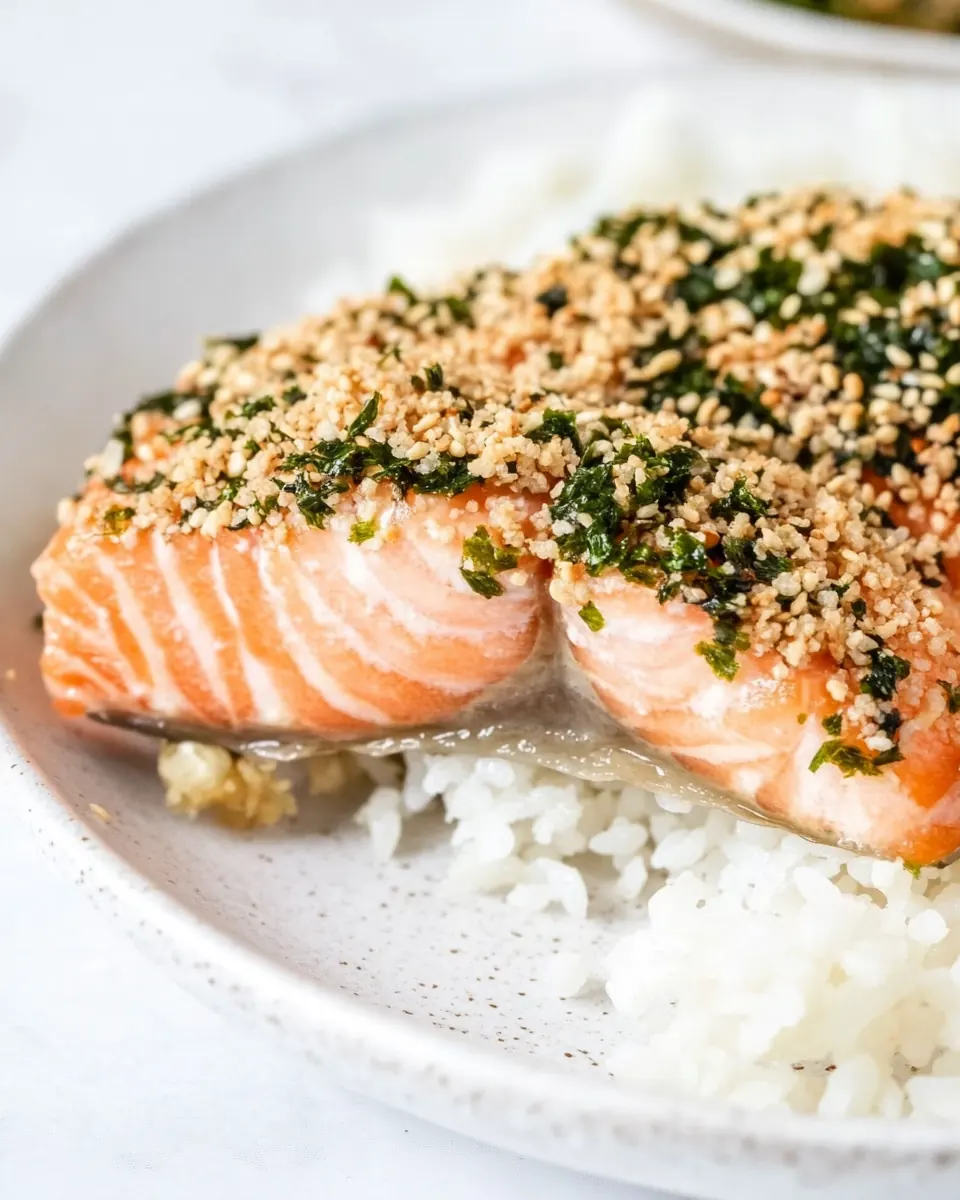
Sprinkle the furikake over the salmon.: As the Furikake hits the coated surface, you should see the colorful flecks cling immediately. This topping brings crunch and concentrated umami, and the visual contrast makes the dish look finished and appetizing. Press lightly so it adheres, but do not bury the mix. A common oversight is uneven sprinkling, which results in bites that vary wildly in flavor.
Line a baking sheet with parchment paper.: Lining the sheet reduces sticking and helps with cleanup, and you may notice the faint papery scent as you smooth it out. It also creates a small air gap that promotes even air circulation under the salmon . If you skip this, the fish may stick and fall apart when lifted. People sometimes use foil instead; parchment is preferable to avoid metallic contact with acidic ingredients.
Place the salmon fillets on the baking sheet and cook in the middle of the oven for 6-8 minutes if you have 4 thin fillets or 8-10 minutes if you have 2 thick fillets.: As the fish roasts, you will see the edges turn opaque and the aroma will become richer and more savory. The timing gives a moist, flaky center while allowing the coating to set. The visual cue for doneness is flakes that separate easily when prodded gently with a fork and a consistent opaque color through most of the fillet. Avoid overcooking, which yields dry texture; check at the earlier end of the range if your fillets are thinner than average.
Line the air fryer basket with a square of parchment paper or a store-bought liner.: The liner should sit flat and allow air to circulate around the salmon . You will notice a subtle difference in how the air fryer crisps the coating versus the oven, often achieving a slightly quicker browning. Proper lining prevents sticking and makes cleanup faster. Do not block vents or crowd the basket, which can cause uneven cooking and a soggy surface.
Place the salmon fillets in the basket with space between them. Cook for 6-8 minutes if you have 4 thin fillets or 8-10 minutes if you have 2 thick fillets.: When arranged with breathing room, hot air circulates freely, producing even crisping on the exterior while maintaining a tender interior. You should hear a soft sizzle as the hot air interacts with the coating. Crowding is the most common mistake here, leading to steaming rather than crisping. Keep pieces separated by at least a finger width for the best result.
Cook for 6 to 8 minutes if you have 4 thin fillets or 8 to 10 minutes if you have 2 thick fillets: During this final cook, watch for the coating to turn slightly toasted and the salmon to become opaque nearly through. The aroma shifts to a toasted nutty note from the Furikake , and the surface gains a slight resistance when pressed. This timing aims for a juicy interior and a texturally interesting top. A frequent error is relying solely on time instead of visual and tactile cues; use a fork to check flakiness at the lower end of the range to avoid drying out.