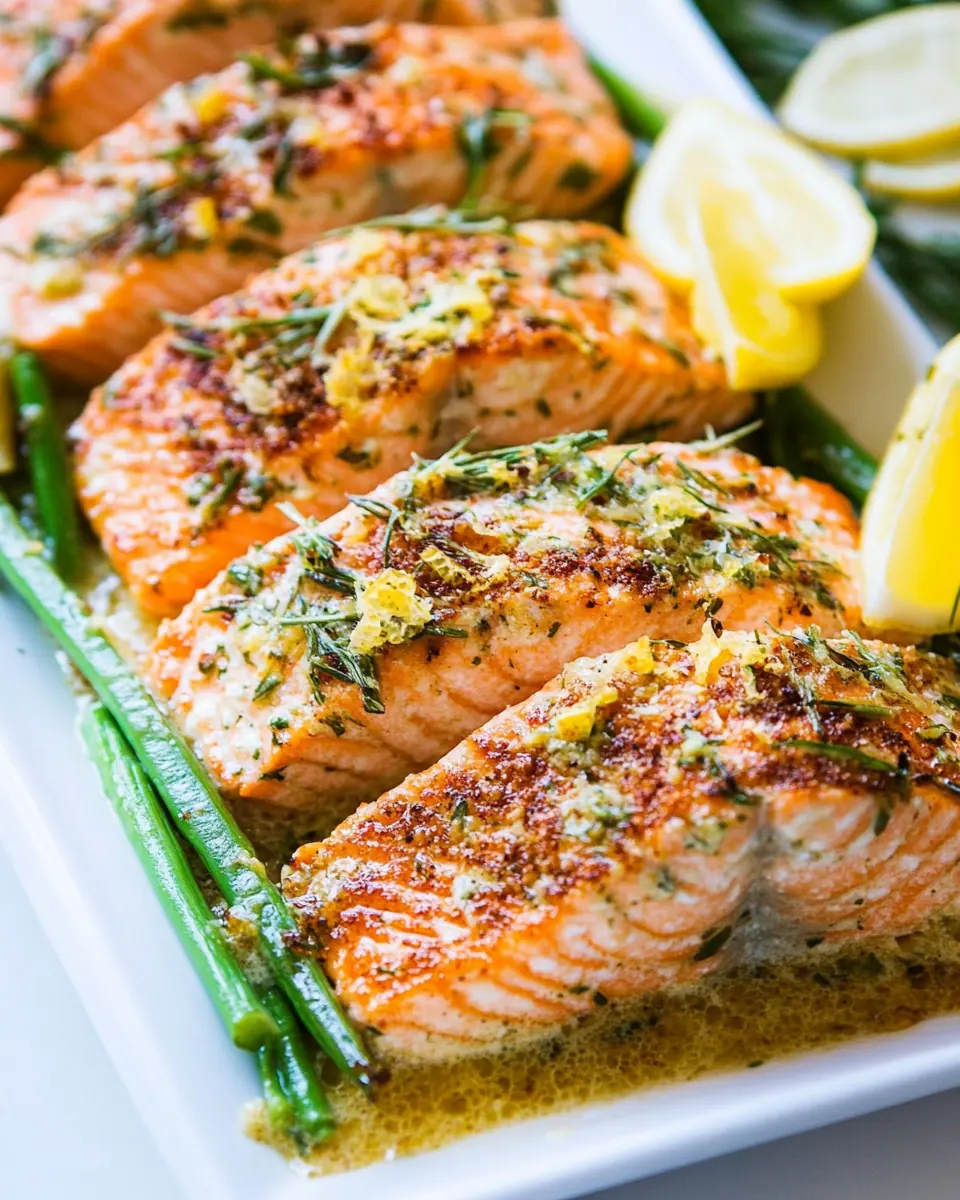
Place a rack in the center of your oven and preheat the oven to 400 degrees F. Generously coat a large rimmed baking sheet with nonstick spray. Arrange the salmon fillets in the center of the sheet.: The oven should be fully heated so that when the fish goes in it immediately begins to set and brown at the edges, giving a pleasant aroma that fills the kitchen. You will hear a faint sizzle as the fish hits the hot pan if the sheet is warm enough. Visually, the fillets will look glossy and will start to firm up on the surface within minutes. This initial high heat is important for sealing in juices, so do not skip preheating. A common mistake is sliding the sheet into an oven that is still heating, which can produce uneven doneness; wait for the correct temperature and use an oven thermometer if needed.
In a small bowl with a fork, combine the softened butter, garlic, lemon zest, 2 tablespoons chopped fresh parsley, and 1/4 teaspoon black pepper. Mash to create a paste, then rub on the salmon fillets. If desired, arrange extra lemon slices on top.: As you mash, the aroma of the garlic and lemon will bloom, and the butter will become spreadable and glossy. Smell is your indicator here; the mixture should smell bright and garlicky without sharp raw bite. Rubbing the paste onto the surface helps form a flavorful crust as it roasts, and the lemon zest will release essential oils for an aromatic top note. Avoid leaving large chunks of garlic on the fish which can char and become bitter; mince finely and distribute evenly.
Place the green beans and tomatoes in a large bowl. Drizzle with olive oil and sprinkle with 1/2 teaspoon kosher salt and the remaining 1/4 teaspoon black pepper. Toss to coat, then arrange around the salmon. Drizzle the lemon juice over the top of the salmon and vegetables.: Tossing the green beans and cherry tomatoes in olive oil allows them to roast evenly and encourages caramelization at the edges, which smells sweet and toasty. When arranged around the salmon , the vegetables will brown and their juices will mingle with the lemon juice you drizzle over everything, creating a natural pan sauce. The sound of the vegetables settling on the sheet will be quiet but you should be able to see a light sheen from the oil. A common pitfall is overcrowding the pan, which causes steaming; give the veggies a little breathing room for crisp edges.
Place the sheet pan in the oven and cook until the fish flakes easily with a fork and reaches an internal temperature of 135 to 140 degrees F, about 16 to 20 minutes. Let rest 3 minutes. Sprinkle with remaining 2 tablespoons parsley, then serve, sprinkled with additional salt and/or pepper to taste.: During roasting you will notice the tomatoes soften and sometimes burst, releasing a honeyed scent, while the beans darken slightly at the tips and develop a satisfying snap. The salmon will change from translucent to opaque and will give under gentle pressure, with juices pooling slightly around the fillet. Resting for 3 minutes lets the juices redistribute, resulting in moister flakes. If you cut into it too soon, the juices will run out and the fish may dry. A frequent error is overcooking; use an instant read thermometer if you have one to hit that sweet 135 to 140 degrees F range for tender, flaky fish.