Butter a 15 x 10-inch (rimmed) jelly roll pan.: As you press a thin film of butter across the pan, you will notice the sheen and the faint, creamy aroma. That coating ensures the fudge releases cleanly, and it also provides a barrier so the set surface does not stick or tear. A common oversight is using too little fat, which causes the fudge to cling; avoid this by fully covering the base and slightly up the sides. If you see bare metal, rub a little more until the surface appears evenly glossy. Using a parchment sling is another option, but in this recipe I prefer the slight flavor exchange from the butter for the perfect finish.
Combine the chocolate and marshmallow creme in a large bowl; set aside.: When you bring the two together dry, the visual is already comforting: the dark nuggets of semi sweet chocolate chips and the pale, cloudlike marshmallow creme . Placing them in a roomy bowl gives you space for vigorous stirring later without spills. Keep the bowl near the stove so you can pour the hot mixture immediately; delay can let heat escape and slow melting. Avoid using a glass bowl that will shock with sudden temperature change; a heatproof stainless or ceramic bowl works best.
Combine the sugar, butter, milk and salt in a heavy skillet. Bring to a rapid boil, then boil 6 minutes, stirring constantly. Remove from heat and stir in the vanilla.: As the granulated white sugar , butter , and evaporated milk warm, the mixture will go from pale and milky to glossy and syrupy. Bring it to a rapid, rolling boil so the sugars reach the proper candy stage for fudge. You will hear the liquid roar and see vigorous bubbling; that sound signals evaporation and concentration. Stir constantly with a wooden spoon to prevent the sugars from caramelizing on the skillet sides and burning, which creates a bitter note. After maintaining the boil for six minutes, the mixture should thicken and coat the spoon. Remove from the heat promptly and fold in vanilla extract off the heat to preserve its aroma. A typical mistake is under boiling, which results in a too soft set, or over boiling, which makes the fudge grainy or too firm. If your mixture smells scorched, discard and start again to avoid bitter flavors.
Pour the hot butter mixture over the chocolate mixture in the large bowl. Stir with a wooden spoon until smooth. Add the nuts and mix well.: Once the hot syrup hits the chocolate and marshmallow creme , you will hear a soft hiss and see glossy ribbons as the solids begin to melt. Stir patiently with a wooden spoon, feeling the resistance change from stiff to silky; that tactile feedback is crucial because it tells you the chocolate has fully melted and the texture is cohesive. The aroma will deepen into warm chocolate with toasted sugar notes. When smooth, fold in the chopped pecans , distributing them evenly without over mixing, which can deflate some of the marshmallow silkiness. A common misstep is pouring too slowly so the chocolate seizes; pour in one motion, then stir steadily. If you detect small unmelted flecks, continue gentle heat from a double boiler briefly, but be cautious not to overheat.
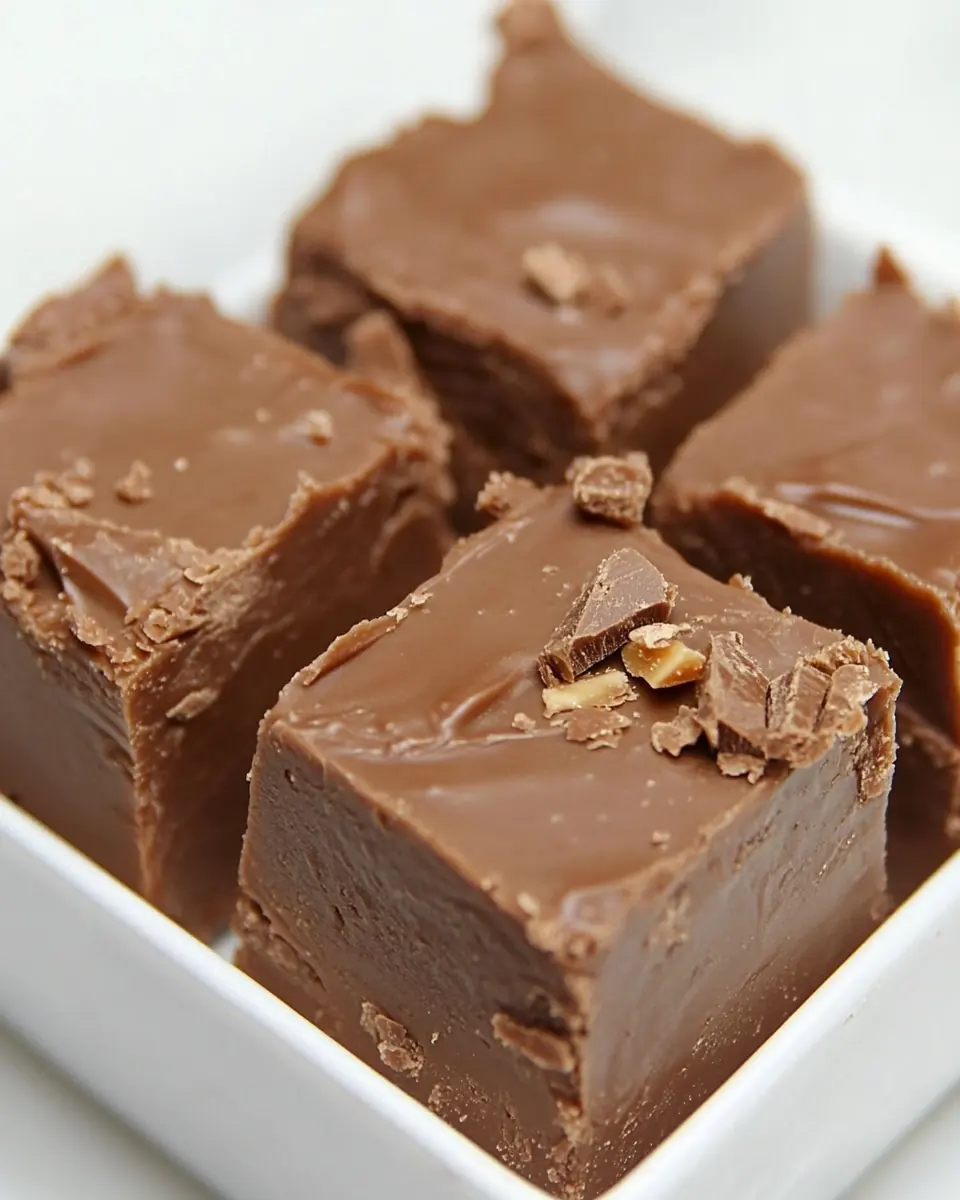
Spread the fudge into the prepared pan. When cooled, cut into 1-inch squares.: Pouring the mixture into the buttered jelly roll pan, you will notice it hold together, glossy and heavy. Use a spatula to smooth the top; the surface should shine but not be runny. Let it cool at room temperature until it firms, the texture changing from glossy syrup to a dense, sliceable block. The cooling stage allows sugar crystals to stabilize and the fats to solidify, giving that classic fudge bite. Once set, cut into 1 inch squares, aiming for uniform pieces so they present nicely and store evenly. A typical error is slicing too soon while still warm, which yields messy shapes; patience gives clean edges. If you prefer neat, straight cuts, chill briefly and score with a warm knife between slices for tidy results.