Go Back
Gingerbread Pancakes

Gingerbread Pancakes

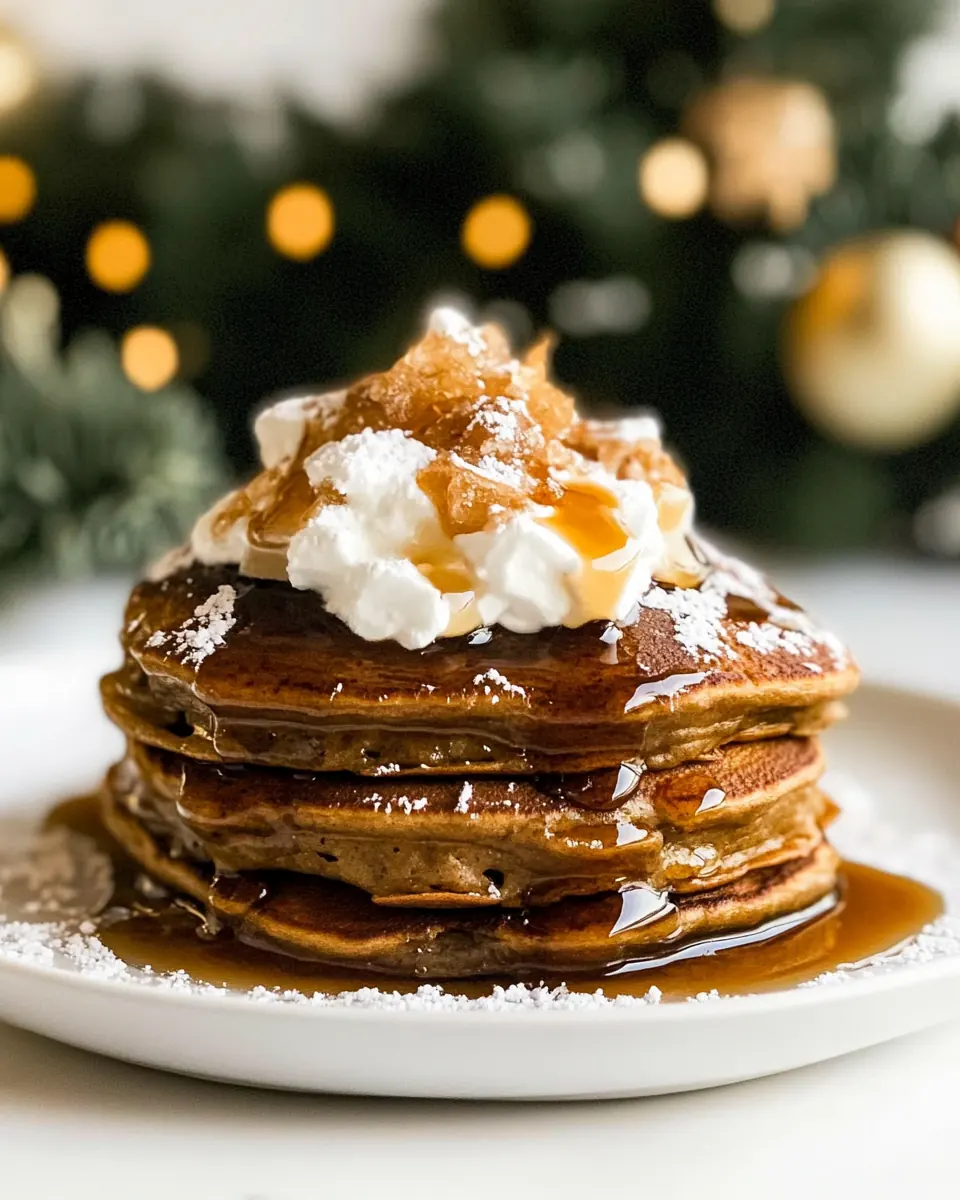
Gingerbread Pancakes are softly spiced and irresistibly warm, with notes of molasses, cinnamon, and ginger. These fluffy pancakes are easy to make and perfect for a cozy fall or Christmas morning, offering a tender interior and caramelized edges. They make an inviting easy weeknight breakfast or special weekend brunch, and they’re worth making when you want something comforting and festive.
Prep Time 10 minutes
Cook Time 15 minutes
Total Time 25 minutes
Servings: 4 people
Course: Breakfast
Cuisine: American
Calories: 250

Ingredients
  

  • 1 large egg Whisked to bind wet and dry components while contributing richness and structure to the batter; beaten until homogeneous to help create tender pancakes. Adds protein that aids in setting the pancake and improving mouthfeel. Use at room temperature for best incorporation.
  • 2 tablespoons oil I used canola oil Poured in to provide fat for moistness and a tender crumb while preventing sticking during cooking. Neutral-flavored oil keeps spices and molasses forward without overpowering. Measure carefully to maintain pancake texture.
  • 1 cup milk Stirred in to hydrate dry ingredients and create a pourable batter while contributing lightness and steam during cooking. Milk also mellows spices and helps dissolve sugar and molasses. Warm or room-temperature milk blends more easily.
  • 2 tablespoons molasses Added to impart deep, complex sweetness and characteristic gingerbread flavor with a hint of bitterness. Molasses darkens batter and enhances moisture retention for rich pancakes. Spoon and level to avoid excess sweetness.
  • 1 cup flour Sifted or stirred in as the primary structure-building element that forms the pancake body when hydrated. All-purpose flour provides gluten and starch that set during cooking, giving lift and chew. Avoid overmixing to prevent toughness.
  • 1/4 teaspoons salt Sprinkled to enhance overall flavor balance and to strengthen gluten control slightly by limiting yeast-like activity in batter. Salt brightens sweetness and spices, ensuring the pancake tastes well-rounded. Use precise measuring for consistent results.
  • 2 tablespoons sugar Mixed in to contribute sweetness, browning, and slight caramel notes that enhance the molasses and spices. Granulated sugar helps with texture and promotes Maillard reaction for golden surfaces. Adjust amount to taste but keep recipe balance.
  • 1 teaspoons cinnamon Ground to offer warm, sweet-woody aromatic notes that complement molasses and ginger while enhancing overall spice complexity. Cinnamon also contributes to perceived sweetness and depth. Use ground cinnamon for even distribution.
  • 1 teaspoon ground ginger Sprinkled to deliver the hallmark pungent, slightly peppery warmth of gingerbread that defines the recipe's profile. Ground ginger brightens and lifts other spices, creating a spicy backbone. Fresh ground ginger powder ensures consistent heat.
  • 1/2 teaspoon nutmeg Added to contribute warm, nutty, slightly sweet aromatics that round out the spice blend without overpowering. Nutmeg deepens flavor complexity and complements cinnamon and ginger. Use sparingly for balanced spice.
  • 1/2 teaspoon cloves Included to give sharp, warm, clove-like notes that intensify the gingerbread character and add aromatic depth. Ground cloves are potent, so small amounts go a long way in batter. Even distribution prevents singular strong bites.
  • 2 tablespoons baking powder Folded in as a leavening booster that helps pancakes rise and become fluffy by releasing gas during cooking. Baking powder lightens texture and creates lift for tender, airy pancakes. Ensure it is fresh for best potency.
  • Homemade Caramel Syrup optional Served optionally as a sticky, sweet condiment that enhances the pancakes with buttery caramel notes and extra moisture when drizzled over. Homemade caramel syrup complements molasses and spices, elevating overall indulgence. Warm slightly for easy pouring.

Equipment

  • Skillet
  • Mixing Bowls
  • Whisk
  • Measuring Cups
  • Spatula

Method
 

  1. In a medium sized bowl whisk together egg, oil, milk, and molasses. In a separate bowl combine flour, salt, sugar, cinnamon, ginger, nutmeg, cloves, and baking powder. Add the dry ingredients into the wet ingredients and combine.: The air smells rich and slightly sweet as you whisk, and you will notice the molasses dissolving into the milky mix creating a glossy, deep brown liquid. This wet blend sets the flavor foundation and ensures the spices mix evenly later. A common mistake is under whisking which can leave pockets of molasses, so whisk until the mixture looks homogeneous and slightly frothy. If you see streaks of unmixed molasses, pause and whisk more, because that uneven sweetness can create spots that overbrown on the skillet. The why here is simple, thorough blending equalizes moisture and flavor, and it smooths the batter so the pancakes cook uniformly.
  2. Preheat a skillet over medium heat. Spray with cooking spray and drop about 1/3 cup of the batter onto the warm skillet. Once it forms bubbles then flip to the other side and cook until golden brown.: As you sift or stir these dry flour and spice ingredients together, the room fills with the warm scent of spices, signaling the aroma that will come through when the pancakes cook. Mixing the dry ingredients distributes the leavening and spices so every bite tastes balanced. Avoid packing the flour or adding ingredients unevenly, because clumps of baking powder will give uneven rise and pale spots in the pancakes. For best results, break up any lumps with a fork and stir until the mixture looks uniform and fragrant.
  3. Add the dry ingredients into the wet ingredients and combine: When you fold the dry into the wet, you should see the batter transition from streaky to smooth, with a consistency that drops slowly from a spoon, not totally runny, not very thick. The batter should hold together and fall in ribbons, which helps the pancakes form round, even shapes on the skillet. Overmixing is the usual error here, leading to tough pancakes because the flour develops gluten. Mix just until you no longer see dry streaks; a few small lumps are okay. This step matters because gentle mixing preserves tenderness while ensuring even distribution of spices and leavening.
  4. Preheat a skillet over medium heat: When the skillet is hot enough it gives a faint shimmer and a few small wisps of steam, and a drop of water will dance and evaporate. That sound of sizzle is what you want when batter hits the surface, because it signals proper heat for browning. If the skillet is too cool the pancakes will spread thin and be pale; if it is too hot they will char outside before cooking through. I recommend medium heat and heating for a few minutes so the pan holds steady temperature when you begin cooking.
  5. Spray with cooking spray and drop about 1/3 cup of the batter onto the warm skillet: As the batter hits the skillet you will hear a soft sizzle and see tiny bubbles forming at the surface after a short moment. The batter should hold a small mound, not flatten into a wafer, and it should start to set around the edges within a minute to two. Using about 1/3 cup ensures consistent pancake size, and a light spray keeps them from sticking while not adding excess greasiness. A common pitfall is using too much fat in the pan, which causes the edges to become greasy rather than crisp. Maintain an even pour and give each pancake some space so they cook evenly.
  6. Once it forms bubbles then flip to the other side and cook until golden brown: Watch for bubbles to appear across the surface and for the edges to look set, that is your cue to flip. When you turn the pancake, notice the underside should be a warm golden brown with slightly crisp edges, and the second side cooks faster, finishing into an evenly colored cake. The smell will shift from raw batter to toasty spice and caramel notes; that is a reassuring sign of done-ness. Avoid flipping too early or flipping multiple times, which can deflate the pancake and make it tough. Cook until both sides are golden, and press gently to check springiness for doneness.
Notes

  • Lower sugar for a less sweet stack Replace some or all of the sugar with a smaller amount to let the spices shine, but keep the molasses so the characteristic flavor remains intact.
  • Use alternative milk for dietary needs Swap the milk for almond or oat milk, keeping volume equal, to accommodate lactose sensitivities while maintaining similar batter consistency.
  • Adjust spice intensity Increase the ginger or cinnamon slightly for a bolder profile, adding no more than 1 1/2 times the listed amount to avoid overpowering the batter.
  • Make them thicker Reduce the milk slightly to produce a denser batter that yields fluffier, more substantial pancakes that hold toppings well.
  • Try a warm syrup Serve with warmed Homemade Caramel Syrup or a drizzle of extra molasses for a richer finish on special mornings.
  • Keep leftovers fresh Store cooled pancakes in an airtight container in the refrigerator for up to two days and reheat gently on a skillet to restore crisp edges.