Preheat oven to 400 F. Line a baking sheet with a Silpat or parchment; set aside.: The oven heat gives the scones a rapid lift and a golden exterior, so preheating to 400 F ensures immediate steam formation from the cold butter . You should feel a warm wave in the kitchen when you open the oven door and see the steady glow of the racks, which reassures you the oven is ready. If the oven is cooler than intended, the scones will spread instead of rising, producing a denser interior. A tip is to place the baking sheet inside while preheating so it is hot, but be careful handling it with mitts.
In a large bowl, add 2 cups flour, granulated sugar, baking powder, optional salt, and whisk to combine.: Lining the sheet prevents sticking and encourages even browning. You will notice a faint oil sheen if using Silpat, and parchment offers a matte surface that helps the bottoms not overbrown. Avoid using an unlined sheet because fruit juices can burn and make cleanup difficult. If you skip this step, expect some sticking and harder cleanup.
Add the butter, and with a pastry cutter or two forks, cut the butter in. You can use a food processor, but I find not having to wash it is a big time-saver. I smoosh the butter with forks and when it’s the size of large marbles, I use my hands and knead it in. It will feel like semi-wet, cool sand. Some larger pea-sized butter clumps are okay; set bowl aside.: When you whisk the dry ingredients you should see a pale, sandy mixture and a faint, sweet scent from the sugar . Combining them first distributes the baking powder evenly so the scones rise uniformly. Vigorous mixing is not needed, and over-whisking can incorporate too much air and alter texture; light, thorough blending is enough.
In a small bowl, add the egg, sour cream, vanilla, and whisk to combine until smooth.: As you cut in the cold butter , the mix will take on a crumbly, coarse sand texture with some visible butter bits. The goal is pea to marble sized pieces, which when baked create flakiness and pockets. The mixture should feel cool to the touch. If the butter warms too much and becomes sticky, chill the bowl briefly before continuing. A common mistake is overworking the butter so it melts completely, which removes those flaky layers.
Pour wet mixture over dry, and fold until just combined with a soft-tipped spatula; don’t overmix or scones will be tough. Dough will be wet and shaggy.: The wet mixture will become glossy and slightly thick, with a pale color and a faint vanilla aroma. Whisking until smooth ensures even distribution, which helps the dough come together reliably. If the wet mix is lumpy, you risk uneven hydration of the dough. Keep the mixture cool and do not add it hot or very warm.
Fold in the berries and optional zest.: At this point, the batter will look shaggy and moist, with streaks of flour becoming incorporated. Folding gently prevents gluten overdevelopment, which would toughen the scones. You should hear a soft scraping sound and see the dough come away from the bowl sides. A common misstep is vigorous stirring, which yields dense scones rather than tender, flaky ones.
Sprinkle about 2 tablespoons flour over a Silpat or clean work surface and lightly coat hands.: The sound will be delicate as the berries slip into the dough and the color flecks spread throughout. Using frozen berries straight from the freezer keeps juices contained and reduces bleeding, so you will notice less pink swirl in the batter. If you use fresh berries, fold very gently to avoid crushing. Overmixing here will also break berries and create a soggy dough.
Turn dough out onto surface and knead it into a 8-inch round, approximately. Dough is very moist, wet, sticky, and tacky, but if it’s being too stubborn or too wet to come together, sprinkle with flour 1 tablespoon at a time until you get it to come together and into a round.: The thin flour dusting gives you a surface to shape without sticking, while keeping the dough from absorbing too much extra flour. You will feel the dough move more freely under your palms. Resist the urge to add large amounts of flour, because that will toughen the scones. If the dough still sticks, add flour a tablespoon at a time rather than a large handful.
With a large knife, slice round into 8 equal-sized wedges.: The dough will be tacky but should come together into a cohesive round; your hands will feel cool and slightly damp from the fruit and dairy. Knead very gently, pressing and folding no more than necessary, to keep the texture tender. If the dough is too wet to manage, dust with small amounts of flour until cooperative. Over-kneading will produce a tighter crumb and a tougher result.
Using a flat spatula or pie turner, transfer wedges to prepared baking sheet spaced at least 2 inches apart. Do not crowd because scones puff and spread while baking. Tip – try to make sure there are no exposed berries touching the baking sheet because they’ll be prone to burning.: As you slice, you will see a cross section of berry pockets and little butter flecks. Symmetry helps even baking, so try to make wedges similar in size. Use a sharp knife for clean cuts, rather than sawing motions that can drag the dough. If wedges vary greatly, smaller pieces will bake faster and may dry out while larger ones finish.
Optionally, sprinkle each wedge with a generous pinch of turbinado sugar, about 1 teaspoon each.: When you set them on the sheet, you will notice puffing room around each wedge, which is important because they will expand. Place them cut side up so any juices are contained. Avoid crowding because touching scones will steam rather than bake, and the sides will be soft instead of golden.
Bake for about 18 minutes, or until scones are very lightly golden and cooked through. 18 minutes in my oven with frozen fruit is perfect, but if using fresh fruit, baking time will likely be reduced. A toothpick inserted in the center should come out clean or with a few moist crumbs, but no batter. Because they’re baking in quite a hot oven, watch them closely starting after about 15 minutes to ensure the bottoms aren’t getting too browned.: The coarse sugar will glint and add a crunchy bite after baking, and you will see it melt slightly into the crust creating a pretty finish. This is visual and textural flourish, not required for structure. Too much sugar on top can burn in the hot oven, so keep it modest.
Allow scones to cool on baking tray for about 5 minutes before removing and transferring to a rack to finish cooling. While the scones cool, make the glaze.: During baking you will smell warm butter and sweet fruit, and the edges will take on a light golden hue. A toothpick should come out clean or with a few moist crumbs, but no raw batter. Ovens vary, so start watching at 15 minutes to avoid overbrowning, especially if using fresh berries which may shorten time. If bottoms brown too quickly, lower the rack or tent with foil.
In a small bowl, combine the confectioners’ sugar and cream (or citrus juice).: The scones will firm up slightly as they rest, making them easier to move without breaking. You will feel warmth radiating from the tray and slight steam from berry pockets. If you try to move them immediately while piping hot they may crumble; patience here improves presentation.
Whisk together until smooth. Depending on desired consistency, you may need to play with the cream and sugar ratios slightly.: The confectioners’ sugar will look like soft snow before liquid is added. Whisking will turn it into a glossy, opaque glaze that smells sweet or citrusy if using juice. Start with a small amount of liquid and add more until the glaze achieves a pourable thickness. Adding too much liquid will make the glaze runny and may soak into the scone tops.
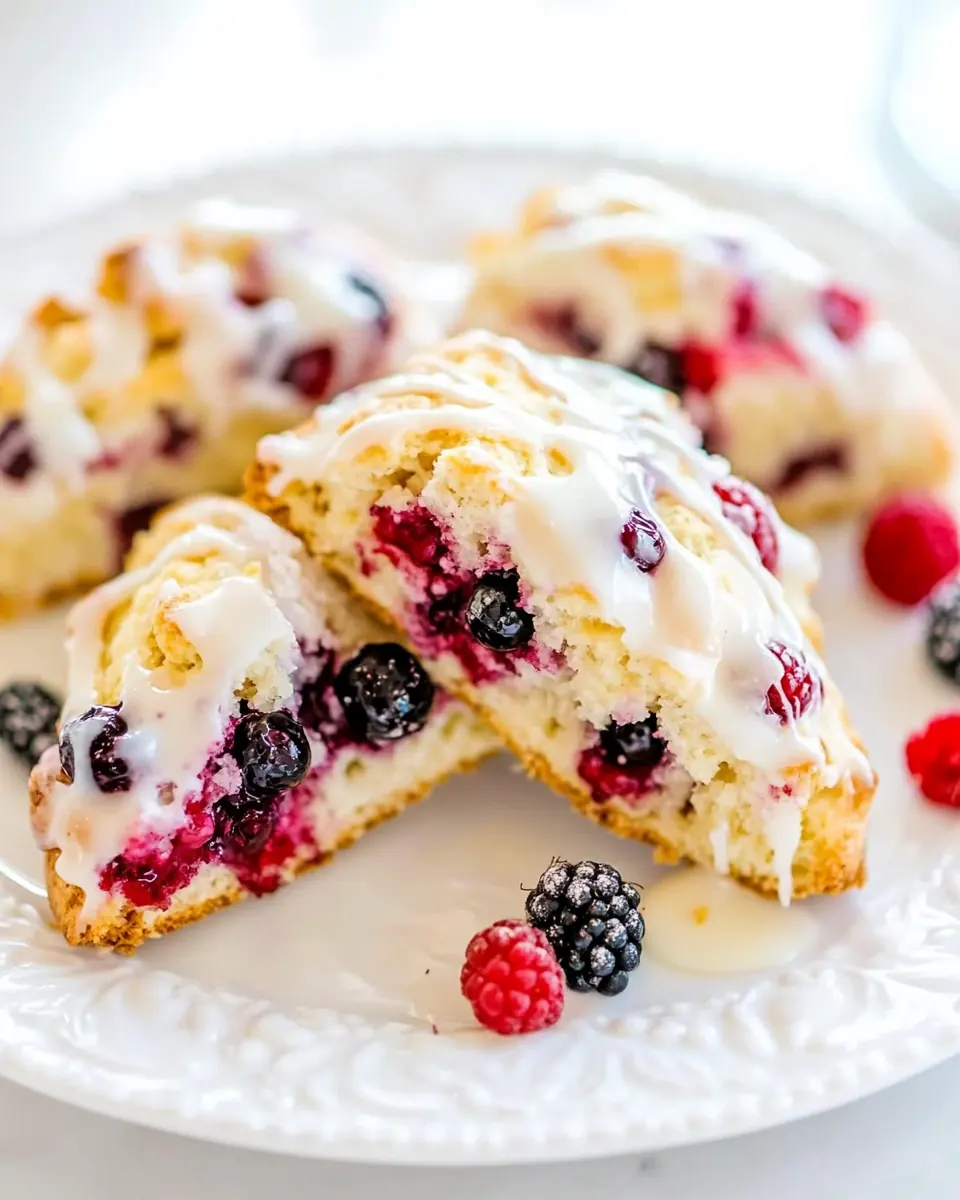
Evenly drizzle the glaze over the scones before serving.: A smooth glaze will drip slowly off a spoon in a thick ribbon, and it should coat the back of the spoon evenly. Adjust consistency by adding tiny amounts of sugar or liquid. If there are lumps, press the glaze through a fine mesh or whisk vigorously to avoid grainy texture on the finished scones.
Evenly drizzle the glaze over the scones before serving: The glaze will create a shiny, sweet layer that catches light and enhances each bite. Use a spoon or piping motion to decorate, and allow it to set for a minute before stacking. If you glaze too early while the scones are very hot, the glaze may become thin and run off, so let them cool slightly for the best cling.