Preheat the oven to 325°F. Place garlic in small heavy skillet. Drizzle with oil and toss to coat. Roast in oven until garlic is very tender, about 25 minutes. Cool. Peel garlic. Combine with goat cheese in small bowl; mash with fork. Season with salt and pepper.: As the oven warms to 325 F you will notice the aroma of roasting garlic deepen into honeyed sweetness, and the cloves will become soft enough to collapse under gentle pressure. When you cut into a clove, it should be glossy and almost syrupy, signaling readiness. Mashing the roasted cloves into the crumbled goat cheese releases a creamy, savory perfume that transforms texture and flavor, creating a spreadable filling. The reason this roasting is important is it tames raw garlic sharpness and adds caramelized notes that pair with herbs. One common mistake is pulling the garlic too early, leaving it undercooked and harsh; ensure it is very tender and cool slightly before peeling to avoid burning your fingers and to make mashing easier. Taste and season carefully with salt and pepper so the filling is bright but not over salted.
You can use 12 won ton wrappers if you plan to fold them in half to make the ravioli. Or you can use 24 wrappers if you plan to place two wrappers together and cut with a round pastry cutter. Either way is fine.: When choosing your wrapper approach, pay attention to texture and thickness; folding a single wrapper into a semicircle creates a slightly thicker edge, while pairing two wrappers and cutting with a round cutter produces even, sealed rounds with uniform thickness. Visually, folded wrappers will look more rustic, while cut rounds appear refined. This choice matters because wrapper size influences cooking time and mouthfeel, so decide according to whether you prefer larger pillows or many small bites. A troubleshooting tip is to keep unused wrappers under a damp towel; they dry out quickly and become brittle, which makes sealing difficult. Also avoid overstuffing the wrapper so it does not burst during boiling.
Place won ton wrappers on work surface. Spoon cheese mixture into center of wrappers. Brush edges of wrappers with egg white with a brush, or use your fingers to rub it on. Fold over to form semicircle or triangle (depending on what shape your wrapper is), or place another wrapper on top. Press edges to seal and gently cup your hand on top to work the air pockets out of the ravioli. Rub on a little more egg white to make sure edges are sealed. If you’re using a pastry cutter, cut out the ravioli and then use egg white to seal the edges.: As you assemble, you will feel the cool, slightly tacky texture of the wrapper and the creamy filling settling into the center. Pressing out air pockets is critical; trapped air will expand during cooking and can split the wrapper. Cup your hand and press gently from center to edges, listening for a subtle change in feel as the pocket flattens and the edges meet. The egg white creates a sheen at the seam and promotes adhesion, so be generous with sealing but not messy. A frequent error is overfilling, which creates bulging centers and weak seals; use modest spoonfuls so the ravioli hold shape and cook evenly.
Place prepared ravioli in a single layer on a floured cookie sheet, cover tightly with plastic wrap and refrigerate until ready to use. (These can be made a day ahead.): Laying the ravioli in a single layer on a floured surface prevents sticking and preserves shape; the light dusting of flour serves as a barrier that keeps the bottom from adhering to the tray. Covering them tightly with plastic helps retain moisture so the wrappers do not dry and crack, and chilling firms the filling and makes the ravioli easier to handle when cooking. The benefit of making them ahead is the flavors have time to meld, and the sealing strengthens while they chill. A common mistake here is stacking them, which causes edges to fuse together; always arrange them in one layer and ensure enough space for air circulation in the refrigerator.
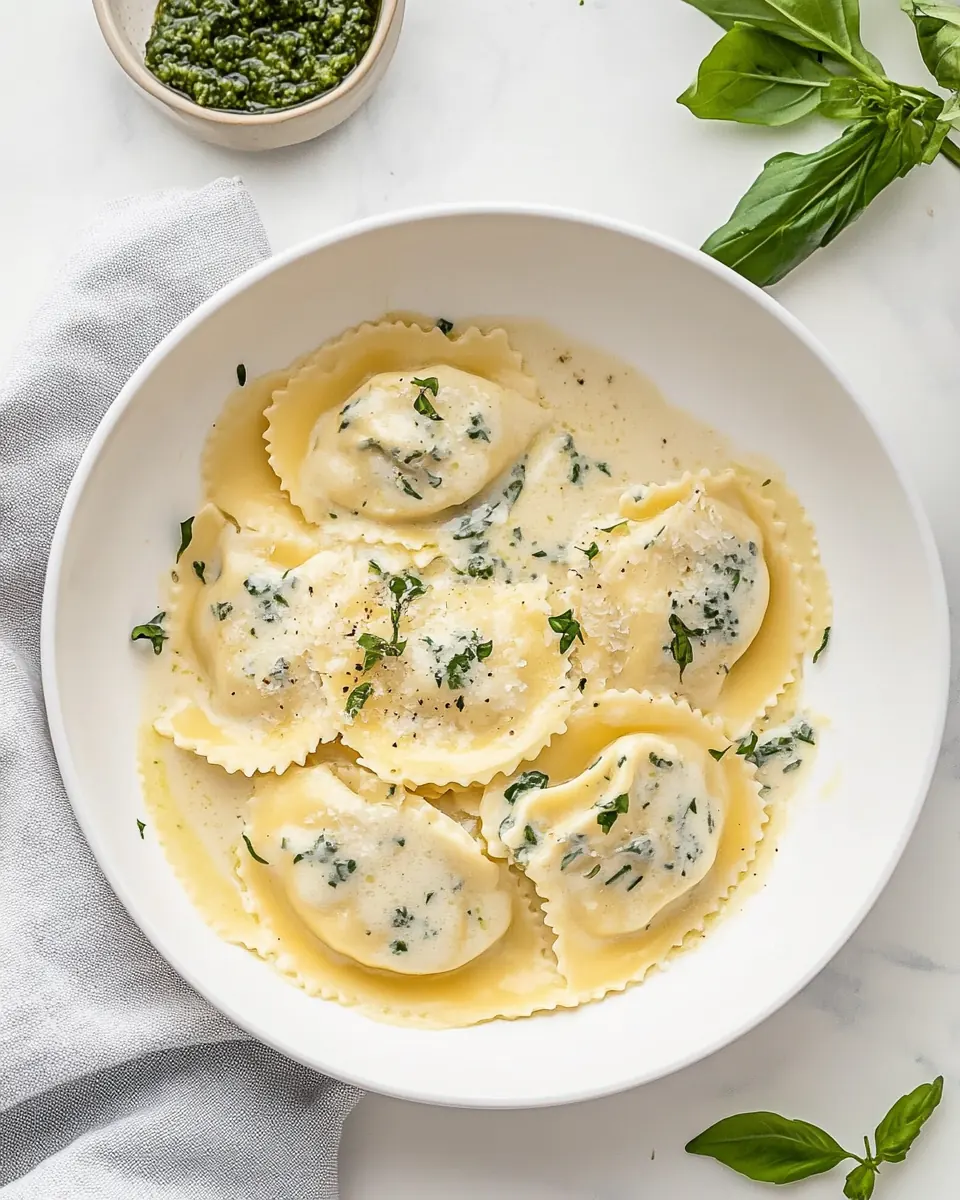
Cook ravioli in large pot of boiling salted water until just tender, about 5 minutes. Drain and divide between 2 plates.: Bring a large pot of water to a rolling boil and add enough salt that the water tastes like the sea; this seasons the wrappers from the outside in. As the ravioli cook, they will float and the wrappers will turn translucent, signaling doneness and a tender, pillowy texture. The aroma will be subtly savory, with hints of goat cheese and roasted garlic wafting from the pot. Drain gently so the ravioli keep their shape, and transfer carefully with a slotted spoon to avoid tearing. Overcooking will make the wrappers mushy and risk rupturing them, so watch closely and remove as soon as they are tender. If the filling tastes underdone, it usually means the garlic or seasoning was not balanced earlier, so adjust in future batches.