Go Back
Grandma’s Oatmeal Cookies

Grandma’s Oatmeal Cookies

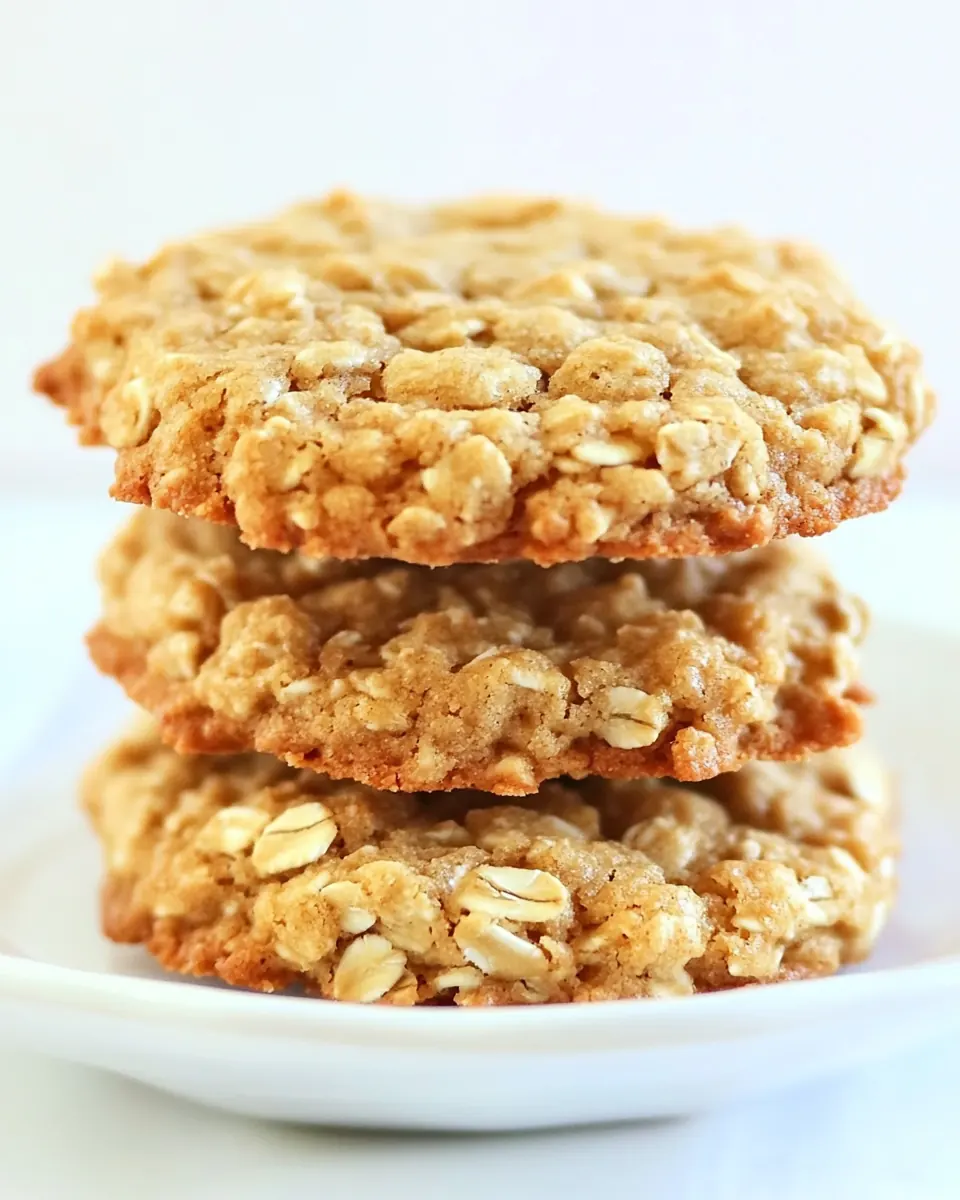
Grandma’s Oatmeal Cookies are chewy, cinnamon kissed, and easy to make from pantry staples. With old fashioned oats for hearty texture and a blend of brown and white sugars for caramelized edges, they make an ideal easy weeknight dessert or snack. Perfect for sharing, these cookies deliver warm, nostalgic flavor and a reliable bake every time, so you have a sweet reason to make them.
Prep Time 15 minutes
Cook Time 10 minutes
Total Time 25 minutes
Servings: 48 cookies
Course: Desserts
Cuisine: American
Calories: 150

Ingredients
  

  • 1 cup shortening Provide a solid fat that creates tender, flaky texture and helps cookies spread evenly when baked; creaming with sugars aerates the dough for lift and structure.
  • 1 cup packed light brown sugar Add deep, caramel-like sweetness and moisture while contributing a slight chewiness and rich color; helps balance flavors and enhances overall cookie complexity.
  • 1 cup granulated white sugar Contribute clean, sweet flavor and help with structure and browning; works with creamed shortening to create light, tender crumb and desired sweetness level.
  • 2 large eggs, well beaten Bind wet and dry ingredients while providing moisture and leavening support from trapped air; beaten eggs contribute richness, color, and tender texture to the cookies.
  • 1 tablespoon vanilla extract Impart warm, familiar aromatic notes that enhance and round out the cookie flavors; small amount amplifies sweetness and complements cinnamon and brown sugar.
  • 1 1/2 cups all purpose flour Provide the primary structural backbone and bulk of the dough by supplying gluten and starch; measured amount balances tenderness and holds the mix of oats and add-ins together.
  • 1 teaspoon salt Balance and enhance sweetness while controlling flavor and strengthening gluten slightly; small amount also helps regulate dough hydration and overall taste profile.
  • 1 teaspoon baking soda Act as a chemical leavening agent that reacts with acids to produce carbon dioxide for lift and slight spread; correct amount ensures proper texture without metallic aftertaste.
  • 1 tablespoon ground cinnamon Deliver warm, spicy aroma and flavor that defines the cookie’s character; used to complement brown sugar and oats and to create a classic cinnamon profile.
  • 3/4 cup chopped walnuts or raisins (see Recipe Notes) Contribute crunchy texture or chewy bursts of sweetness depending on choice, adding flavor contrast and interest to the oat cookie; can be swapped according to preference per recipe notes.
  • 3 cups old-fashioned oats (do not use quick-cooking oats) Provide hearty chew, rustic texture, and a nutty flavor while absorbing moisture to create a substantial, satisfying cookie; old-fashioned oats maintain their shape and bite during baking.

Equipment

  • Electric mixer
  • cookie sheet
  • Parchment Paper
  • Wire Rack
  • Measuring Cups

Method
 

  1. Preheat the oven to 350 degrees F. Line cookie sheet with parchment paper, or spray with nonstick spray.: Warmth fills the kitchen as the oven comes up to temperature, and that dry, toasty scent primes the space for baking. Preheating ensures cookies bake evenly so they set properly and do not spread too much, which matters for texture. Lining the cookie sheet prevents sticking and promotes golden bottoms, while parchment helps lift cookies cleanly. A common mistake is not allowing the oven to fully preheat, which can lead to uneven baking and underdone centers. If your oven runs hot, use an oven thermometer to confirm the temperature.
  2. In a large bowl, use an electric mixer to cream together the shortening and sugars. Add the eggs and vanilla and beat well. Set aside.: The inevitable light, airy mixture you see when creaming is vital, it traps tiny pockets of air that help the cookies rise slightly and give a tender crumb. You should notice the texture going from grainy to smoother, and the color lightening a touch. When you add the beaten eggs and vanilla extract , the batter becomes glossy and cohesive. If you undercream, the cookies can be dense, and overbeating after adding eggs can cause excess liquid, changing spread. Use medium speed and scrape the bowl so everything blends uniformly.
  3. Sift together the flour, salt, baking soda and cinnamon. Add the dry ingredients to the wet and mix well. Add the nuts and/or raisins, if desired. Stir in the oats last.: The sifted dry mix should smell faintly spicy from the ground cinnamon and look uniformly pale. Folding the dry into the wet gradually prevents streaks of flour and helps maintain a tender texture. Adding mix ins before the oats helps them distribute, and stirring in the old fashioned oats last preserves their shape and chew. If you mix the oats too early or overwork the dough, they can break down, resulting in a gummy cookie. Watch for a dough that looks cohesive but not greasy, and that the oats are evenly scattered.
  4. Spoon out by rounded teaspoonfuls onto greased cookie sheets. Bake for 10 minutes. Remove to a wire rack and cool completely.: As you portion the dough, you will notice a slightly sticky, malleable consistency that holds shape but will spread a bit while baking. Aim for evenly sized mounds to ensure even bake time. While baking, listen for faint bubbling and watch the edges for a gentle deepening of color, which signals readiness. The centers will still look soft when you pull them, they firm as they cool on the wire rack. A common error is overbaking, which yields hard, dry cookies, so err on the side of a slightly underbaked center for a tender chew. Cooling on wire racks prevents steam from soggy bottoms and lets the cookies set properly.
Notes

  • Mix ins balance If you want raisins and nuts together, follow the recipe note of using 1 cup raisins and reducing nuts to 1/2 cup, this keeps the dough proportions stable and prevents overly dense cookies.
  • Oven placement Bake one sheet at a time on the center rack for the most even heat exposure, rotating only if your oven has hot spots to avoid uneven browning.
  • Parchment vs spray Parchment paper gives the most reliable nonstick surface and promotes even bottom browning, while nonstick spray can work in a pinch but may lead to slightly crisper bottoms.
  • Cookie size consistency Use a rounded teaspoon or a small cookie scoop to portion dough, which ensures uniform baking time and predictable results across the batch.
  • Storage Store cooled cookies in an airtight container at room temperature for up to five days, and separate layers with parchment to prevent sticking and preserve texture.