Preheat the oven to 375 degrees F.: The warm oven creates the gentle, steady heat necessary for caramelizing the outsides of the tomatoes while allowing the interior rice to absorb liquid and finish cooking. You should feel the kitchen temperature begin to shift as the oven comes to temperature, and there is a subtle scent of metal warming which is normal. A common mistake is putting the dish into an oven that has not fully reached the target temperature, which can lengthen cooking time and yield uneven caramelization. Use the oven preheat cycle and give it a few extra minutes after the indicator to ensure consistency. If your oven runs hot, lower the heat by 10 degrees to avoid over browning the tops.
Cut the tops off the tomatoes and scoop out the flesh, being careful not to pierce the bottoms. Season the insides with salt.: As you hollow the tomatoes you will notice the firm flesh yielding under the blade and the juice collecting in the bowl, bright and tangy. Leaving the bottoms intact is crucial so the filling stays put while baking, and if the skin starts to tear, press gently to reform the shape rather than forcing the cavity. Rubbing a pinch of salt inside helps draw out excess moisture while seasoning the fruit from within, which enhances depth. Avoid over scooping which can make the shells too thin and prone to collapsing in the oven.
Purée the tomato flesh and any of the additional juices with the garlic in a small food processor. Set aside.: The puree should smell intensely of ripe tomato and raw garlic , with a bright, clean aroma. The texture will be smooth and slightly pulpy. This purée is the building block for the filling; blending the garlic with the flesh mellows its sharp edge and integrates the flavors. A common pitfall is over blending until completely watery, which can dilute flavor and alter the final texture. Pulse until just smooth but still vibrant, and leave it aside so it is ready to fold into the sautéed base.
In a large skillet, sauté the onion over medium-high heat in 2 tablespoons of olive oil until soft, 4 minutes. Add the zucchini and cook a few minutes longer, until the zucchini is just beginning to brown, 3 minutes. Stir in the rice and cook until pearly white and toasty, 2 minutes. Carefully pour in the tomato mixture and add the tomato paste. Simmer until just thickened, 2 minutes. Remove from the heat and season with 1 teaspoon salt and the parsley, if using.: You will hear a gentle sizzle as the diced onion hits the pan and the aroma will become sweet and savory within minutes. Softening at medium-high ensures the edges caramelize slightly while the interior becomes tender, forming a rich foundation. Keep an eye so the pieces do not scorch; if they brown too quickly, lower the heat and stir more frequently. A typical mistake is rushing with too high heat which leads to bitter, burnt notes that overpower the filling. Aim for a translucent color with golden flecks for the best balance of flavor.
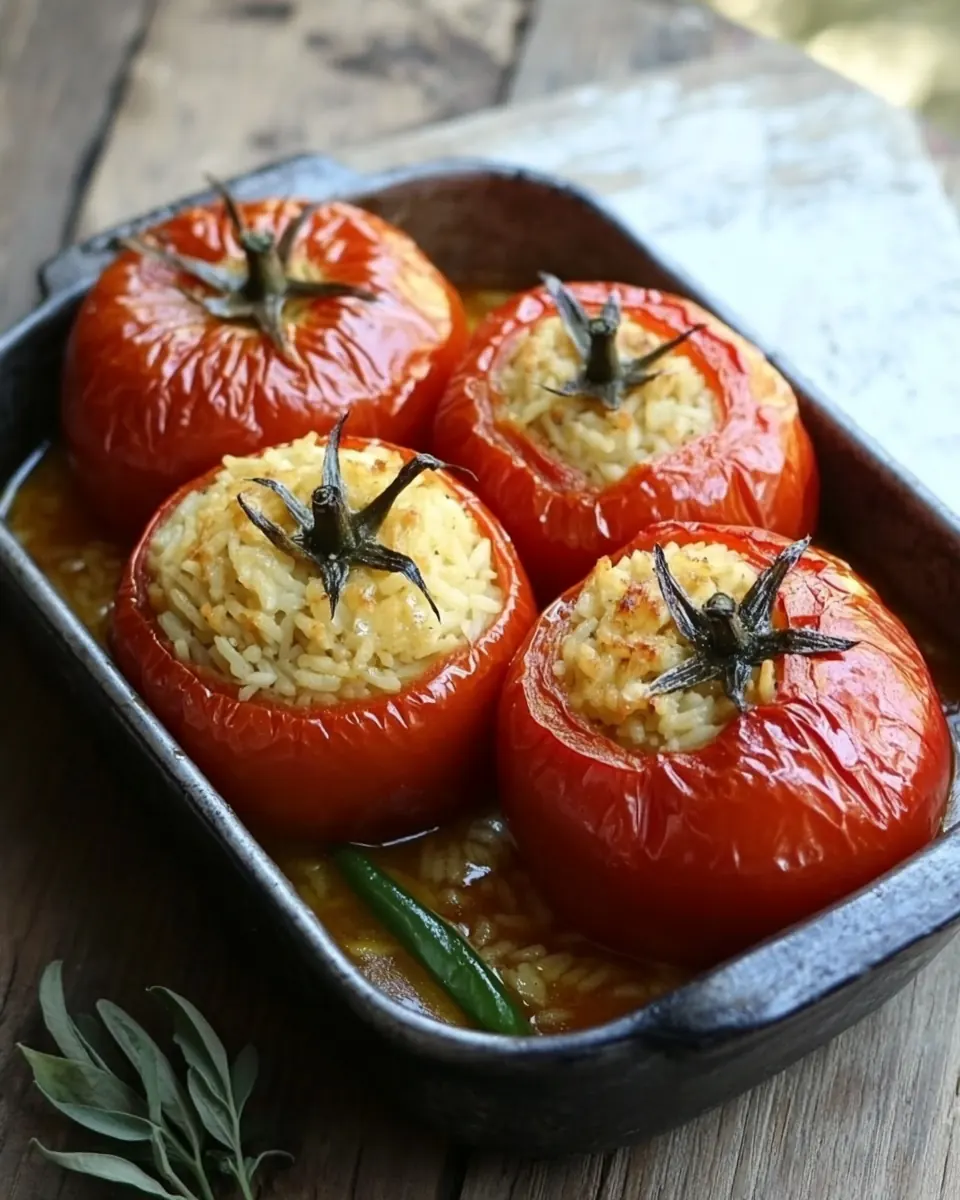
Arrange the tomatoes in a large casserole dish. Spoon the rice mixture into the tomatoes until just shy of full (you might have a little extra depending on the size of your tomatoes). Replace the tops and season generously with salt and pepper. If using, stick the potato wedges in between the tomatoes. Drizzle the veg with olive oil. Pour 1 cup water around the tomatoes. Bake in the oven for 120 minutes, until the tomatoes are caramelized and the rice is al dente. Serve hot or at room temperature.: When the zucchini joins the pan there will be a softer sizzle and a vegetal scent that rounds out the onion sweetness. Browning the edges slightly concentrates flavor and reduces excess moisture that could make the rice mushy. Stir occasionally so pieces brown evenly and remain distinct. Overcooking at this stage releases a lot of water and can dilute the mixture, so stop when tender with tiny browned spots. If your zucchini appears soggy, increase the heat briefly to evaporate excess liquid before continuing.
Stir in the rice and cook until pearly white and toasty, 2 minutes.: Tossing the rice with the aromatics will coat each grain in oil and develop a faint, nutty perfume as the surface toasts. You should hear a lighter, quicker sizzling and see the grains change from translucent to a pale white sheen. This step helps the rice hold its shape and prevents it from turning gluey when it absorbs the tomato liquid. Avoid skipping the toasting, which can result in a bland texture; if grains stick together, separate them with a fork and increase the pan heat for a few seconds more.
Carefully pour in the tomato mixture and add the tomato paste.: The skillet will hiss as the warm tomato purée meets the hot rice and vegetables, releasing an immediate tomato forward aroma that signals the dish is coming together. The tomato paste deepens color and umami, enriching the filling as it simmers. Stir gently so the mixture warms evenly, then reduce the heat to maintain a gentle simmer. A common error is pouring cold purée into an excessively hot pan which can spatter; temper by pouring slowly and stirring. Watch the mixture thicken slightly, which is the cue to move to the next step.
Simmer until just thickened, 2 minutes. Remove from the heat and season with 1 teaspoon salt and the parsley, if using.: In these final simmering moments you will notice the sauce glossy and slightly reduced, clinging to the rice. That sheen tells you enough liquid has evaporated so the filling will not be soupy when baked. Stir in the chopped parsley off the heat to preserve its fresh color and flavor. Taste and adjust salt cautiously because the roasting process concentrates flavors further. One mistake is over simmering which dries the mixture prematurely; stop when the mixture is cohesive but still slightly loose, as it will finish absorbing moisture while baking.
Arrange the tomatoes in a large casserole dish. Spoon the rice mixture into the tomatoes until just shy of full.: The filled tomatoes should bulge slightly without spilling, presenting a glossy, inviting surface. Spoon carefully so you keep the skin intact, and leave a little room at the top for the rice to expand. If you notice uneven filling, redistribute gently to balance cooking. Overstuffing can cause the mixture to overflow and burn at the edges, so err on the side of slightly underfilled; you can always serve extra filling on the side.
Replace the tops and season generously with salt and pepper. If using, stick the potato wedges in between the tomatoes. Drizzle the veg with olive oil.: The herbaceous scent of the pepper and salt will lift the filled platter, and the oil will help the skins blister and the potatoes roast to golden edges. Nestling the potato wedges among the tomatoes lets them soak up savory juices, creating a pleasing contrast in texture. A common oversight is skipping the oil which can lead to dry skins and dull flavor, so be liberal but not excessive. Ensure the potatoes are uniform in size so they finish roasting at the same time.
Pour 1 cup water around the tomatoes. Bake in the oven for 120 minutes, until the tomatoes are caramelized and the rice is al dente. Serve hot or at room temperature.: As the dish bakes you will smell a deepening tomato sweetness, and the tomatoes will soften, collapse slightly, and develop browned, almost jammy edges. The water in the casserole creates steam which helps the rice cook through without burning the bottoms, while the extended low roast time concentrates flavors. Check for visual cues, the skins should wrinkle and the tops should be caramelized. A typical mistake is skipping the water which risks drying the rice and scorching the pan. Let the finished dish rest briefly so flavors settle before serving, and enjoy it warm or at room temperature for different textures.