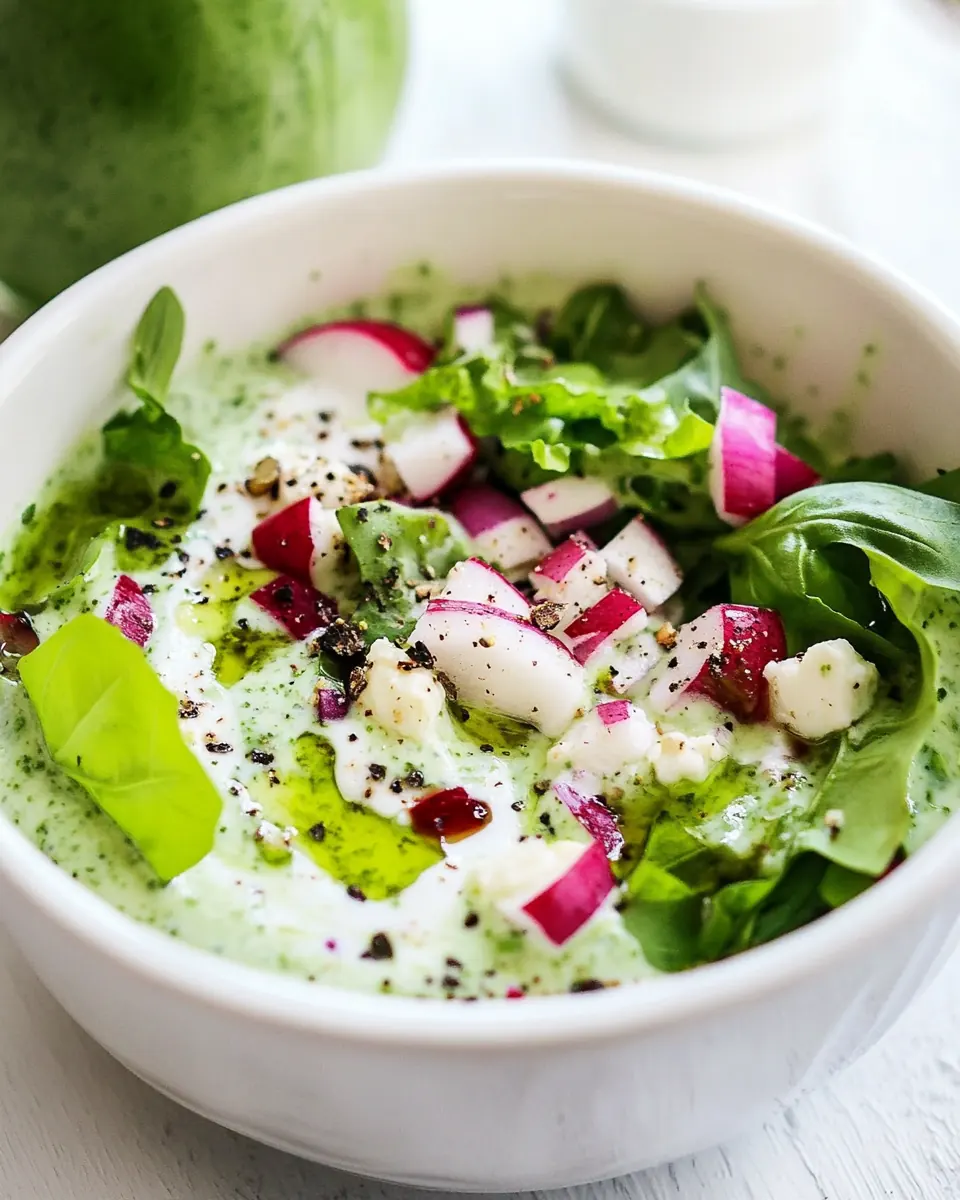
In a high powered blender or food processor add all ingredients and blend until smooth. If the dressing is too thick you can thin out with more Greek yogurt or olive oil.: The moment you start blending you will hear the herbs chop and the mixture begin to emulsify, a soft whir that tells you things are combining. The aroma will shift from raw herbs to a unified green fragrance, and visually the color will change from flecks to a vibrant, even green. This blending step is important because it breaks down herb fibers, creating a silky texture that clings to salads. A common mistake is overfilling the blender, which prevents proper circulation and yields uneven texture. If you find the motor straining, stop and scrape down the sides, then pulse to finish. Use short pulses at first to avoid overprocessing, then run continuously until smooth.
If it’s too thin add in some more herbs to help thicken it up.: When you spoon the dressing it should coat the back of a spoon but still flow gently, and that tactile check is a reliable guide. Adding a little extra Greek yogurt will maintain creaminess and tang, while a touch of olive oil will add silk and shine. The smell will mellow slightly as you add oil, and the texture will become glossier. Avoid adding too much liquid at once, as it is easier to thin gradually than to thicken later. A typical error is over thinning, which leaves a watery dressing that slips off greens; if that happens, return to the blender and add more herbs or yogurt to restore body.
Serve over salad or as a dip for vegetables.: Fresh herbs contain fibers that give structure, so adding extra parsley or basil increases body while enhancing the herbal profile. As you fold in more herbs and blend, you will notice the color deepen and the aroma intensify, signaling a firmer, more characterful dressing. This tweak matters because a dressing that clings to leaves gives better flavor distribution than one that pools at the bottom of the bowl. One pitfall is using wilted herbs, which can make the dressing less vibrant; always pick bright, perky leaves for the best result.
Serve over salad or as a dip for vegetables: The final presentation affects perception, so drizzle the dressing in a ribbon across greens or spoon it into a shallow bowl for dipping; both approaches change how the dressing interacts with texture. When poured over a salad it should lightly coat each leaf without creating a soupy mess, and when used as a dip it should hold its shape on a chip or spear. The sound of crisp vegetables meeting the creamy dressing is part of the experience, and the first bite should balance herb, acid, and tang. A common serving mistake is over dressing, which can drown delicate leaves, so start with a little and add more as needed.