In a small bowl, whisk together the oil, lime juice, chili powder, cumin, garlic powder, oregano, salt, black pepper, and red pepper flakes.: The aroma will be the first sign that you are building something layered and zesty, with citrus brightness lifting the earthiness of the spices. Whisking emulsifies the olive oil and lime into a cohesive coating so the spices disperse evenly across the chicken . As you whisk, notice the mixture thicken slightly and the color deepen, signaling the flavors are marrying. A common mistake is mixing in a cold bowl with clumped spices, so scrape the sides and press any lumps. If the mixture seems too thin, that is fine, the oil will still help the spices adhere during marination.
Place the chicken in Ziploc bag with the fajita marinade. Seal the bag and make sure all of the chicken pieces are well coated. Place the bag in the refrigerator for at least 1 hour and up to 8 hours.: When the marinated pieces touch, you should hear a soft rubbing sound as you massage the bag to coat every face of the chicken . Marinating in a sealed bag concentrates the flavors against the surface and saves on cleanup. Seal the bag and make sure all of the chicken pieces are well coated: distribute the marinade so each bite will have seasoning, rather than leaving pockets of bland meat. Place the bag in the refrigerator for at least 1 hour and up to 8 hours: the cold environment slows down tenderization while allowing the exterior to take on flavor. Avoid marinating much longer because the lime's acid can break down the proteins excessively, making the texture mealy.
When ready to cook, preheat the grill to medium-high heat. Thread marinated chicken, onion, and peppers onto skewers. Discard leftover marinade.: As the grill warms, you will begin to notice a faint smoky scent and the metal will radiate heat. A properly preheated grate gives immediate sear marks and prevents sticking, which is especially important for small pieces threaded on skewers. Thread marinated chicken, onion, and peppers onto skewers: alternate ingredients so heat exposure is even, and leave a little space between pieces for air to circulate. Discard leftover marinade: do not baste with it raw, because it contains raw chicken juices which can contaminate the cooked food. A typical error is crowding the skewers, which slows cooking and prevents the desirable charring.
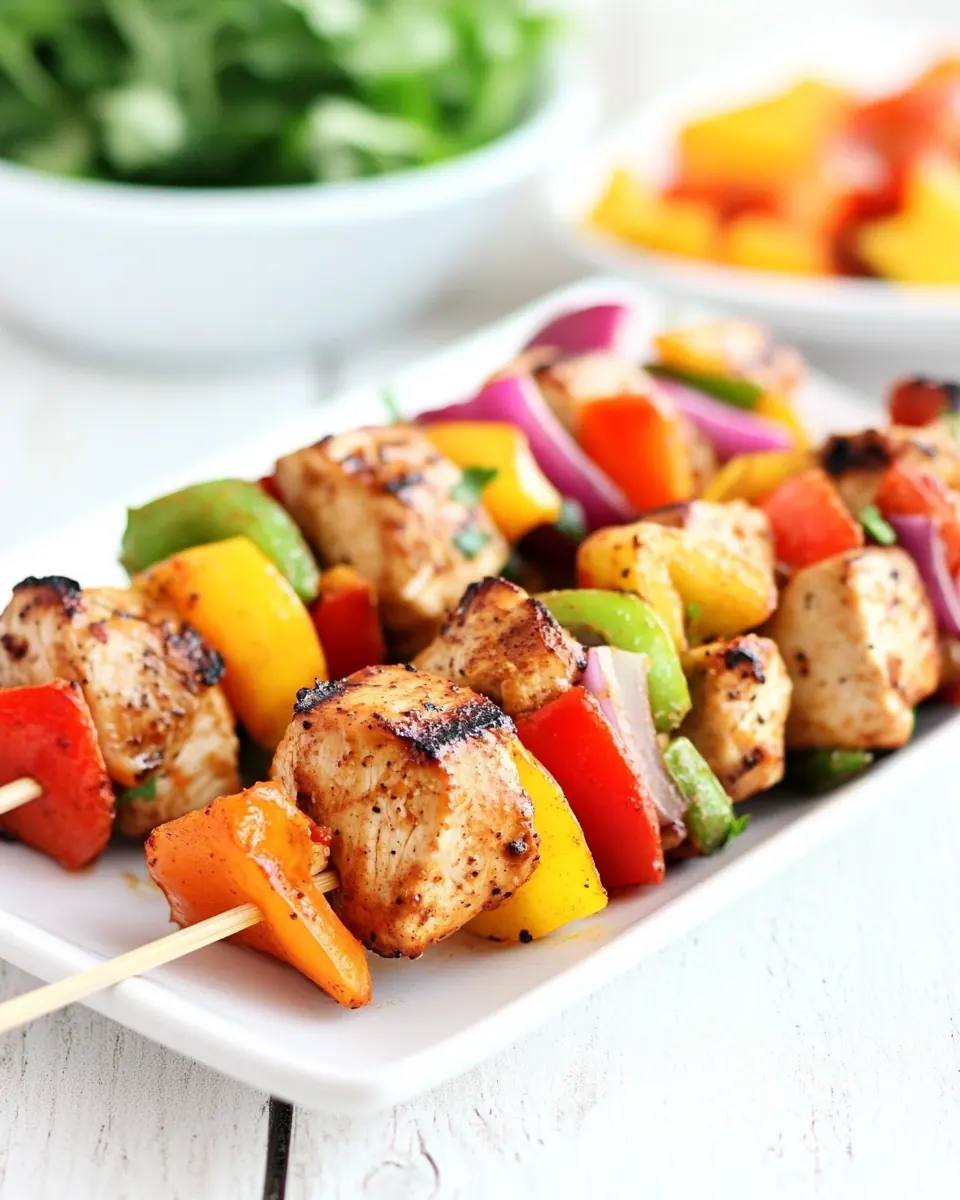
Lightly oil the grill grate. Place the kabobs on the grill, cover, and cook until the chicken is opaque throughout, about 8-12 minutes, turning once or twice during cooking. Transfer to a warmed platter and serve immediately.: Rub a folded paper towel soaked with a touch of olive oil over the bars using tongs to avoid sticking. The light sizzle when the kabobs touch the metal is your confirmation the surface is ready. Place the kabobs on the grill, cover, and cook until the chicken is opaque throughout, about 8 to 12 minutes, turning once or twice during cooking: you want a gentle char on the exterior while preserving juiciness inside. Listen for a steady sizzling that indicates moisture is escaping and sugars are caramelizing; when you see light grill marks and the vegetables begin to blister, that is a good visual cue. Turn with tongs, not a fork, to avoid piercing the meat and releasing juices. A troubleshooting tip: if the flames flare up and char too quickly, move the skewers to a cooler spot and lower the lid to control the heat.
Note - if using wooden skewers soak them in water 20 minutes before using.: The sound of the kabobs resting is quieter than when they were on the grill, and the steam rising will be fragrant with lime and toasted spices. Letting them sit untouched for a couple of minutes allows the juices to redistribute, giving you moister bites. Serve hot so the contrast between smoky edges and tender interior is most noticeable. A common mistake is leaving them in a covered container which wilts the vegetables and softens the crisp edges, so keep them exposed just long enough to plate.
Note - if using wooden skewers soak them in water 20 minutes before using: Soaking prevents the skewers from catching fire and imparts slight moisture that keeps the ends from burning, especially when cooking over direct heat. While soaking, you can prep the rest of the ingredients and watch how the wood darkens, which is a small visual cue that they are ready. Avoid skipping this step when grilling directly over flames, because dry wood can char or ignite, creating safety hazards and bitter smoke that will affect the flavor.