In a large mixing bowl, add the marinade ingredients and whisk until they're well combined. Add the chicken tenders, and mix until they're well coated in the marinade. Cover with plastic wrap, and marinate in the fridge for at least 30 minutes and up to 8 hours.: Right away you'll notice the sheen of olive oil and the citrus tang of lemon juice coming together, releasing bright aromas that tell you the marinade is ready. Whisking helps the dried herbs hydrate slightly and disperse evenly, which ensures each bite of chicken picks up flavor. A common mistake here is under mixing, which can leave pockets of herb or oil, so whisk until the mixture looks homogeneous. The sound is silent, but you can see the mixture glisten and smell the herbs. Visually, the herbs should be suspended in the liquid rather than clumped. If the oil separates, whisk a few more times before adding the chicken .
To grill the chicken tenders, place on a preheated grill or grill pan and cook for 3-5 minutes on each side until they're cooked through. Total of 8-10 minutes depending on the size of the chicken tenders.: As you fold the chicken into the bowl, the pieces should glisten and take on a light coating of the marinade. Use tongs or clean hands to ensure each piece is evenly covered, and press the marinade into the meat gently so the flavors begin to penetrate. The why matters here, because full coverage ensures consistent seasoning and better caramelization when grilling. Avoid piling pieces on top of each other, which can prevent even absorption and lead to uneven cooking. You should smell lemon and herbs evenly distributed across the pieces when you lift one out to inspect it.
Remove from the grill, and allow the chicken tenders to rest for a few minutes before serving.: During this resting time the acids and oil work on the surface of the chicken , and the herbs will infuse their aroma. A short 30 minute rest brightens the flavor, while a few hours deepens it. Refrigeration keeps the texture safe and prevents over tenderizing, which can happen if highly acidic marinades sit too long. If you plan ahead, aim for 1 to 2 hours for an ideal balance. Avoid leaving the chicken at room temperature for extended periods, which is a food safety risk. You will be able to see the marinade coat the meat more uniformly after marinating, and the surface may appear slightly plumper.
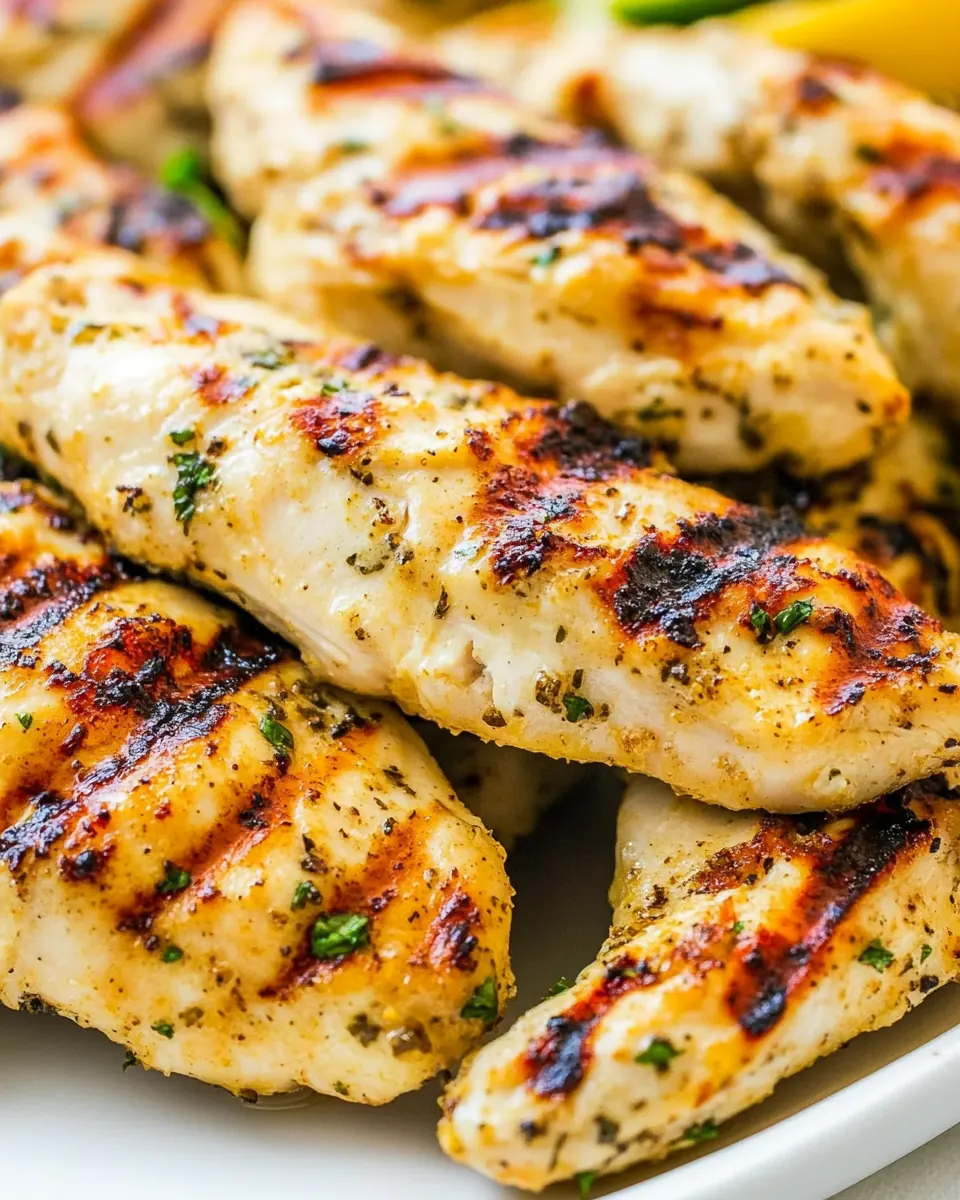
To grill the chicken tenders, place on a preheated grill or grill pan and cook for 3 to 5 minutes on each side until they're cooked through: When the grill is hot you should hear a steady sizzle as the chicken hits the grates. That sound signals good caramelization, which adds flavor and visual appeal. Look for a golden brown exterior and slight charring on the edges as indicators that the surface sugars have developed. The specified time is a guideline, because thickness varies, so watch for firm flesh and clear juices. A common error is moving the pieces too frequently, which prevents the crust from forming. Let each side develop color before flipping once. You should be able to lift a piece cleanly from the grill without sticking, which indicates a good sear.
Total of 8 to 10 minutes depending on the size of the chicken tenders: Trust your senses alongside the clock, because the true indicator is the internal texture. The exterior should be nicely browned and the meat should feel slightly springy when pressed. If you cut into the thickest part you should see opaque, fully cooked flesh with no translucent pink. Overcooking will dry the pieces, so aim to remove them as soon as they reach doneness. An instant read thermometer inserted into the center should reach the safe temperature guideline noted in the notes. If you find pieces finishing at different times, remove the done ones and let the others finish so nothing becomes overcooked.
Remove from the grill, and allow the chicken tenders to rest for a few minutes before serving: Resting is the quiet, often overlooked step that preserves juiciness. As the chicken rests, the juices redistribute from the surface to the interior, giving a more tender bite. The surface will cool slightly and the aroma will settle into a more inviting, concentrated scent. Skipping this rest leads to juices running out when you cut into the meat, which makes it appear drier than it truly is. Aim for a few minutes of rest, during which you can prepare sides or slice the tenders for serving. The color will remain vibrant and the texture will feel cohesive when you begin to eat.