Season the flank steak with the crushed garlic, cumin, salt and pepper and set aside 5-10 minutes.: The air will fill with an immediate garlicky, toasty aroma as the garlic and cumin mingle with the meat surface, which helps form a flavorful outer layer; this aromatics rest also lets the salt begin to penetrate the flank steak , improving internal seasoning. You should notice the surface looks slightly damp from the crushed garlic , that is normal and helps adhesion of spices. A common mistake is over salting at this stage, which can draw out too much moisture if left too long, so stick close to the suggested time. Use your hands to gently press the spices into the meat so they cling while grilling.
Meanwhile, combine red onions, olive oil, lime juice, salt and pepper in a medium bowl and set aside a few minutes.: You will smell the sharpness of the red onion soften as the lime juice and olive oil mellow it, creating a balanced base for the salsa; the oil carries flavors while the acid brightens them. After a few minutes the onion will taste less abrasive and start to marry with the dressing, which makes the final salsa more harmonious. Avoid adding too much salt up front, taste after mixing, because the beans and tomatoes will also contribute seasoning.
Add tomatoes, black beans, corn, cilantro and set aside.: As you fold in the diced tomatoes , drained black beans , grilled corn , and minced cilantro , the bowl becomes a colorful mosaic, and citrusy steam from the lime juice lifts the herbs. The mixture should be vibrant and slightly glossy from the olive oil . A typical error is overmixing, which can crush the tomatoes and make the salsa watery; gently fold the components to retain texture. Give it a final taste and balance salt and pepper so the salsa sings next to the meat.
Heat a clean lightly greased indoor or outdoor grill on high heat.: A hot grill creates the sear you want, releasing a toasty, smoky scent as the grates warm. You should see faint wisps of smoke when it reaches proper temperature, which is essential for forming a flavorful crust on the flank steak . Resist the urge to move the steak too soon, because a proper sear requires steady high heat; if the grill is not hot enough the meat will stick and not brown. Lightly oil the grates or brush the steak with a little olive oil to prevent sticking.
Grill the steak on high heat, 6-8 minutes on each side or until your desired degree of doneness. Until a probe thermometer inserted into the thickest part of the steak registers 130 F to 135°F for medium to medium rare.: As the steak hits the hot grates you will hear an immediate sizzle and smell an intensified beefy aroma, both signs the Maillard reaction is underway, which builds flavor and color. Look for a deep brown crust to form before flipping, and use a probe thermometer to check internal temperature; aim for 130 F to 135 F for medium to medium rare, which yields a juicy center with a slightly firm texture. One mistake is overcooking, which makes flank steak tough; rely on the thermometer rather than time alone because grills vary. If flare ups occur, move the steak to a slightly cooler part of the grill until flames subside.
Let the meat rest about 5 minutes before slicing.: Resting allows the juices to redistribute, so when you slice the flank steak they stay in the meat rather than spilling onto the cutting board; you will notice the surface relax and the aromas mellow. During this pause the internal temperature will rise a few degrees, so plan accordingly. A common oversight is slicing too soon, which causes immediate juice loss and a drier result. Tent the steak loosely with foil to keep it warm while resting.
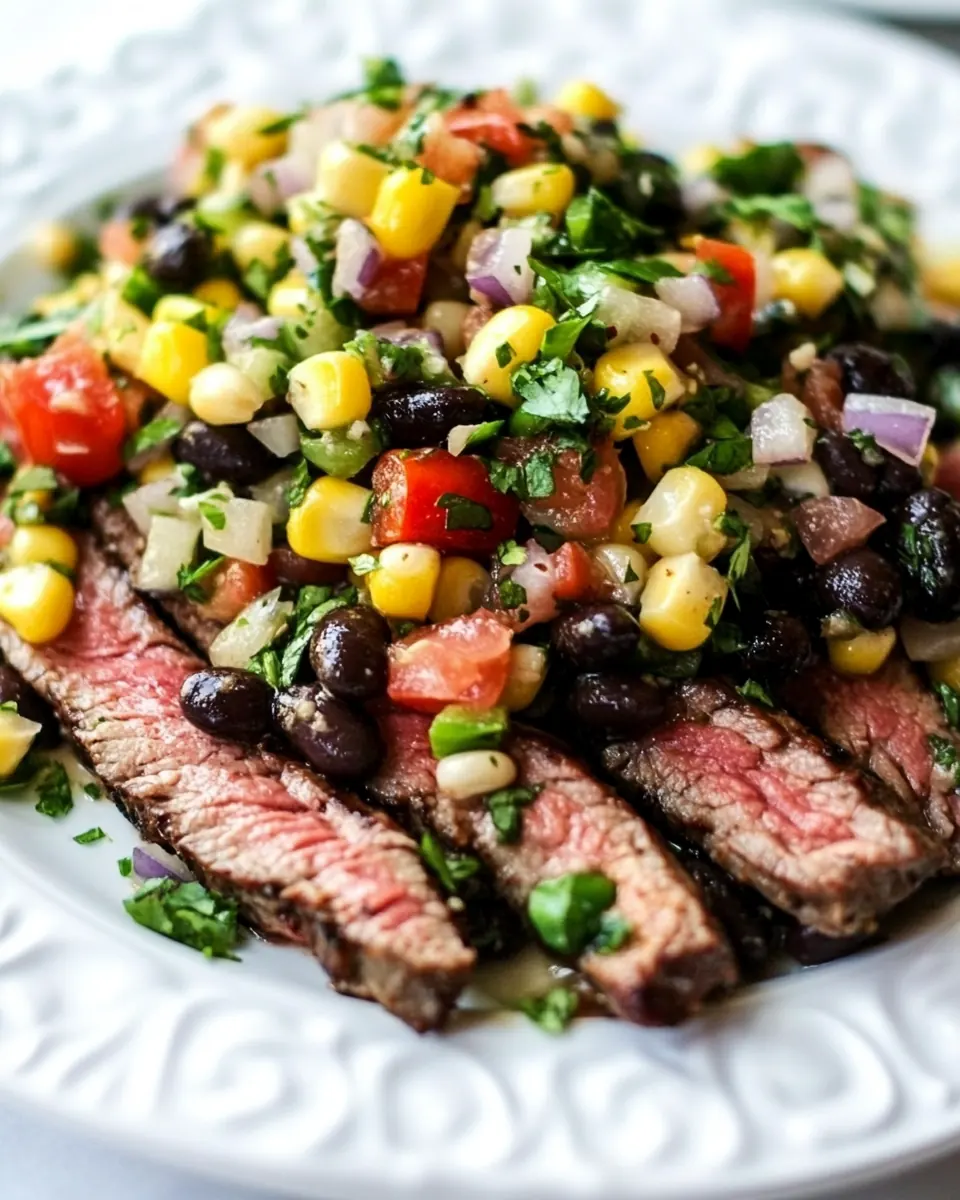
Slice the beef into thin slices across the grain, place on a platter and top with corn, black bean and tomato salad.: Cutting across the grain shortens the muscle fibers, producing tender bites, and the thin slices showcase the pink interior contrasted with the dark seared exterior; the salsa adds bright color and a crunchy textural foil. You should hear a slight give as your knife passes through each slice, and the juices will glisten on the platter when done right. Avoid slicing with a dull knife which can tear the meat, and always cut against the grain to ensure tenderness. Arrange the slices so each piece can be topped with salsa for maximum flavor in every bite.