Pat the shrimp dry and season both sides with salt.: The initial touch of dryness makes an enormous difference. When I press a paper towel to each shrimp , water lifts away so the surface can brown quickly, producing a faint sear and a slightly smoky scent as they hit the grill. You'll hear a delicate sizzle when they contact hot metal, and the sound changes once their exterior firms. Why it matters: dry surfaces brown better, which creates more flavor. Common mistake to avoid, if shrimp are wet they will steam and never get that pleasant golden texture.
Cut the peaches into thick wedges (6 to 8 per peach, depending on size).: Thick wedges hold together on the skewer and develop deep caramelized edges while the flesh inside softens to a tender, jammy texture. As you slice, notice the sweet perfume that escapes, a hint of what the grill will amplify. This technique ensures the fruit chars without turning to mush. Troubleshooting tip, cutting slices that are too thin will cause them to collapse on the grill and make assembly messy.
If using large tomatoes, core them and cut them into wedges approximately the same size.: Matching sizes keeps everything balanced on the skewer so each piece cooks uniformly. When tomatoes are similar in size to the peaches and bread, they blister predictably and sometimes burst, releasing a rich, concentrated aroma. Why it matters, consistent sizing prevents some pieces from overcooking while others remain underdone. A common error is leaving tomatoes whole when they are oversized, which leads to uneven cooking and potential dripping flare ups.
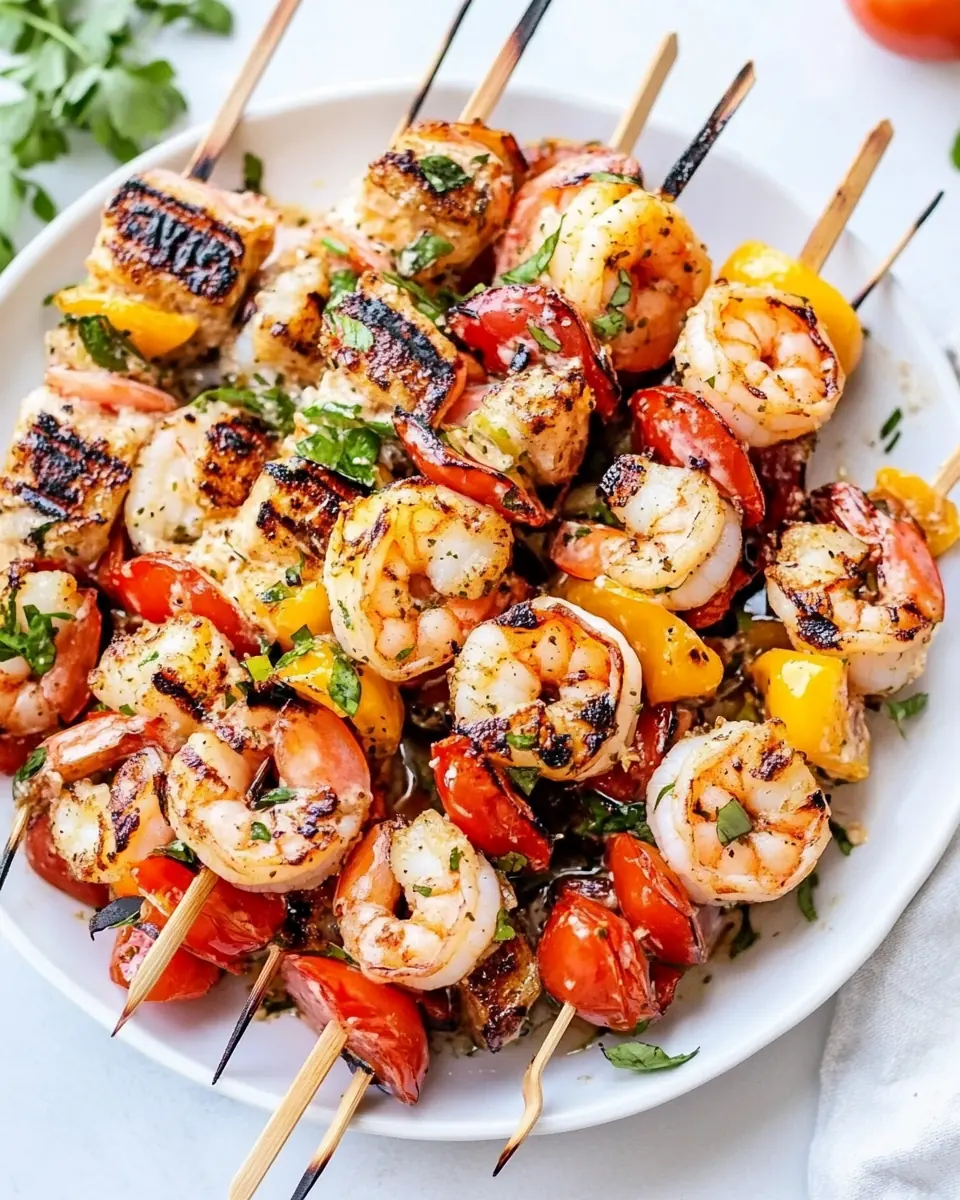
Thread the shrimp, peaches, tomatoes, and cubed bread onto doubled skewers, alternating as you like but beginning and ending each skewer with shrimp, for a total of 8 kabobs. Lightly spray with cooking oil.: As you assemble, you'll notice the weight and rhythm of each skewer, and how the components nestle together. The doubled skewer technique stabilizes ingredients so they do not spin while you flip them, which keeps presentation neat. After spraying, the oil will glint on the surface, hinting at the beautiful charring to come. Why it matters, the order and stabilization reduce slipping and promote even contact with the grill. Avoid crowding too tightly, since cramped skewers can trap steam and prevent that desirable sear.
Preheat the grill with high heat and oil the grates.: A properly preheated grill creates immediate contact cooking, producing a fast sear and those attractive char lines. When the grates are hot and oiled, you will hear a pronounced sizzle as the skewers touch down, and aromas will bloom quickly. I brush the grates or rub them with an oiled paper towel to limit sticking. Why it matters, insufficient heat leads to pale, soggy bread and underwhelming color on the shrimp . A mistake to avoid is placing food on a cold grill, which results in poor texture and longer cooking times than the recipe intends.
Grill the kabobs for 2 to 3 minutes per side, until the shrimp are pink and firm and the bread is lightly charred. The tomatoes may be bursting.: As the skewers cook you'll observe the shrimp transition from translucent to opaque and change color to a luminous pink, and their flesh will feel springy to the touch. The sourdough will darken at the edges and crisp, sending up a toasty fragrance. The heat concentrates the tomato flavor, and occasional pops signal they are softened and sweetened. Why it matters, the short, intense cook preserves juiciness while adding smoky complexity. A common pitfall is overcooking, so use timing and visual cues rather than guessing.
To serve, place the kabobs on a platter. Thinly slice or tear the basil and sprinkle it over everything with a drizzle of balsamic vinegar.: The final assembly is where aromas converge, and the torn basil imparts a fresh, peppery lift against the grilled backdrop. When you drizzle the balsamic vinegar , it beads on the fruit and bread, introducing a bright acidity that balances the sweet notes. This finishing move rounds the dish and makes every bite sing. Troubleshooting, add the basil just before serving to keep its color vibrant and avoid wilting under residual heat.