To a large ziptop plastic bag, add all ingredients except cilantro, seal, and smoosh around to evenly coat chicken. Place bag in fridge for at least 30 minutes, or overnight, to marinate.: The smell of lime and sriracha will hit first, sharp and fragrant, while the honey and olive oil smooth the aromas into a glossy marinade. Smooshing the bag ensures every surface of the chicken receives attention, which means more even flavor and better caramelization on the grill. A common mistake is using a shallow dish where the marinade pools and misses parts of the meat. If that happens, periodically flip the bag to redistribute. The tactile feedback of the bag will tell you when the pieces are well coated.
Lightly oil grill grates and preheat grill to medium-high heat.: During this resting time the acid from the lime juice begins to tenderize connective tissue, and the sriracha and honey begin to penetrate, creating depth. You will notice a faint citrus aroma through the bag after a short soak, and a longer marinade yields a more integrated flavor. Avoid over marinating for more than 24 hours as the acid can start to break down surface texture excessively. If you are short on time, even thirty minutes will make a significant difference.
Add the chicken, discard the bag with the marinade, and grill for about 5 minutes on the first side with lid closed, flip, and cook for about 4 to 5 minutes on the second side with lid closed, or until chicken is cooked through and as done as desired.: The sizzle you want comes from properly preheated grates. Oiling them prevents sticking and promotes clear grill marks, which visually signals proper searing. The sound of contact should be a steady sizzling, not a slow hiss; that tells you the surface is hot enough. A frequent error is cooking on a too low heat, which causes the chicken to cook slowly and dry out. Use tongs and a quick scratch test to make sure meat lifts cleanly from the grates, indicating it has developed a good sear.
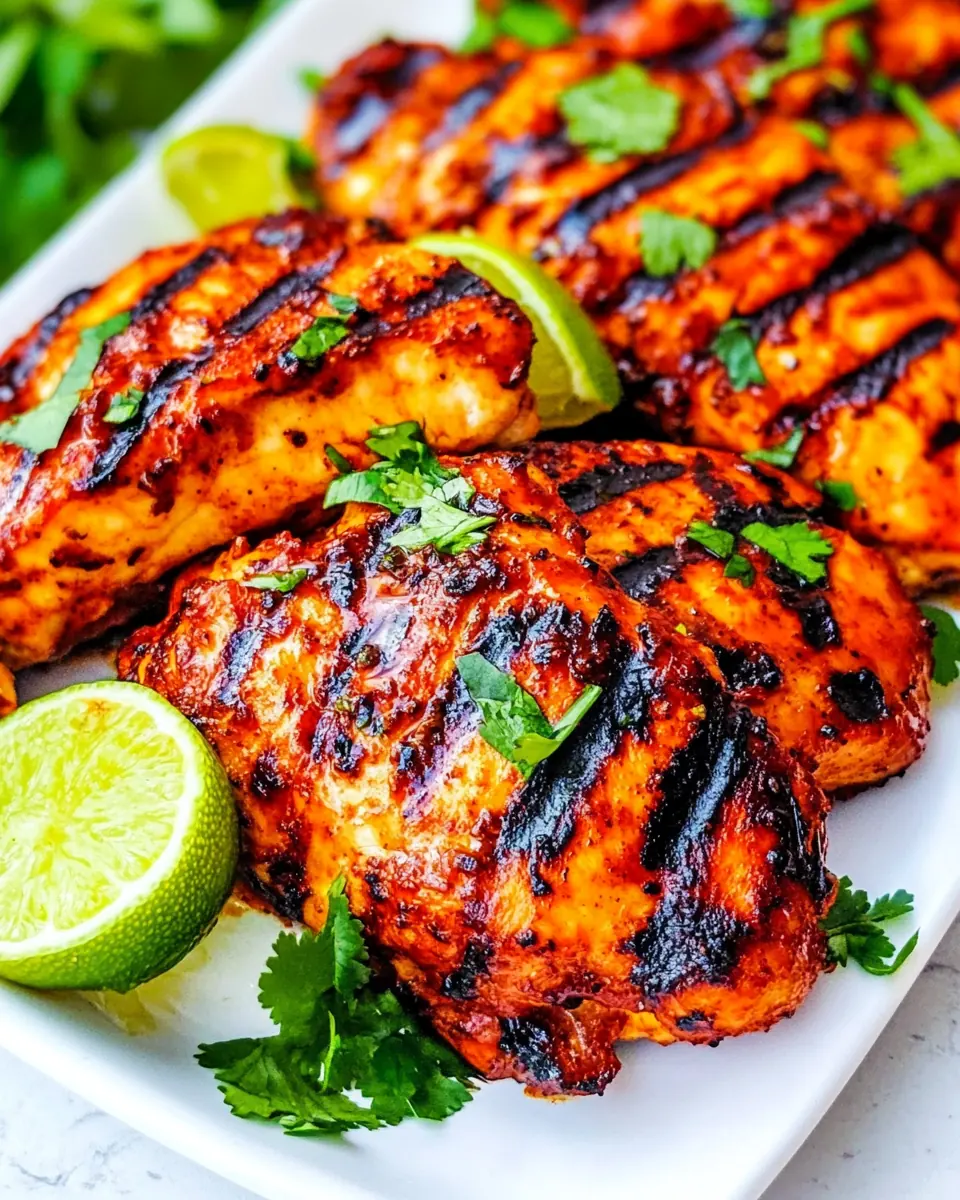
Garnish chicken with cilantro, optional lime wedges, and serve immediately.: When the chicken hits the grates, you should hear an immediate lively sizzle and see the marinade begin to caramelize. Close the lid to trap heat and encourage even cooking, and look for a golden to deep amber color where the sugars have charred lightly. After flipping, listen for a renewed sizzling and watch juices bead at the surface as a sign the meat is almost done. An all too common mistake is flipping too often which prevents development of a crust. If you are unsure about doneness, use an instant read thermometer aiming for 165 degrees Fahrenheit in the thickest part, and then let the meat rest briefly off heat to allow juices to settle.
Garnish chicken with cilantro, optional lime wedges, and serve immediately: The final bright smell of fresh cilantro and the zing from a fresh lime squeeze lift the smoky, sweet, and spicy profile into a lively finish. Serve while warm so the glaze is still slightly tacky, which improves mouthfeel and flavor release. A typical oversight is adding herbs too early so they wilt under heat; adding them at the end preserves color and aroma. The visual contrast of green herbs against the charred glaze signals a well balanced plate and sets expectations before the first bite.