Go Back
Grilled Teriyaki Chicken and Rice Bowls

Grilled Teriyaki Chicken and Rice Bowls

Grilled Teriyaki Chicken and Rice Bowls deliver sticky, savory glazed chicken with caramelized pineapple, bright cilantro lime rice, and charred vegetables for an easy weeknight dinner that tastes like a celebration. The balance of sweet honey, fresh lime, and toasted sesame creates a crave worthy bowl, perfect for summer grilling and casual entertaining. Make it to impress without stress.
Prep Time 45 minutes
Cook Time 25 minutes
Total Time 1 hour 10 minutes
Servings: 4 servings
Course: Dinner
Cuisine: Asian
Calories: 450

Ingredients
  

  • 1/2 cup low sodium soy sauce Provide salty, umami-rich liquid that forms the backbone of the teriyaki marinade; low sodium helps control overall saltiness so other flavors remain balanced. Combine with sweeteners and aromatics to tenderize the chicken and create a glossy, caramelized glaze when grilled.
  • 1 tablespoon honey Contribute natural sweetness and viscosity to the sauce, helping it cling to the chicken and caramelize during cooking. Adjust amount to control the glaze’s sweetness and shine without overpowering savory elements.
  • 1 tablespoon minced ginger Impart bright, pungent warmth and aromatic complexity to the marinade while aiding in tenderization; minced ginger cuts through sweetness and refreshes the palate. Use fresh minced ginger for the best sharp, lively flavor.
  • 1 tablespoon rice vinegar Add mild acidity that balances sweet and savory components and helps break down proteins for tender chicken. Rice vinegar provides a clean tang that brightens the overall sauce without overwhelming other aromatics.
  • 1 tablespoon sesame oil Lend a toasted, nutty aroma that deepens the Asian flavor profile of the dish; sesame oil enriches both marinade and finished bowls. Use sparingly so its strong flavor complements rather than dominates the other ingredients.
  • 2 teaspoons cornstarch or 1 teaspoon arrowroot powder Thicken the teriyaki sauce into a glossy, clingable glaze when dissolved into liquid and heated; choose cornstarch for a neutral texture or arrowroot for a clearer finish. Mix with cold water before adding to hot sauce to prevent lumps and ensure smooth consistency.
  • 1 teaspoon water Dilute and dissolve the thickening agent, allowing cornstarch or arrowroot to hydrate and form a smooth slurry before heating. Use the small amount to achieve the desired sauce thickness without altering flavor.
  • 2 boneless skinless chicken breasts Provide the main protein for the bowls, offering tender, juicy meat that picks up the teriyaki glaze while grilling. Pound or slice for even thickness so the chicken cooks uniformly and absorbs maximum flavor from the marinade.
  • 1 cup long grain white rice Serve as the carbohydrate base, cooking into fluffy grains that soak up juices from the teriyaki and toppings. Rinse before cooking for cleaner texture and use proper water ratio for tender, separate grains.
  • dash of salt Enhance the rice and vegetables with a subtle saline note to bring out natural flavors; use a dash to avoid over-salting since soy sauce contributes sodium. Season lightly and adjust after tasting the finished dish.
  • 2 tablespoons freshly chopped cilantro Provide fresh herbal brightness and a citrusy, slightly peppery lift to finish the bowls; chop just before serving to retain color and aroma. Sprinkle on top to add a lively contrast to the sweet-salty glaze.
  • juice from one lime Add bright acidity and a zesty finish that lifts the entire bowl and balances richness; fresh lime juice cuts through the glaze and freshens the palate. Squeeze over rice and veggies at the end for an immediate burst of brightness.
  • 1 medium red bell pepper, chopped Introduce crisp, sweet crunch and vibrant color when chopped, adding textural contrast to tender chicken and rice. Grill or toss raw pieces into the bowls for a bright, summery accent that pairs well with pineapple.
  • 1/2 red onion, chopped Contribute sharp, slightly sweet pungency and crunchy texture when chopped; red onion provides contrast to softer elements in the bowl. Rinse briefly if you want milder bite, or marinate in lime juice for a milder, pickled flavor.
  • 1 tablespoon olive oil Provide a neutral, fruity fat for sautéing vegetables and building a light caramelization on produce; olive oil helps prevent sticking during grilling or pan-roasting. Use just enough to coat vegetables so they brown evenly without becoming greasy.
  • 1 small zucchini, sliced Add tender, juicy vegetal slices with mild sweetness and soft bite when cooked; zucchini absorbs flavors and grills quickly. Slice uniformly so pieces cook evenly and pair nicely with peppers and pineapple for balanced texture.
  • 4 slices of pineapple Offer sweet, caramelizable fruit rounds that complement the savory-sweet teriyaki and add smoky-sweet depth when grilled. Grill until charred edges appear to enhance sweetness and serve alongside chicken for a tropical touch.
  • salt and pepper Season finished components to taste with additional seasoning, balancing flavors after accounting for sodium from soy sauce; use salt sparingly. Grind fresh black pepper for a warm, sharp counterpoint to sweet glaze components.
  • sesame seeds, for garnish Provide a final visual and textural garnish with nutty crunch and toasty flavor when sprinkled over the bowls; sesame seeds enhance appearance and echo the sesame oil’s aroma. Toast lightly for added depth and extra fragrance before serving.

Equipment

  • Grill
  • Medium Saucepan
  • Mixing Bowls
  • Aluminum Foil
  • Tongs

Method
 

  1. In a medium bowl, whisk together the soy sauce, honey, ginger, rice vinegar and sesame oil. In a small bowl, whisk together cornstarch and water until smooth then whisk into the sauce mixture until combined. Remove one-fourth cup teriyaki sauce and set aside for serving. Add the chicken to the bowl with the remaining teriyaki sauce and marinate in the refrigerator for at least thirty minutes.: The aroma of the sauce will be immediately fragrant with warm ginger and toasted sesame notes, and as the honey dissolves you will see the mixture shine. Visually the glaze should look uniform and slightly viscous once the cornstarch slurry is mixed in. You can gently press a piece of chicken into the marinade to check that it is fully coated, which ensures flavor penetration. The reason marinating matters is that the acid from the rice vinegar and the salt from the soy sauce begin to tenderize the meat while the aromatics infuse. A common mistake is skimping on marination time; if you rush this step the glaze will sit mostly on the surface rather than flavoring the interior. To troubleshoot lumps from the cornstarch, whisk the slurry thoroughly with the water before adding, and if you see tiny clumps, strain the sauce through a fine mesh before combining.
  2. To make the cilantro lime rice, in a medium saucepan bring two cups of water to a boil. Add rice and a dash of salt. Reduce heat to low, cover and cook for fifteen minutes. Remove from heat and stir in cilantro and lime juice.: When the water first comes to a boil you will hear a steady rolling sound, and once the lid goes on the steam trapped inside cooks the grains evenly. The rice should finish tender with grains that remain distinct, not mushy. After cooking, stirring in the chopped cilantro and fresh lime juice releases a bright herbal scent that perks up the neutral starch. The 'why' here is that the acidity and herbs cut through the richness of the teriyaki and balance the bowl. One common error is lifting the lid too often during cooking, which lets steam escape and can lead to undercooked rice; resist peeking until the time is up. If the rice seems dry after resting, sprinkle a teaspoon of warm water and re-cover for a few minutes to steam.
  3. Cut two large pieces of aluminum foil. Divide the red bell pepper and red onion between the two pieces, drizzle with one teaspoon of olive oil and sprinkle with salt and pepper. Pull the short sides up and roll them down over each other, then fold over each end to seal and create a packet.: As you chop the red bell pepper and red onion , you'll notice their sweet, vegetal scent become more pronounced; inside the foil the steam will concentrate those aromas. The packets trap moisture, allowing the vegetables to soften and their natural sugars to intensify. Rolling and sealing the foil tightly is essential, because a loose seal will leak and the vegetables may char instead of steaming gently. A typical slip is overfilling the packet; leave a little room for steam circulation so the contents cook evenly. You can tell they are done when you open a packet and see glistening, softened pieces and a fragrant steam puff rises.
  4. Prepare grill for direct grilling over medium-high heat. Brush and oil the grill grate.: Preheating the grill until it is hot to the touch ensures you get good sear marks and caramelization. Brushing the grate clean then oiling it prevents sticking, especially for the marinated chicken and slices of pineapple . The right temperature will produce a satisfying sizzle when food hits the grate, signaling Maillard reactions that develop flavor. A common oversight is not oiling the grate, which can cause the chicken and squidgy vegetables to tear when you flip them. If your grill flames up from marinade drips, move the item briefly to a cooler spot until the flare subsides, then return to finish cooking.
  5. Place the marinated chicken and the vegetable packets on the grill directly over the fire. Cook chicken until the juices run clear and the chicken is cooked through, about five to eight minutes on each side. Cook vegetable packets until done, about fifteen to twenty minutes. While the chicken and vegetable packets are cooking, brush zucchini with remaining olive oil and then arrange the sliced zucchini and pineapple on the grill. Cook for two minutes on each side.: As the chicken sizzles, the sauce will thicken further and cling to the surface, giving a glossy sheen and deepening color where it caramelizes. The sound is a steady sear punctuated by occasional pops from the marinade; the smell turns richly umami with sweet toasted edges. The foil packets will puff slightly as steam builds, and when you open them carefully you will be greeted by concentrated, sweet vegetable aromas. The zucchini and pineapple will blister and char in quick bursts, producing sweet perfume and smoky notes that contrast perfectly with the savory meat. This step matters because the direct heat creates texture and complexity you cannot replicate on the stovetop. Avoid pressing the chicken down with a spatula, which squeezes out juices and dries the meat. If you worry about undercooking, use a thermometer to check for an internal temperature of 165 F before resting.
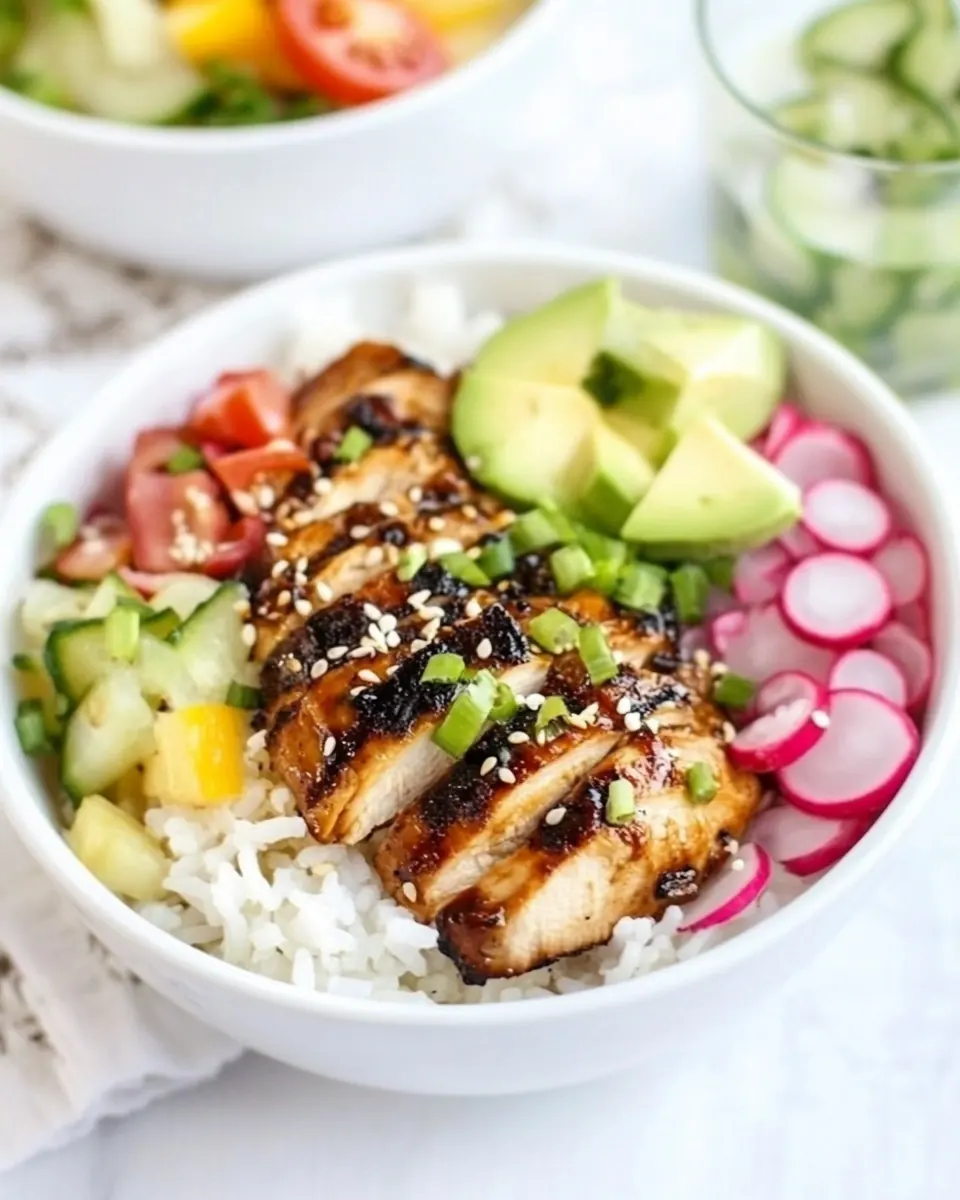
  6. To arrange the bowls, divide rice between two bowls. Layer each with one piece of chicken, contents of one vegetable packet (be careful opening the foil packets because they will release steam), two slices of pineapple and zucchini. Garnish chicken with sesame seeds and serve with additional teriyaki sauce, as desired. Enjoy!: When assembling, the warm rice should steam lightly and act as a cushion for the sliced chicken . The visual contrast of golden glazed meat, colorful vegetables, and bright green cilantro makes the bowl inviting. The scent should be a balanced medley of smoky grill, caramelized sauce, and citrusy rice. Garnishing with sesame seeds adds texture and a nutty whisper that completes the profile. A common mistake is piling everything too high so the bowl becomes unstable; arrange thoughtfully to keep components distinct. If you like extra sauce, drizzle the reserved teriyaki sparingly, tasting as you go to avoid overpowering the fresh lime finish.
Notes

  • Prep mise en place Before you start grilling, have the rice, marinated chicken, vegetable packets, and sliced pineapple ready and within reach to keep grilling smooth and stress free.
  • Pat dry the chicken Before marinating, pat the chicken dry with paper towels so the marinade adheres evenly and browning occurs more readily when it hits the grill.
  • Whisk the slurry thoroughly Mix the cornstarch or arrowroot with the water until completely smooth so the sauce thickens uniformly without lumps when heated.
  • Don’t overfill foil packets Leave space for steam circulation inside the packets so the vegetables soften rather than steam in their own juices and become mushy.
  • Oil the grill grate Use a high smoke point oil on a paper towel held with tongs to prevent sticking, especially for the marinated chicken and pineapple.
  • Flip with care Turn the chicken only once or twice to maintain glaze integrity and prevent tearing, which helps keep the meat juicy.
  • Use reserved sauce sparingly The cooked glaze is more concentrated, so taste as you go when adding extra to bowls to avoid making the dish too salty or sweet.