Preheat oven to 350°F. Line 12-count cupcake tins with 20 cupcake liners.: The initial oven heat creates the right environment for an even rise, and lining tins makes cleanup easier. As the oven warms, you can prepare your batter, and the steady heat helps the cupcakes spring up rather than spread. A common mistake is not preheating long enough which causes uneven rise, so wait until the oven has reached temperature and use the middle rack for balanced airflow. You should hear a soft hum from the oven and notice a steady, warm air flow when you open it.
In a medium bowl, whisk the flour, unsweetened cocoa powder, baking powder, baking soda, and salt together. Set aside.: Whisking dries together ensures even distribution of leaveners and cocoa, which prevents pockets of bitter cocoa or bumpy texture. The mixture should look uniformly colored and free of lumps. If you skip this step, you might find uneven pockets or inconsistent rise. Take a moment to sift or vigorously whisk until smooth.
Place butter and chocolate chips in a large microwave-safe bowl. Heat in microwave (on high) for 1 minute, then stir well. If not fully melted, continue to heat and stir well in 30-second intervals until melted. This should be melted but not very hot.: Melting this mixture creates the molten base that will give the batter deep chocolate richness. Stirring between bursts prevents scorching and promotes a glossy emulsion. You want the mixture warm and silky, not steaming, because hot chocolate can cook eggs when combined. A pitfall is overheating which leads to grainy texture, so use short intervals and stir thoroughly.
Stir (with a mixing spoon, not electric beaters) the brown sugar into the melted chocolate mixture.: Incorporating the sugar by hand keeps the molten chocolate from aerating too much, preserving a denser, fudgier crumb. The sugar will dissolve slightly into the warm mixture giving it a glossy sheen. If you use beaters here, you may whip in too much air and alter the cupcake texture. Aim for a smooth, slightly glossy batter with no sugar grit remaining.
Whisk the eggs and vanilla into the melted chocolate mixture.: Eggs bring structure and moisture while vanilla enhances aroma. Whisk until the mixture looks homogeneous and slightly thickened, and you can smell the vanilla lifting the chocolate. If the melted chocolate is too hot it can scramble the eggs, so ensure it has cooled slightly. A common error is adding cold eggs to very warm chocolate which causes curdling, so use room temperature eggs.
Pour half of the dry ingredients into the wet ingredients and stir just until combined. Do not overmix.: Adding half the dry mix first allows you to incorporate without overworking gluten. After folding, the batter should show streaks of flour that will be finished in the next step. Overmixing here will tighten the crumb and produce dense cupcakes, so stop stirring when you no longer see white flour. The batter should be glossy and slightly thick.
Stir all the buttermilk into the wet mixture. Stir just until mixed.: Buttermilk softens the crumb and reacts with baking soda to add lift and subtle tang. When you add it, the batter will loosen and smell brighter, with the chocolate aroma becoming more pronounced. Stir just enough to combine, because prolonged mixing oxidizes the batter and can make it tough. If the batter seems separated, a few gentle strokes will bring it back together.
Pour the remaining half of the dry ingredients into the wet ingredients and stir just until mixed and no white flour remains. Don’t overmix or the cupcakes won’t bake into the correct soft texture.: Finish incorporating the dry mix so the batter is smooth and uniformly colored. The correct texture is slightly thick but pourable, and you should see no dry streaks. Overmixing at this stage develops gluten and yields a firmer, less tender cupcake. Stop as soon as the batter comes together and has a satiny sheen.
Fill the cupcake liners halfway full with cupcake batter. This will be 20 cupcakes. Don’t overfill cupcake liners or the cupcakes won’t rise properly.: Filling correctly keeps domes even and prevents spillover. The batter should sit just at the halfway mark, and the surface will be slightly glossy. If liners are overfilled they can spill and the centers can bake unevenly. Use a small ice cream scoop or measuring spoons for consistent portions.
Place cupcakes into the oven and bake for 15-16 minutes, or until a toothpick inserted in the middle comes out clean.: As they bake you will smell chocolate intensify and see the edges pull slightly from the liner. A clean toothpick indicates the crumb set without wet batter. Underbaking produces a gummy center, while overbaking dries them out. If the tops are browning too quickly, tent loosely with foil for the final minutes.
Remove the cupcakes from the hot cupcake tins and place them on a wire rack to cool completely before frosting. It’s important to remove the cupcakes from the hot cupcake tin as soon as they come out of the oven so they don’t continue baking and dry out.: Cooling on a rack stops carryover heat and prevents the cupcakes from continuing to cook in the tin, which could dry them. You will feel warmth give way to room temperature, and the tops should be firm to the touch. If you frost while still warm the ganache could melt into the crumb. Be patient and allow full cooling.
While the cupcakes cool, make the ganache: In a medium microwave-safe bowl, heat the heavy cream in the microwave until hot, about 1 1/2 minutes.: Hot cream is essential to melt chocolate evenly and yield a glossy ganache. The aroma will be purely warm cream and you should see small bubbles around the edges. Avoid boiling which can separate the emulsion. Heat just until hot and steaming for best texture.
Immediately pour the chocolate chips into the hot heavy cream, then let sit for 5 minutes before stirring.: Letting the chips sit allows residual heat to melt them gently, producing a smooth emulsion when stirred. The wait also prevents seizing that can occur with abrupt stirring. After five minutes the mixture will look slack and glossy before stirring. A mistake is stirring too early, which can leave unmelted lumps.
After 5 minutes, stir chocolate chips and heavy cream until well mixed.: Stir until the mixture is completely smooth and homogeneous, with a shiny surface that reflects light. The ganache should move in slow ribbons when lifted. If it remains grainy, warm briefly and stir again. Overheating here can make the ganache thin, so short bursts of microwave and steady stirring are better.
Stir in the corn syrup.: Corn syrup increases shine and stabilizes the ganache, giving it a glossy, nearly mirror like finish. Stir until fully incorporated and you notice the surface deepen in sheen. Omitting this will produce a less glossy filling, but the flavor remains similar. Be mindful that too much syrup can make the ganache excessively sweet.
Set the bowl in the refrigerator to chill for 30 minutes before using it to fill cupcakes.: Chilling firms the ganache to a spoonable consistency so you can fill without it running out. You will notice the ganache thicken and lose some surface shine as it cools. If you chill too long it becomes hard to pipe, so check at the thirty minute mark and test a small teaspoon.
While the ganache chills, make the frosting: In the bowl of a stand mixer fitted with the paddle attachment, beat the powdered sugar, butter, unsweetened cocoa powder, and vanilla extract on high until the frosting is light and fluffy, about 2 minutes.: This whipping stage aerates the frosting, producing a light texture that still holds shape for piping. The frosting will transition from matte to slightly glossy and rise in volume. Overbeating can make it too airy and liable to collapse, so stop when it is light and holds soft peaks.
Add the frosting to a large icing bag with or without an icing tip (I used a Wilton 1 M tip for these cupcakes).: Transferring frosting to a bag readies it for consistent piping and pretty swirls. The stability of your frosting will determine how crisp the piped edges remain. If the frosting is too soft refrigerate briefly, and if too stiff let it warm for a few minutes at room temperature.
Set frosting aside for now. This can stay out at room temperature.: Leaving the frosting at room temperature keeps it pipeable while you assemble. You should not feel any coldness when touching the bag, and the frosting should flow smoothly when squeezed. If your kitchen is warm, consider a short chill to prevent slumping.
In a small microwave-safe bowl, melt the white chocolate in the microwave just until melted (start with 30 seconds on high then stir – you don’t want this really hot).: Melted white chocolate must be warm and fluid for writing, not piping hot which can run. Stir thoroughly so the texture is uniform and shiny. If it is lumpy, brief additional low heat and stirring will smooth it out. Too hot white chocolate will spread and ruin precise lettering.
Place the melted white chocolate into an icing bag and cut a very small hole at the tip for printing.: A tiny opening gives you control for lettering; practice on parchment if unsure. The chocolate should flow in slow, steady lines. If the stream is too wide, snip a smaller hole. If the chocolate hardens, warm briefly in your hands or a low microwave burst.
Print funny and clever sayings on the chocolate rectangle “tombstone” cookies. Some examples include: RIP, Ima Goner, Game Over, This Sucks, One Way, Dead End, Bea Fraid, Ben Better.: Writing adds the personality that makes the graveyard theme work. Use short phrases for legibility and steady, gentle pressure when piping. If a letter blobs, chill and scrape clean before rewriting to keep the tombstone tidy. A shaky hand benefits from a light rest against the counter edge for stability.
Place the printed-on cookies into the freezer for about 5-10 minutes just so the white chocolate hardens before putting them on top of the cupcakes.: Freezing sets the writing quickly, preventing smudging during assembly. The chocolate will harden to a satin sheen and feel firm to the touch. Do not leave them frozen for too long or condensation can form when returned to room temperature, so use soon after setting.
To fill the cupcakes with ganache, use a small knife to cut a small hole (well) into the top of each cupcake. Spoon about a teaspoon of ganache into each cupcake then place the cut circle of cupcake back on top to cover the ganache filling.: Filling adds a molten surprise in the center that cuts through the frosting with a decadent burst of chocolate. When you cut the well the crumb should feel tender but not gummy, and the ganache should be thick enough to sit in the middle without seeping out. If your ganache is too loose, chill slightly more before filling.
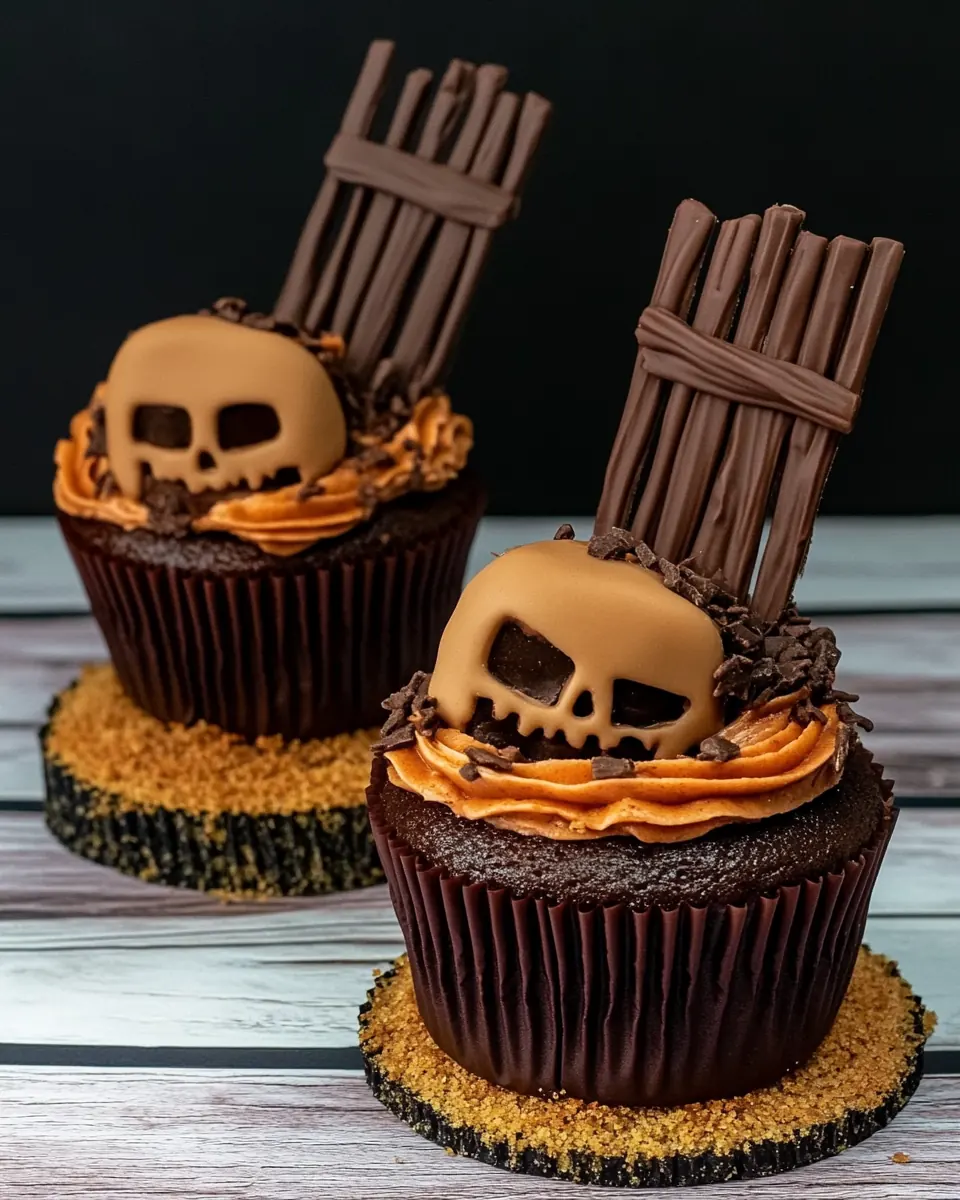
Pipe frosting on top of each filled cupcake then place a tombstone cookie in the top of each.: Piping gives the cupcakes their finished silhouette and the cookie crowns the design. Hold the piping bag at a consistent angle for uniform swirls and press gently to create height. If the tombstone tilts, press it in slightly and add a dot of frosting behind it as support. The finished tray should look festive and stable for serving.