In a double boiler or microwave, melt butter.: The smell of warm butter is instantly comforting, and when it melts gently you will notice a faint sweet, toasted aroma. Allow the butter to melt until fully liquid but not bubbling; vigorous bubbling suggests it is too hot. This step is crucial because pouring very hot butter into the eggs can cook them. A common mistake is overheating the butter which leads to scrambled yolks during emulsification. If the butter separates into milk solids and clear fat, skim off the solids or pour carefully so the clear golden fat is used. Let the melted butter rest a minute so it cools to warm, not hot, before you start blending.
While butter is melting, place egg yolks, lemon juice, and spices in a blender and cover. On low speed, slowly pour the melted butter into the blender in a steady stream until the butter and egg yolk are well blended.: As the blender whirs, you will smell the bright citrus of the lemon juice and the gentle spice from black pepper and cayenne pepper . The blending begins integrating the acid into the egg yolks , which helps stabilize the final emulsion. Getting this base smooth is important because it sets the texture baseline. A frequent misstep is using cold yolks straight from the fridge which slow down emulsification, so try to have them come closer to room temperature first. Covering the blender helps prevent splatter and keeps the aroma contained.
If the sauce is thick slowly add in water, until you have reached a slightly thick and runny consistency.: Listen for the steady hum of the blender and watch as the color shifts to a glossy pale gold. The slow stream is the magical part, it allows the fat to form tiny droplets suspended within the yolk matrix, creating a stable emulsion. If you pour too fast, the sauce may break, feeling greasy and separated rather than silky. If separation begins, stop pouring and add a teaspoon of warm water and blend gently to coax it back. The texture should be smooth and slightly thick, with a sheen that catches the light.
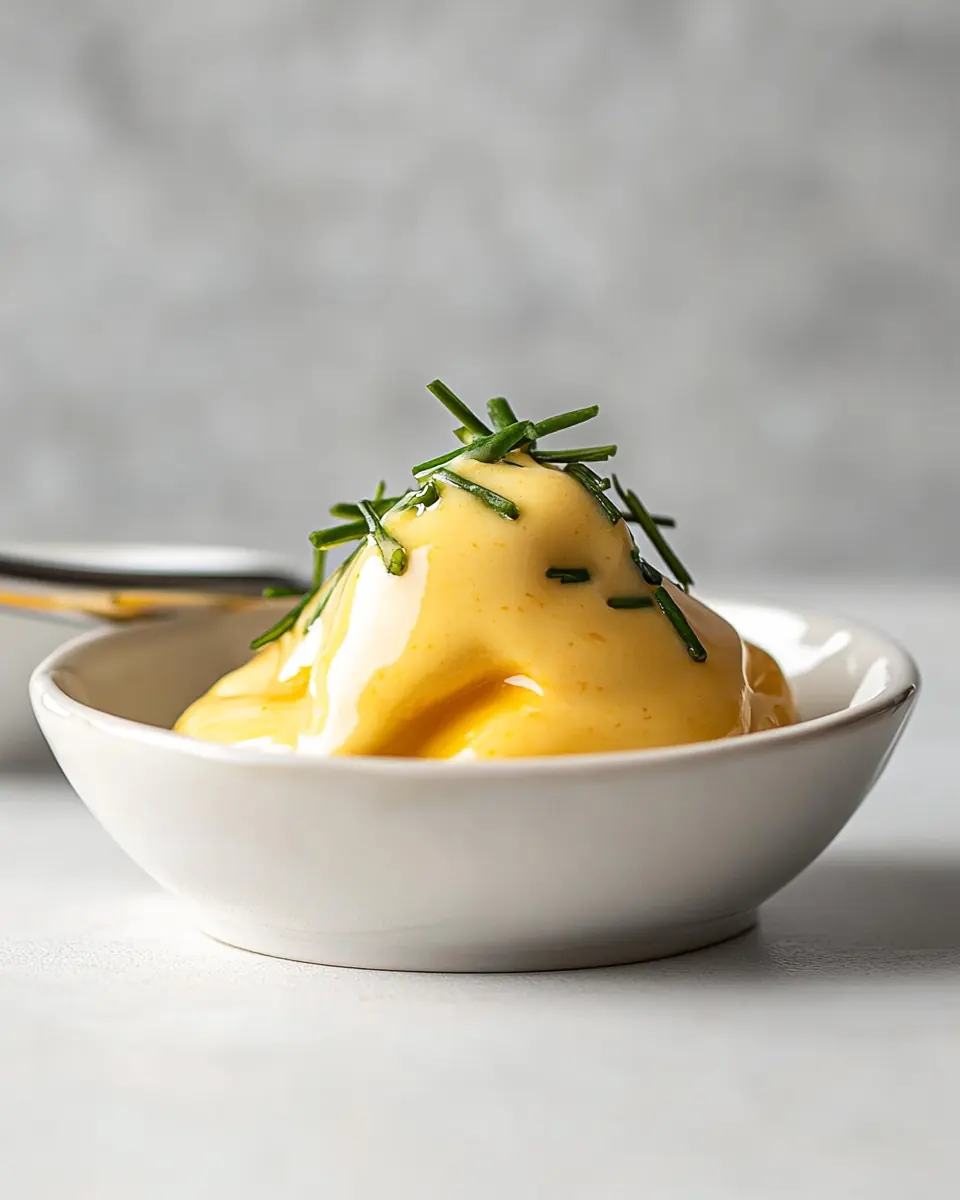
Taste and adjust spices as needed. Serve warm in serving dish of choice!: The sound here is subtle, just the quiet addition of warm water and a few gentle pulses of the blender. Adding water thins the emulsion without watering down flavor, and the warmth keeps the texture cohesive. When you add warm water , do so a teaspoon at a time and observe how the sauce flows from a spoon; it should coat and then slowly drip. A common error is adding cold water which can shock the emulsion and cause breaking. If the sauce gets too thin, you can reinforce it with another lightly whisked egg yolk blended in, but that is rarely necessary if you add water cautiously.
Taste and adjust spices as needed.: Finally, the tasting moment reveals how all components harmonize. The initial aroma should be lemon bright, the mouthfeel creamy, and the finish slightly peppery. Make small adjustments, adding a pinch more salt or a fraction more cayenne pepper if you want more warmth. Avoid big jumps when seasoning, because the flavors concentrate as the sauce sits. One mistake is over-correcting with salt, which is hard to reverse; instead, add tiny increments and taste each time. Serve the sauce warm, not hot, to preserve the silkiness.