Preheat oven to 350 degrees (F). Line the bottom of a loaf pan with parchment paper and spray with non-stick spray.: As the kitchen warms, you will notice a faint hum from the oven and eventually a steady heat that helps the loaf bake evenly. Preheating ensures the batter meets immediate, consistent heat which promotes steady rise and proper crumb set. A common mistake is placing the pan into a cool oven, which can lead to uneven baking and a dense center. Make sure the rack is centered for even browning and line the bottom of the loaf pan with parchment and spray with non stick spray so the loaf releases cleanly.
In a medium bowl, sift together 2 cups of the oat flour, baking soda, cinnamon and salt; set aside. In a separate large bowl, beat maple syrup and eggs with a whisk until well combined, about 3 minutes. Add oil (or butter, if using that), mashed bananas, Greek yogurt, and vanilla. Gently mix in dry ingredients. Place blackberries in a small bowl and toss with remaining oat flour. Fold blackberries into the batter.: You will smell the warm spice of cinnamon as it blends with the oat flour , and sifting aerates the mixture so it integrates smoothly with wet ingredients. This matters because a well aerated dry mix helps avoid clumps and gives a lighter crumb. If you skip sifting, you may encounter small pockets of dry flour in the baked loaf. Take a moment to whisk these dry ingredients until they look uniform and slightly fluffy.
Pour batter into the lined loaf pan and bake for 45 minutes to an hour, or when a cake tester comes out with just a few crumbs sticking to it. Allow bread to cool completely before slicing.: As you whisk, the mixture will lighten in color and gain a slightly frothy texture, which helps trap some air for lift. The sweet scent of maple syrup will rise, and you should see a glossy consistency when ready. Over beating is rare here but avoid extended vigorous mixing that could break down the eggs too much. Aim for a well blended, airy mixture before adding oil and bananas.
Add oil, mashed bananas, Greek yogurt, and vanilla: Once incorporated, the wet bowl gives off a humid, banana forward aroma and has a creamy sheen from the oil and Greek yogurt . These ingredients provide moisture and tenderness, and the acidity from the Greek yogurt reacts with the baking soda later during baking for lift. A notable mistake is using cold eggs or yogurt which can cause the oil to seize up; ensure these ingredients are close to room temperature for smooth mixing.
Gently mix in dry ingredients: After adding the dry mix, you will sense the batter thicken and the color deepen slightly from the cinnamon . Use gentle folding motions so you preserve air and avoid overworking gluten in the oat flour which can lead to toughness. A frequent error is excessive stirring, which produces a denser loaf; fold until just combined with no large streaks of flour.
Place blackberries in a small bowl and toss with remaining oat flour: The berries will look glossy and slightly dusted after tossing, which creates a thin coating that helps them stay suspended in the batter. This step prevents all the blackberries from sinking and concentrating at the bottom. If you skip this, you may find a concentrated fruit pocket. Use a gentle hand to coat them evenly without smashing them.
Fold blackberries into the batter: Folding in the blackberries introduces bursts of berry aroma and bright purple streaks throughout the batter. Do this carefully to avoid breaking the fruit and turning the batter a uniform color, which would mute the berry texture. A common slip is over folding which bruises the berries; fold until you see even distribution of fruit pockets.
Pour batter into the lined loaf pan: As you transfer the batter, you will see the weight and density of the mixture, and the surface should be smooth with visible berry pieces beneath. Use a spatula to scrape the bowl clean and level the top so the loaf bakes evenly. Avoid overfilling the pan; aim for about three quarters full to prevent spillover and ensure a proper dome.
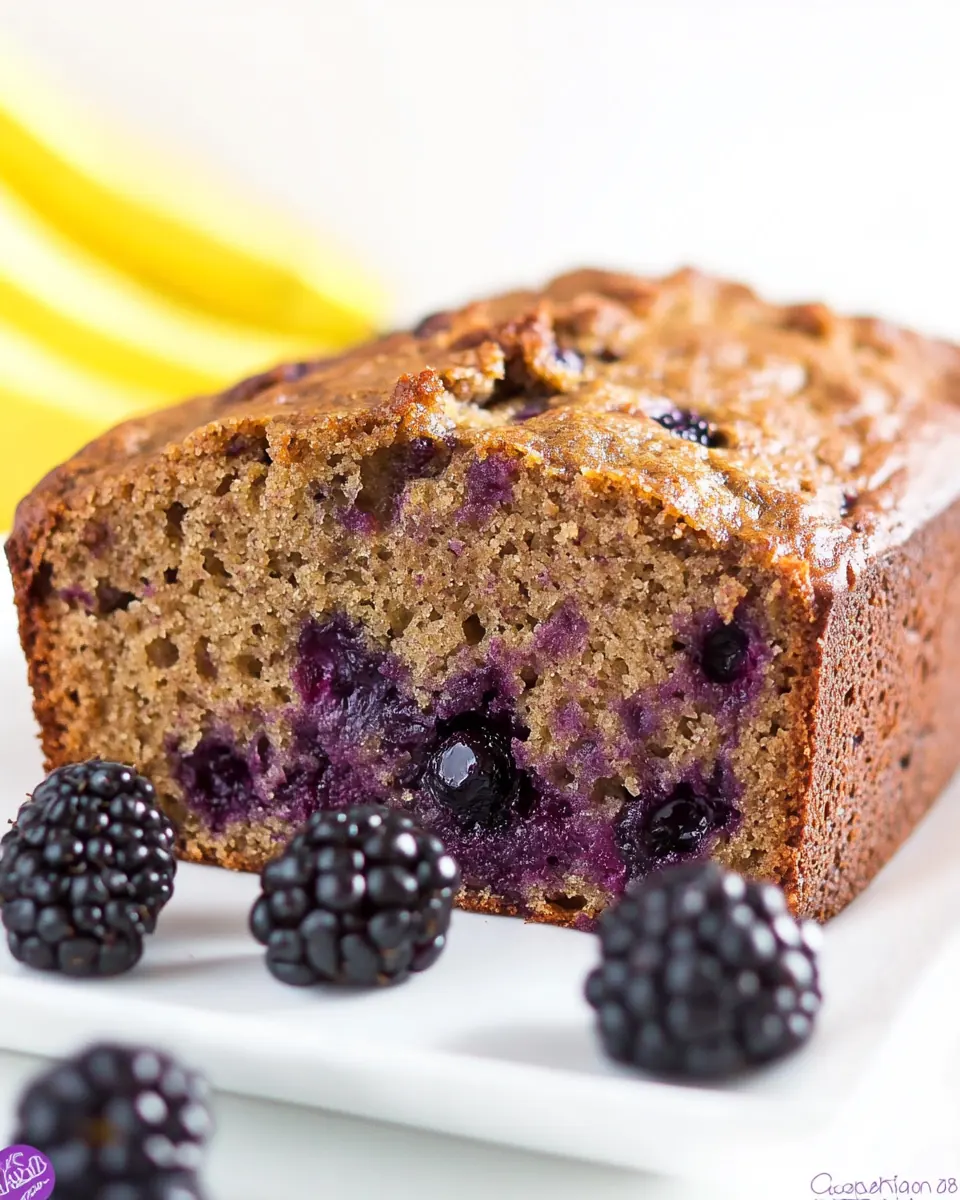
Bake for 45 minutes to an hour, or when a cake tester comes out with just a few crumbs sticking to it: During baking you will notice the loaf rise, edges caramelize, and a warm berry aroma filling the kitchen. The color will move from pale to golden brown, and the top may crack naturally which is fine. Use a cake tester or toothpick to check doneness near the center; a few moist crumbs are ideal. Putting the loaf into the oven before it is fully preheated can lengthen baking time and cause an uneven center, so be patient here.
Allow bread to cool completely before slicing: Cooling is tactile and visual, the loaf will firm up and the crumb will set, making cleaner slices. If you cut too soon, the interior can be gummy and fall apart. Resist the urge to slice while still warm; waiting gives the structure time to finish its gentle steam set and improves texture and presentation.