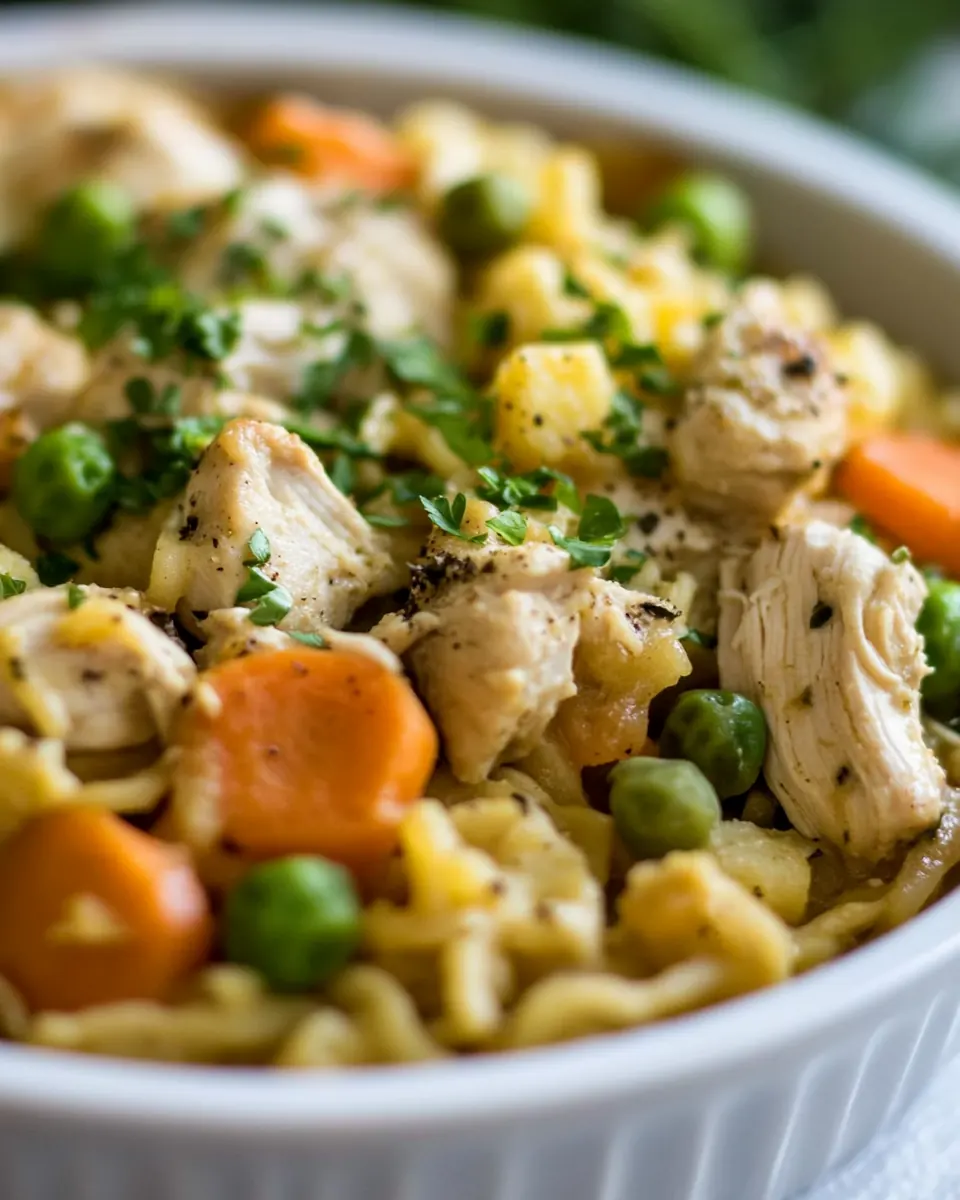
Place the cubed chicken, sliced carrots, celery, and frozen peas in a large pan and cover with salted water. Bring to a boil and cook until the veggies are fork-tender and the chicken is no longer pink inside, about 7-9 minutes. Drain and cover to keep warm. Set aside.: The aroma of the simmering water becomes savory and reassuring, and you will hear a soft rolling boil as the starches and proteins begin to relax. This method ensures the chicken cooks gently and the vegetables become tender without falling apart. Listen for a quiet simmer rather than a furious bubble, which helps keep the pieces intact. A common mistake is boiling too hard, which toughens the chicken and makes the vegetables mushy. Keep a wooden spoon nearby to gently stir once or twice, and check the chicken at the thickest piece to confirm it is no longer pink inside.
While the chicken cooks, melt the butter in a large saucepan over medium-high heat. Add the onions and cook until golden brown, about 1 minute. Add the almond flour and coconut flour and cook, stirring constantly, until golden brown and the flour begins to absorb the butter, just 1 minute or so.: As the pot moves from simmer to a gentle boil, you will notice the liquid turn slightly cloudier, an indication that flavor is donating from the ingredients into the poaching liquid. When a fork slides into the carrot easily and the chicken has lost its pink center, the timing is right. Overcooking here is easy to do, leading to dry chicken and overly soft vegetables. Remove promptly and drain; keeping them covered will trap heat and keep everything warm while you finish other components.
Stir 1 cup of the chicken broth and the celery seed into the flour mixture. Bring to a boil and then turn the heat down to medium. Simmer, stirring occasionally, until the sauce thickens and reduces by about half, about 9-10 minutes.: The act of draining releases steam that can carry away delicate flavors if left exposed. As you cover the pan, you will notice a faint steamy scent, which helps keep the pieces juicy. Covering is practical because it maintains temperature without continuing aggressive cooking. A frequent misstep is leaving the pieces uncovered to cool, which can result in drying out. Keep them tucked under a lid until assembly time.
While the sauce thickens, heat the olive oil in a large pan over medium-high heat.: The butter should sizzle gently when it first meets the pan, releasing a nutty aroma as the milk solids warm. This is the flavor foundation for the sauce, and watching for small foam bubbles tells you the temperature is right. If the butter browns too quickly, reduce the heat to prevent a burnt taste. Use a heavy bottom pan to distribute heat evenly and avoid hotspots.
Spiralize the potato using the 3 mm-blade and place it into the olive oil. Cook until the noodles wilt and turn golden brown, about 10-12 minutes, stirring occasionally. Season with a pinch of salt.: The onion will soften and release sweet, savory aromatics, filling your kitchen with an inviting smell. Stir frequently to prevent sticking, and look for a translucent sheen progressing to light golden edges. Undercooked onion leaves a sharp bite, while overcooked pieces become bitter; aim for a warm, sweet note. Keep a spatula handy to deglaze any fond that develops slightly, as that adds depth to the sauce.
Once the sauce has thickened, turn the heat down to medium-low. In a separate medium bowl, whisk together the Greek yogurt and the remaining 1 1/2 tablespoons of chicken broth until smooth and creamy. While whisking, pour the yogurt mixture into the chicken broth mixture and stir until well combined. Bring to a simmer and cook until it begins to thicken, about 5 minutes. Season to taste with salt and pepper.: As the flours toast, they emit a warm, nutty scent and the mixture will take on a slightly thicker, paste like consistency. Stirring constantly prevents lumps and ensures even toasting. If you skip this step, the sauce can taste raw or feel grainy. Watch closely because nut flours toast quickly and can burn, which introduces a bitter undertone.
Add the cooked potato noodles into the sauce and stir until evenly coated. Divide between plates, top with the chicken/vegetable mixture, and garnish with fresh parsley.: When the liquid hits the toasted flours, you will hear a soft hiss as the mixture loosens. The broth blends with the nut flours to create a velvety base, while the celery seed adds an aromatic, slightly peppery lift. Stir briskly to combine and avoid lumps forming. A common trap is adding all the broth at once without whisking, which can leave pockets of dry flour. Pour steadily and whisk to integrate.
Bring to a boil and then turn the heat down to medium: The sauce will bubble as starches activate, and that boil helps the mixture homogenize. Reduce to medium so it simmers gently and thickens without scorching. You will notice the sauce start to coat the back of a spoon, a visual cue the consistency is progressing correctly. If you keep it at too high a heat, it can reduce too fast and become pasty, so adjust the flame to maintain a slow simmer.
Simmer, stirring occasionally, until the sauce thickens and reduces by about half, about 9 to 10 minutes: The aroma deepens and the sauce will become noticeably glossy and cling to utensils. This reduction concentrates flavor and ensures the final texture is rich but not gluey. Stir occasionally to prevent sticking at the bottom, especially as the sauce tightens. One mistake is walking away; frequent checks keep the texture on point and stop it from over reducing.
While the sauce thickens, heat the olive oil in a large pan over medium high heat: The oil warms until it shimmers, releasing a subtle fruity scent. This step prepares the surface for quick frying of the potato noodles, and you want it hot enough to sizzle but not so hot that it smokes. If the oil is too cool, the noodles will absorb oil and become greasy; too hot and they will burn. Watch the surface and adjust the heat so the oil is lively without smoking.
Spiralize the potato using the 3 mm blade and place it into the olive oil: As the strands hit the pan, you will hear an immediate sizzle and see the edges begin to soften and color. The spiralized potato cooks quickly, so spread it in an even layer and avoid overcrowding. That sizzle signals moisture escaping and the beginnings of caramelization, which builds flavor. A common error is piling too many strands at once, which steams instead of browns, leaving them limp rather than pleasantly tender with crisp edges.
Cook until the noodles wilt and turn golden brown, about 10 to 12 minutes, stirring occasionally: During this time you will notice changing textures, from rigid strands to glossy, flexible noodles with little golden bits where edges contact the pan. Stir occasionally to encourage even browning. If you walk away, some strands will over crisp while others remain raw, so stay attentive and use a spatula to flip sections as they color. Season with a pinch of salt once they are nearly done to enhance the natural sweetness.
Season with a pinch of salt: A small hit of salt at this stage punctuates the potato flavor and helps the overall seasoning come together. Taste as you go since the chicken broth may already contain salt. Oversalting here is an easy misstep, so add modestly and adjust later if needed.
Once the sauce has thickened, turn the heat down to medium low: The sauce will settle into a creamy, slightly glossy state, and lowering the heat prevents splitting when you add the yogurt mixture. Keeping it too hot risks curdling the dairy, so reduce gently and maintain a slow, even simmer. If you do not reduce the heat, the yogurt can separate, leaving a broken texture.
In a separate medium bowl, whisk together the Greek yogurt and the remaining 1 1/2 tablespoons of chicken broth until smooth and creamy: The yogurt should transform into a silky emulsion when whisked with warm broth, softening its tang and making it easier to incorporate. Whisking in a bowl first prevents lumps and reduces thermal shock when added to the hot sauce. If you pour cold yogurt straight in, it can seize up, so tempering is key.
While whisking, pour the yogurt mixture into the chicken broth mixture and stir until well combined: As the two meet, you will see a sheen return to the sauce, and aromas blend into a rounded, slightly tangy profile. Stir steadily to achieve a homogeneous texture. Rapid temperature change can cause separation, so stir gently and steadily. If you notice any curdling, lower the heat and whisk vigorously to reemulsify.
Bring to a simmer and cook until it begins to thicken, about 5 minutes: The sauce will become velvety and cling to the back of a spoon, signaling readiness. This brief simmer allows flavors to marry and for the mixture to reach the perfect coating consistency. Over simmering tightens the sauce too much and can make it pasty, so watch the clock and remove from heat at the right moment.
Season to taste with salt and pepper: Fine tune the flavor now, tasting for balance. Freshly ground pepper adds aromatic lift while salt amplifies the savory notes. Go easy, since the chicken broth contributed salt earlier. A common mistake is heavy handed seasoning; small adjustments after tasting yield the best result.
Add the cooked potato noodles into the sauce and stir until evenly coated: As you fold the noodles in, they will glisten with sauce and the kitchen will fill with a cozy, savory perfume. The noodles should look glossy and fully coated, with some bits of golden edge visible. If the sauce seems too thin, let it sit off heat for a minute to thicken slightly; if too thick, stir in a splash of broth. Avoid aggressive mixing, which can break down the delicate noodles.
Divide between plates, top with the chicken slash vegetable mixture, and garnish with fresh parsley: The final assembly brings warmth from the sauced noodles and the savory poached topping. The garnish of chopped parsley introduces a bright, herbaceous finish. Plate mindfully so each serving gets a balance of noodles and the chicken vegetable mix. A mistake to avoid is piling everything together without balance, which can hide the contrast that makes the dish sing.