In a large bowl whisk together the egg yolks, Greek yogurt, orange juice, brown sugar, and vanilla; set aside.: The first sensations you will notice are the creamy texture and the bright citrus aroma from the orange juice , and the mixture should look smooth and slightly glossy. Whisking the yolks with the Greek Yogurt emulsifies fats and creates a tender base, which contributes to even browning during cooking. If you rush this step and leave lumps, the batter may not hydrate uniformly, resulting in inconsistent texture. A common mistake is under-whisking which leaves streaks of yolk, so take a minute until the mixture is homogenous and fragrant.
In a separate large bowl whisk together the flour, baking powder, salt, and cinnamon; and diced strawberries and toss to combine, making sure berries are fully coated in the flour.: As you mix the dry ingredients, inhale the toasty notes of whole wheat flour and the warm perfume of cinnamon . Tossing the strawberries in the flour prevents them from sinking and helps distribute them evenly throughout the batter, keeping the color of the batter pale rather than streaked pink. This step matters because it preserves the visual appeal and texture; skipping the toss means the fruit will collapse into the batter, creating uneven moisture pockets. Watch out for overmixing the dry components which can compress the flour and yield dense pancakes.
Add flour mixture to the wet milk mixture, and stir just to combine; do not over mix! The batter will be thick, so don't worry if there's a lot of clumps left.: When the dry and wet components meet, you should notice a rustic, chunky batter with visible streaks and pockets, which is perfect. The clumps hydrate as the batter rests briefly, preventing gluten overdevelopment that creates toughness. The reason for minimal stirring is to keep the pancakes tender and airy, relying on the whipped whites later to provide lift. A frequent error is over-stirring until perfectly smooth, which yields flat, chewy pancakes, so resist smoothing every lump.
Add egg whites to a large bowl or the body of a stand mixer. Beat using a handheld mixer or the whisk attachment until the whites begin to form soft peaks.: As you beat the egg whites , they will transform from glossy liquid to foamy clouds that hold light peaks and a soft sheen. This stage is crucial because those trapped air bubbles expand when cooked, creating a light interior. If you underbeat, you will not get enough lift; if you overbeat to stiff peaks, the whites can break and weep, causing the batter to deflate. Aim for soft peaks that bend slightly at the tip and feel pillowy to the touch.
With a rubber spatula fold egg whites into flour/Greek yogurt mixture, stirring until fully incorporated.: Folding is a gentle, patient motion where you scrape under and lift over, preserving the air while achieving a cohesive batter. Sensory cues include a glossy, slightly billowy batter that is still thick but supple, and you should hear minimal resistance from the spatula. This technique matters because it maintains volume yet blends ingredients evenly, avoiding dense pancakes. A typical mistake is aggressive mixing which knocks out the air, so fold slowly until no white streaks remain.
Melt 1/2 tablespoon of butter in a large skillet over medium-heat.: The skillet should whisper with a faint sizzle when the butter hits and begin to smell nutty as it warms, but avoid browning at this point. Getting the pan to the right warmth ensures an even golden crust without burning. If the pan is too hot, the exterior will darken before the interior cooks, leading to raw centers; if too cool, the pancakes will spread flat and pale. Test with a small drop of batter to check the temperature before cooking a full batch.
Ladle 1/3 cup scoops of the batter into the skillet, only cooking a few at a time so they don't blend together. Cook pancakes until the edges begin to brown and the top of the batter bubbles, then flip and cook for another 1-2 minutes. Repeat for all pancake batter.: As batter meets the pan it should sizzle softly and begin to set at the edges, creating a shallow ring where bubbles will form. Cooking a few at a time gives you room to flip without merging and helps regulate pan temperature. You will notice the batter surface change from shiny to matte as it cooks, and small bubbles will rise and pop; that is your cue to flip. Crowding the pan causes uneven heat distribution and merged pancakes, which is a common problem to avoid.
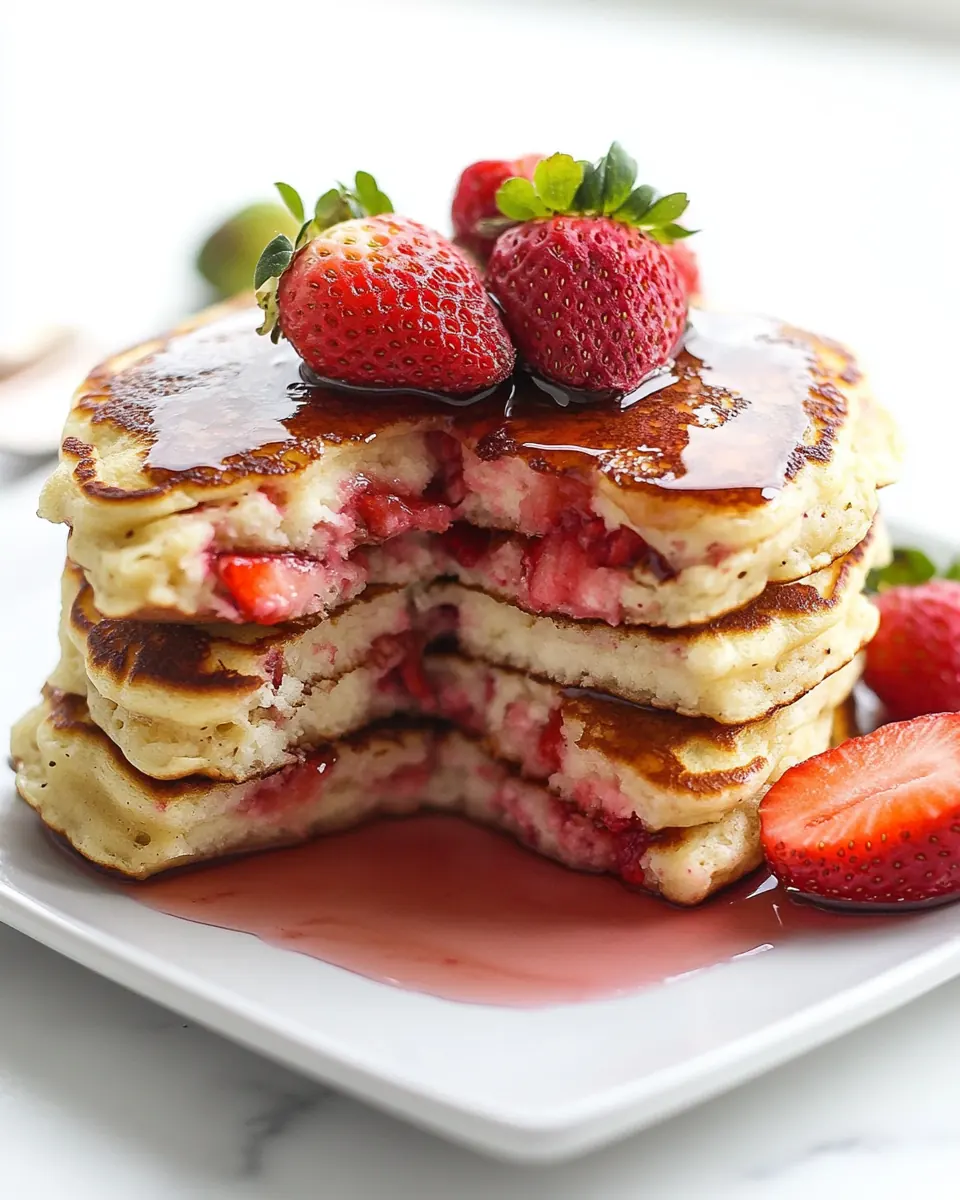
Top pancakes with syrup and extra strawberries, or anything else your heart desires! Serve at once.: The ideal visual cue is a golden rim with a slightly set top peppered with small bubbling, and the underside should be a rich golden brown when checked. After flipping, the second side cooks quickly to finish the interior without drying out, and the aroma will shift to a buttery, toasty note. If you flip too early you risk tearing; if you wait too long the cake becomes dry. Keep heat moderate and adjust as needed between batches to maintain consistent color and texture.
Top pancakes with syrup and extra strawberries, or anything else your heart desires! Serve at once: At service the warm stacks should steam gently and the maple syrup will shimmer when drizzled, enhancing the look and mouthfeel. Adding extra strawberries provides freshness, while a pat of butter adds gloss and savory balance. Serve immediately to preserve texture; letting them sit too long causes steam to soften the exterior. A common serving pitfall is stacking too high which traps steam and yields soggy pancakes, so keep stacks moderate for the best contrast between crisp edges and tender centers.