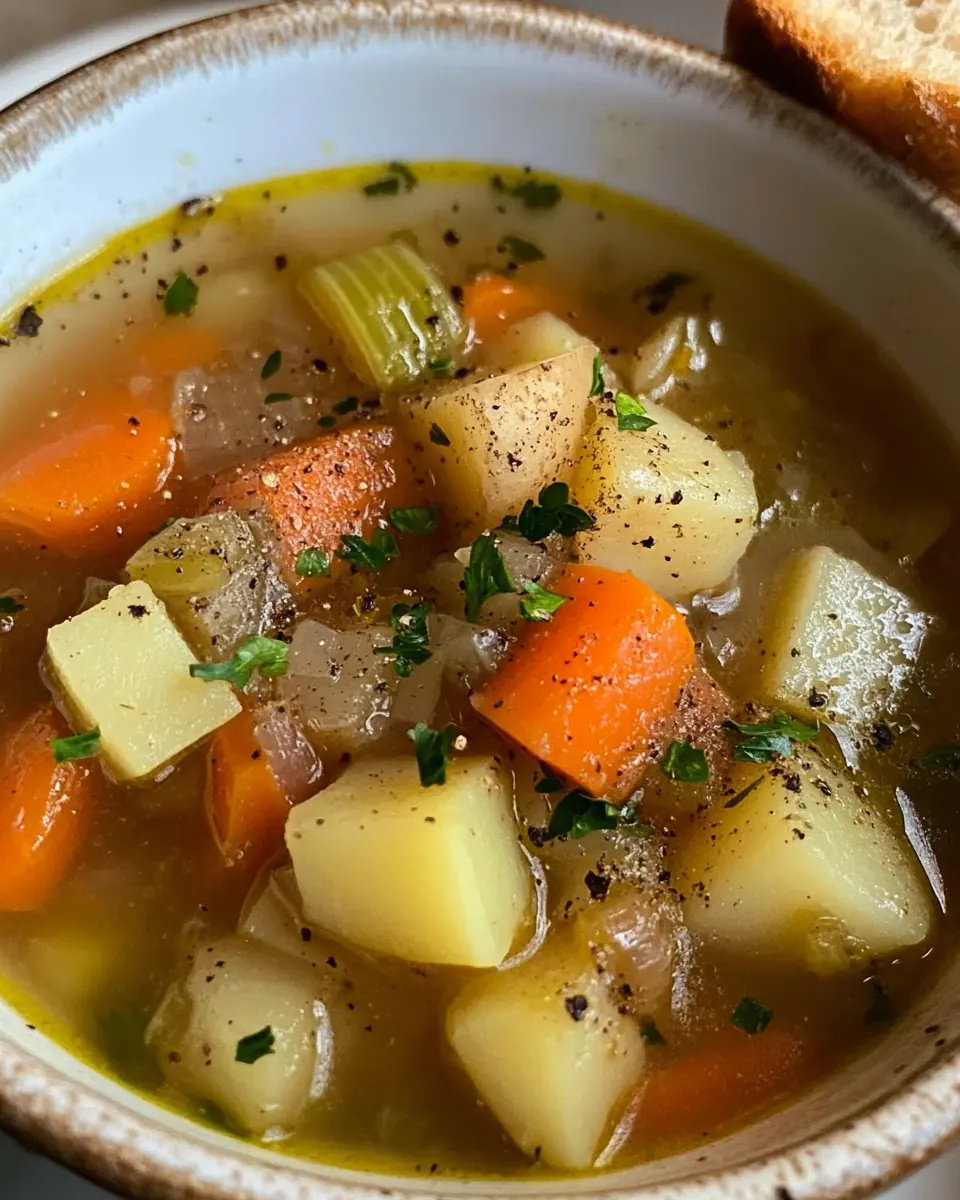
Add all ingredients except for vegetable broth to a large pot on the stove on medium heat. Stir a few times over 10 minutes, as the butter melts and veggies and potatoes become fragrant.: As you hear the gentle sizzle when the butter and olive oil meet the pot, inhale the sweet, toasty aroma of the melting fats. The onion will soften and turn translucent, releasing sugars that perfume the air, while the minced garlic becomes aromatic without going bitter. The diced potatoes , carrots , and celery should glisten and begin to show softened edges, not brown spots. This initial contact between fat and vegetables builds the foundational flavor through gentle heat, helping the soup develop depth. A common mistake is using high heat, which can brown the vegetables and create an uneven flavor profile; instead maintain steady medium heat and stir occasionally so nothing sticks to the bottom.
Add vegetable broth to sautéed vegetable and potato soup ingredients. Cover with a lid and check on soup in 5-10 minutes. If it is boiling, turn the burner down to medium-low to instead create a simmer. Cook for about 15-20 minutes longer, until veggies are cooked to your liking.: During this period the pot will emit layered scents of sweet onion and aromatic garlic , and you will notice the vegetables becoming tender at the edges. The sound is a soft, consistent sizzle rather than loud popping; that steady sound means moisture is being released and flavors are concentrating. Gently scrape the bottom of the pot with a wooden spoon to capture any fond, which adds richness to the broth later. If you rush this step or stop stirring, pieces can catch and burn, leading to bitter notes in the soup, so patience here ensures a clean, savory base.
Serve as desired. High quality Parmesan cheese is one of my favorite things to top this type of homemade vegetable soup. I also like a few fresh basil leaves and chunks of soft sourdough bread to slop it all up. Delicious!: When you pour the warm vegetable broth into the pot, listen for a gentle hiss as it meets the hot vegetables, and watch the mixture loosen into a soupy texture. The broth dissolves the caramelized bits on the bottom, incorporating their flavor. This is the transition from sauté to simmer, and getting it right helps the soup taste cohesive. Avoid adding cold broth straight from the fridge as it can shock the pot and disrupt gentle cooking; bringing it closer to room temperature or gently heating it first is a subtle but effective technique.
Cover with a lid and check on soup in 5 to 10 minutes: Within this time you will see steam rising and small bubbles forming at the edges when the liquid begins to heat through. Lifting the lid briefly will release a wave of savory, vegetable steam that signals the aromatics are infusing the broth. Keep an eye on the pot because a rapid boil can break down textures too quickly; the goal is a steady simmer. If you see vigorous rolling bubbles, lower the heat to maintain a delicate simmer instead.
If it is boiling, turn the burner down to medium low to instead create a simmer: A simmer produces gentle movement in the liquid and encourages even cooking without agitating the potatoes into falling apart. Visual cues include small, slow-rising bubbles and a calm surface with occasional movement. This controlled heat preserves texture and allows flavors to meld slowly. The typical error here is leaving the pot at high heat so everything becomes overcooked and mushy, so once simmering is achieved, settle into a patient rhythm and let the soup develop.
Cook for about 15 to 20 minutes longer, until veggies are cooked to your liking: As the soup simmers, test a piece of potato and a bit of carrot for tenderness; they should be tender through but not falling apart unless you prefer a more broken down texture. You will notice the broth gaining a fuller mouthfeel as the potatoes release starch. Taste the liquid and adjust the seasoning with extra salt or a pinch of pepper if needed. One common pitfall is assuming time alone guarantees doneness; instead use the tactile test by pressing a piece with a fork to confirm it meets your preferred texture.
Serve as desired: When ladling the soup, aim for a mix of broth and vegetables in each bowl to showcase the balanced texture. Top with freshly grated Parmesan cheese which will melt slightly into the hot liquid, adding savory richness, and scatter torn basil leaves for a fragrant lift. A side of warm Sourdough bread invites dipping and rounds out the meal. The final taste check is crucial, since finishing flavors can be adjusted with a squeeze of fresh acidity or an additional pinch of salt ; avoid overheating the bowl after adding delicate basil to preserve its brightness.