Thaw the hash browns completely and set aside.: The first sensory check is touch and visual clarity, the potatoes should be soft to the touch with no icy pockets. If you start with partially frozen potatoes , the casserole will release water as it bakes and become watery, which flattens flavor and destroys the intended creamy texture. A common mistake is rushing this step, so allow the bag to sit overnight in the refrigerator or at room temperature until fully thawed. If they seem watery after thawing, press them lightly in a colander to remove excess liquid without squeezing all the starch away, because some moisture helps cohesiveness.
Preheat the oven to 350°F.: When the oven warms, listen for the quiet hum and feel the heat from the door, it should hold steady at 350°F for even baking. Proper oven temperature ensures the casserole cooks through evenly and the topping browns at the right rate. If your oven runs hot or cold, use an oven thermometer to avoid overbrowning or undercooking. Avoid opening the oven repeatedly early in the bake, as that drops the temperature and can increase total cooking time.
Melt 1 tablespoon butter in a large non-stick skillet over medium heat. Add the onion and a pinch of kosher salt and cook for 3-5 minutes or until the onion is just soft. Don’t let the onion get browned or crispy.: As the butter sizzles, you will notice the onion soften and become translucent, releasing sweet, savory aroma that will blend quietly into the casserole. This gentle cooking preserves moisture and prevents bitter caramelized notes, which is important because we want mellow onion flavor, not sharpness. A usual slip is cooking too long or at too high a temperature, which browns the onion and changes the dish profile. If the skillet starts to brown, lower the heat and add a splash of water to deglaze and cool the pan slightly.
While the onion is cooking, melt the rest of the butter in a medium size bowl and set aside.: The melted butter will be warm and glossy, perfect for coating the corn flakes and for enriching the casserole mix. This pre-melted batch provides even distribution of fat, which promotes golden color on the topping and richness throughout. Avoid overheating the butter until it browns, because browned butter will introduce nutty notes that may change the intended flavor. If you accidentally brown it, let it cool slightly before mixing so it does not overcook other ingredients.
In a large mixing bowl whisk together the sour cream and cream of chicken soup with 5 tablespoons of the melted butter and the kosher salt and black pepper. Add the thawed potatoes and the cooked onion and stir to combine, then add the shredded cheese until mixed well. Transfer the mixture to 11×13-inch baking dish and top with more cheese if desired.: At this stage you will sense a thick, creamy mixture coating the potatoes , with flecks of onion and the warm aroma of melted butter . The whisked base creates a smooth emulsion that helps the casserole stay cohesive rather than watery, and stirring in the shredded cheese while everything is still warm encourages even melting. A frequent oversight is underseasoning, so taste a small spoonful before baking and adjust the salt and pepper. When transferring, spread the mixture evenly so the casserole cooks uniformly; uneven thickness leads to edges that overcook before the center is done.
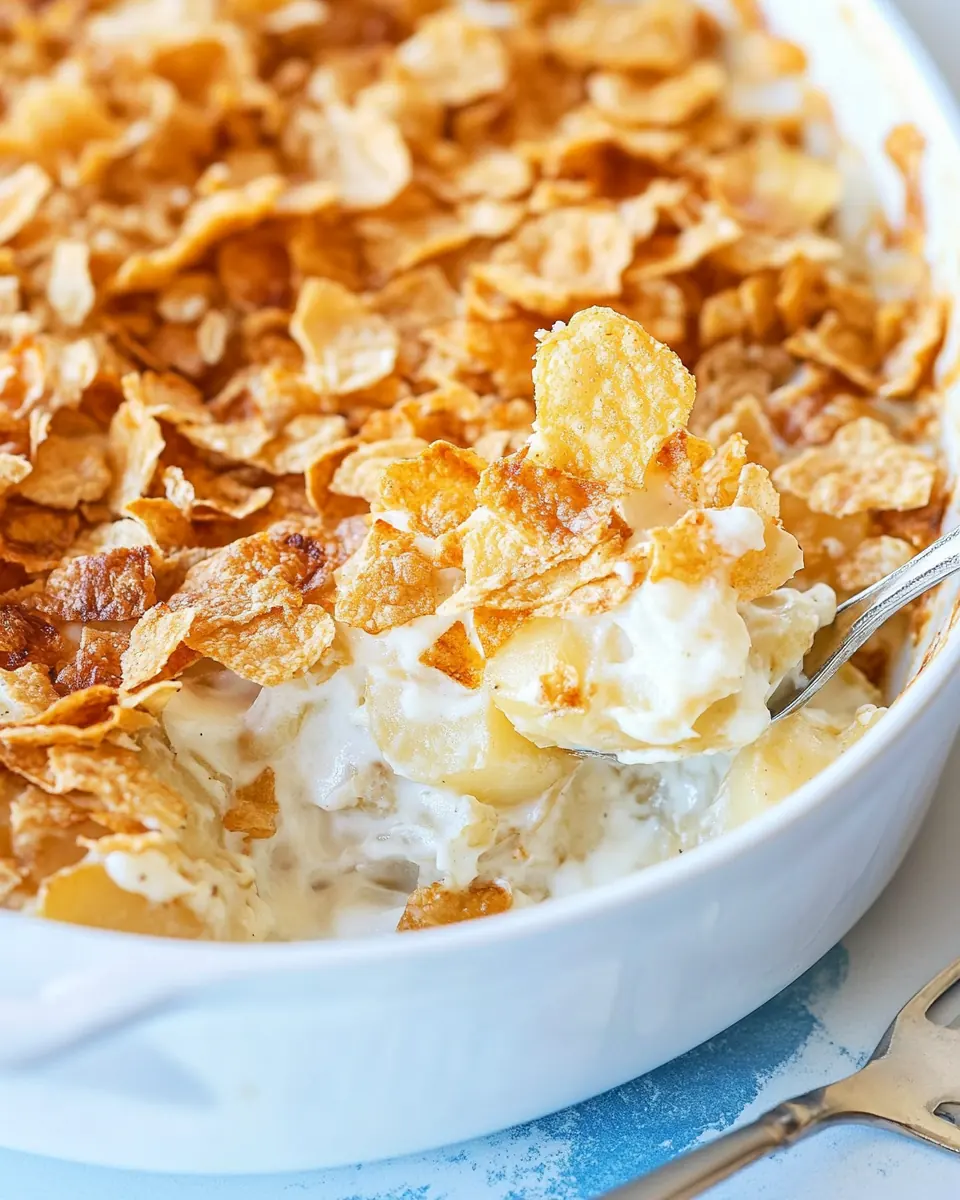
Add the cornflakes to the remaining melted butter and toss lightly to coat. Spread evenly over the potato mixture. Bake for 1 hour 30 minutes. Check the casserole at about 1 hour 10 minutes and if the corn flakes are getting too browned, tent the pan with aluminum foil.: You will notice the corn flakes turn glossy when coated with butter , and as they bake they will crisp and take on a warm golden hue. The contrast between the crunchy top and the soft interior is the hallmark sensory pleasure of this dish, and it develops as moisture steam escapes during baking. Keep a close eye near the end, because burned flakes taste bitter and will ruin the finish. If the top browns too quickly, tenting the pan preserves the crunch without overcooking, and it helps the center continue to heat through without sacrificing texture.
Rest for 5 minutes before serving. This casserole is great for serving hot or warm.: After baking, the aroma will be rich and inviting, and the casserole will still be bubbling gently at the edges, signaling retained heat. Resting lets residual steam redistribute, producing cleaner portions and preventing the filling from running when scooped. Serving too soon is a common error because the interior can be molten and loose; a short rest provides structure while keeping the dish warm and spoonable. Whether served hot or warm, the textural contrast between the crunchy corn flakes and creamy interior will be at its best after this brief pause.