To make the dough, combine flour, sugar, cornmeal, and salt in a processor; pulse 2-3 times. Add butter and pulse 4-5 times, or until mixture resembles coarse meal. With the processor running, slowly pour the buttermilk through the chute, processing until the dough forms a ball. Remove the dough ball and adhere any remaining pieces of dough to it, then wrap in plastic wrap or parchment paper. Refrigerate for at least 45 minutes before rolling out.: The initial hum of the food processor should sound rhythmic and light, not continuous, as pulsing distributes the all purpose flour , granulated sugar , coarse cornmeal , and salt without activating gluten. You want a uniform mix of dry ingredients so the butter disperses evenly later. Expect a faint scent of cornmeal and a slightly sweet note from the sugar. A common mistake is pulsing too long, which can overwork the flour and lead to a tougher crust. If you see the mixture clumping, stop and break it up with a spatula before continuing. Use short bursts to keep the mixture aerated, and scrape down the bowl once so no pockets of dry ingredients remain hidden at the bottom. Maintaining this texture matters because it determines how the butter will interact with the flour in the next step, which directly affects flakiness.
Center a rack in the oven and preheat to 350 degrees F. Remove the galette dough from the refrigerator and place on a sheet of parchment paper. Starting at the center of the dough, roll out, forming a 14-15-inch wide circle. Place the dough with parchment paper on a baking sheet.: When you add the small pieces of cold butter , the pulses should create a mix that looks like coarse meal with visible pea sized butter bits, and the smell will turn slightly richer from the butter. These visible pieces are essential, because they will steam during baking and create layers in the crust. If the butter melts and the mixture becomes pasty, your final dough will be dense, so work quickly and keep butter chilled. A common misstep is letting the processor run continuously, which will turn the butter into a paste. If you see small clumps forming, stop and chill the bowl briefly if needed. You can test by rubbing a pinch between fingers to ensure you still feel tiny butter pieces.
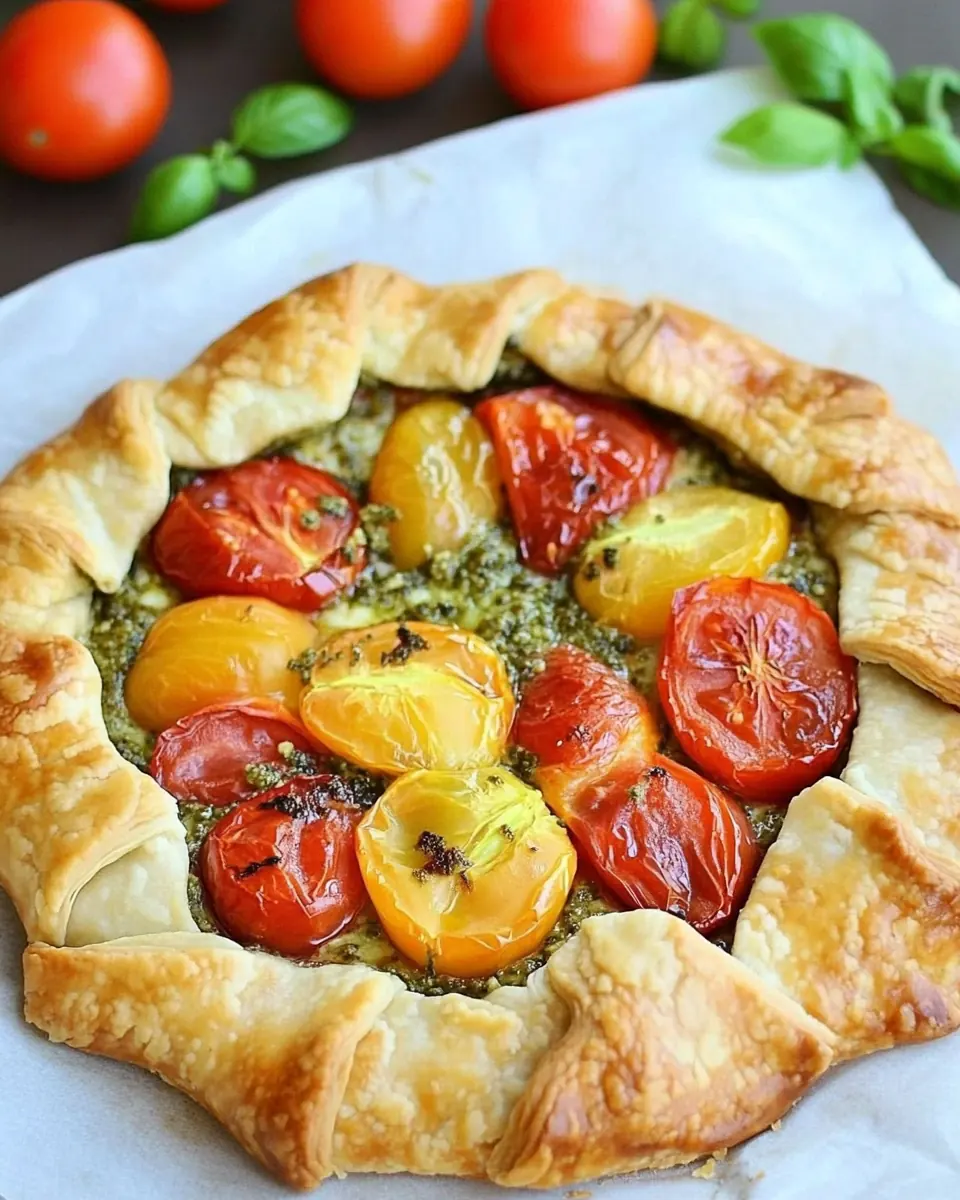
Slice the heirloom tomatoes and place them on paper towels. Brush the galette dough with pesto. Place the tomato slices on top of the dough, leaving a 2-inch border. Fold the dough border over the tomatoes, overlapping where necessary and pressing gently to adhere the folds. Lightly brush the edge of the dough with the beaten egg.: As you stream in the buttermilk , listen for a change in the processor’s motor tone, which signals the dough coming together. The dough should gather into a loose, slightly tacky ball that holds when pressed, not a sticky mess. Expect a cool, faintly tangy scent from the buttermilk mingling with the flour. If it seems dry, add buttermilk in tiny increments, but resist adding too much; overly wet dough is hard to handle and will spread while baking. Conversely, too little moisture yields a crumbly dough. A good troubleshooting trick is to pinch some dough—if it barely sticks, it is ready. If the butter warmed too much and the dough becomes greasy, chill it before proceeding.
Bake the galette for 45 minutes, or until the crust is golden brown. Transfer the baking sheet to a wire rack to cool to room temperature before slicing. Slice and serve.: When you take the dough out, you should feel a cool, cohesive ball with bits of butter still apparent. Use your hands to gather any stray bits and press them gently into the main ball, avoiding excessive kneading which would toughen the dough. Wrapping tightly in plastic or parchment will prevent drying and protect it in the fridge. The act of wrapping traps moisture and keeps the dough neat for rolling later. If the dough feels too soft to handle, pressing it flat into a disk helps it chill evenly. Never overwork the dough while patching, or you will lose flakiness.
Note-you can make the galette dough in advance. It will keep in the refrigerator for 3 days. You can use store-bought pesto if you are in a pinch, but we like to use our Spinach Basil Pesto. And any heirloom tomatoes will work for this recipe!: Chilling the dough firms the butter back up and lets the gluten relax, which results in a more tender crust. During this wait you might notice the dough becoming chill to the touch and easier to roll without sticking. If you are short on time, a quick freeze for 15 to 20 minutes works, but do not forget it or the butter may harden too much, risking cracking when rolled. Avoid leaving it overnight uncovered, as it can dry at the edges; tightly wrapped refrigeration for up to three days is fine. A typical error is skipping this rest, which often yields a denser, less flaky result.
Center a rack in the oven and preheat to 350 degrees F: Preheating to 350 degrees F ensures the oven is at a stable temperature so the crust bakes evenly. You should feel a warm, slightly dry heat when you open the oven, and your oven thermometer, if you use one, should read steady at the set point. An oven that is too cool results in a soggy bottom, while an oven that's too hot browns the edges before the center cooks. Positioning the rack centrally gives the galette even exposure to heat. A common oversight is opening the oven repeatedly while baking, which disturbs airflow and can lengthen baking time.
Remove the galette dough from the refrigerator and place on a sheet of parchment paper: When you bring the dough out, it should be firm but pliable. Place it atop parchment to prevent sticking and to make transferring effortless. You may feel a faint buttery scent and notice a slightly cold firmness. Working on parchment also helps catch any stray filling juices, keeping the pan cleaner. If the dough cracks at the edges while you start to roll, let it rest for five to ten minutes to soften slightly rather than force it and create tears.
Starting at the center of the dough, roll out, forming a 14 to 15-inch wide circle: Rolling from the center outward encourages an even thickness; you should see a smooth, pale surface turn into a broad circle about 14 to 15 inches across. The dough should feel cool and slightly tacky but not sticky. Rotate the dough as you roll to maintain an even shape, lifting and repositioning the parchment if it sticks. If it resists stretching, chill briefly and try again to avoid tearing. Uneven thickness causes uneven baking, with thin spots browning faster than the center.
Place the dough with parchment paper on a baking sheet: Sliding the dough and parchment onto a baking sheet is simple and preserves your circle. The baking sheet should be room temperature and flat, and you will sense the dough settle into place with a quiet glide. The sheet helps conduct heat and supports the galette during assembly and transfer to the oven. Avoid using an overcrowded or warped pan which can warp the galette; a flat, sturdy sheet yields the best, even browning.
Slice the heirloom tomatoes and place them on paper towels: As you slice the heirloom tomatoes , you will see vivid concentric colors and smell a grassy, ripe tomato aroma. Laying the slices on paper towels extracts surface moisture, which is essential to prevent a soggy crust. Press gently with another towel to blot; you want them slightly dry, not parched. An error is layering overly wet slices; this releases water as they bake and can make the bottom limp. Even spacing and uniform thickness help the tomatoes cook evenly.
Brush the galette dough with pesto: The thin layer of basil pesto should spread like a glossy, aromatic veil across the dough, smelling of basil and oil. Use just enough to flavor without pooling; you want the pesto to cling to the pastry and act as a barrier to some tomato moisture. If your pesto is very oily, spoon off excess oil first to prevent a greasy bottom. The pesto’s herbal intensity is the backbone of this galette’s character, so spread with intention rather than abandon.
Place the tomato slices on top of the dough, leaving a 2-inch border: Arrange the slices in slightly overlapping concentric circles, watching the colors and textures play together. Leaving a 2 inch border ensures you have enough pastry to fold over the filling and seal the edges. As you layer, press lightly so the tomatoes nestle into the pesto but do not flatten them completely. Too tight an arrangement can trap steam and cause juices to pool; spacing them allows gentle evaporation and concentrated flavor.
Fold the dough border over the tomatoes, overlapping where necessary and pressing gently to adhere the folds: Folding creates the galette’s rustic edge, and you should feel the pastry give as you tuck it over the tomatoes. Overlap gently and press just enough to make the folds stick, using a dab of beaten egg if needed. The tactile sensation of sealing should be firm but not forceful. If you overwork the rim it will become tough, so keep motions light and decisive. A neat, even fold helps the galette hold its shape while baking.
Lightly brush the edge of the dough with the beaten egg: The beaten egg adds shine and encourages attractive browning. Brush sparingly so the egg does not drip onto the baking sheet where it could burn. You will notice an immediate glossy sheen; this is the visual cue that translates into a golden, appealing crust after baking. Over-application can cause pooling and sticky spots, so a thin, even coat is ideal.
Bake the galette for 45 minutes, or until the crust is golden brown: During baking you will hear a quiet change from stillness to gentle crackling at the crust, and a warm, savory aroma will fill the kitchen. A golden brown crust is the target, with the edges a rich amber and the tomatoes slightly roasted and softened. If the crust browns too quickly, tent with foil to prevent burning while the center finishes. An underbaked crust will feel doughy, and an overbaked one will be dry and crumbly, so rely on visual cues and a gentle tap test to judge doneness.
Transfer the baking sheet to a wire rack to cool to room temperature before slicing: Cooling on a wire rack prevents steam from collecting under the galette and turning the bottom soggy. You will notice the scent settle and the filling firm slightly as it cools. Let it reach room temperature for cleaner slices and a better mouthfeel. Cutting while overly hot causes juices to run, making messy slices. A patient rest yields a prettier presentation and more cohesive wedges.
Slice and serve: When you slice, use a sharp knife and observe the glossy tomato layers and crisp crust. The first cut often reveals a contrast of textures and a fragrant blend of pesto and tomato. Serve each wedge on a plate and enjoy the balance of tender filling and flaky pastry. If the galette resists clean slicing, it may need a few more minutes of cooling.
Note you can make the galette dough in advance: The dough keeps for up to three days in the refrigerator, which is handy for planning. When ready, roll and assemble as directed. You will appreciate the convenience and the way a rested dough often performs even better. Keep it wrapped airtight to prevent drying and always check for any off smells before using.
You can use store bought pesto if you are in a pinch: Quality store bought basil pesto will save time and still yield excellent flavor, though homemade often feels brighter. If using store bought, taste first to assess salt levels and oil content, adjusting your use accordingly. Even in a hurry, a good pesto makes this galette sing.
Any heirloom tomatoes will work for this recipe: Different heirlooms bring varied sweetness, acidity, and juiciness, so pick ones that are ripe but not overripe to avoid excess moisture. A medley of colors looks stunning and offers layered flavor experiences. If a tomato seems overly soft, blot it well before assembling to protect the crust.