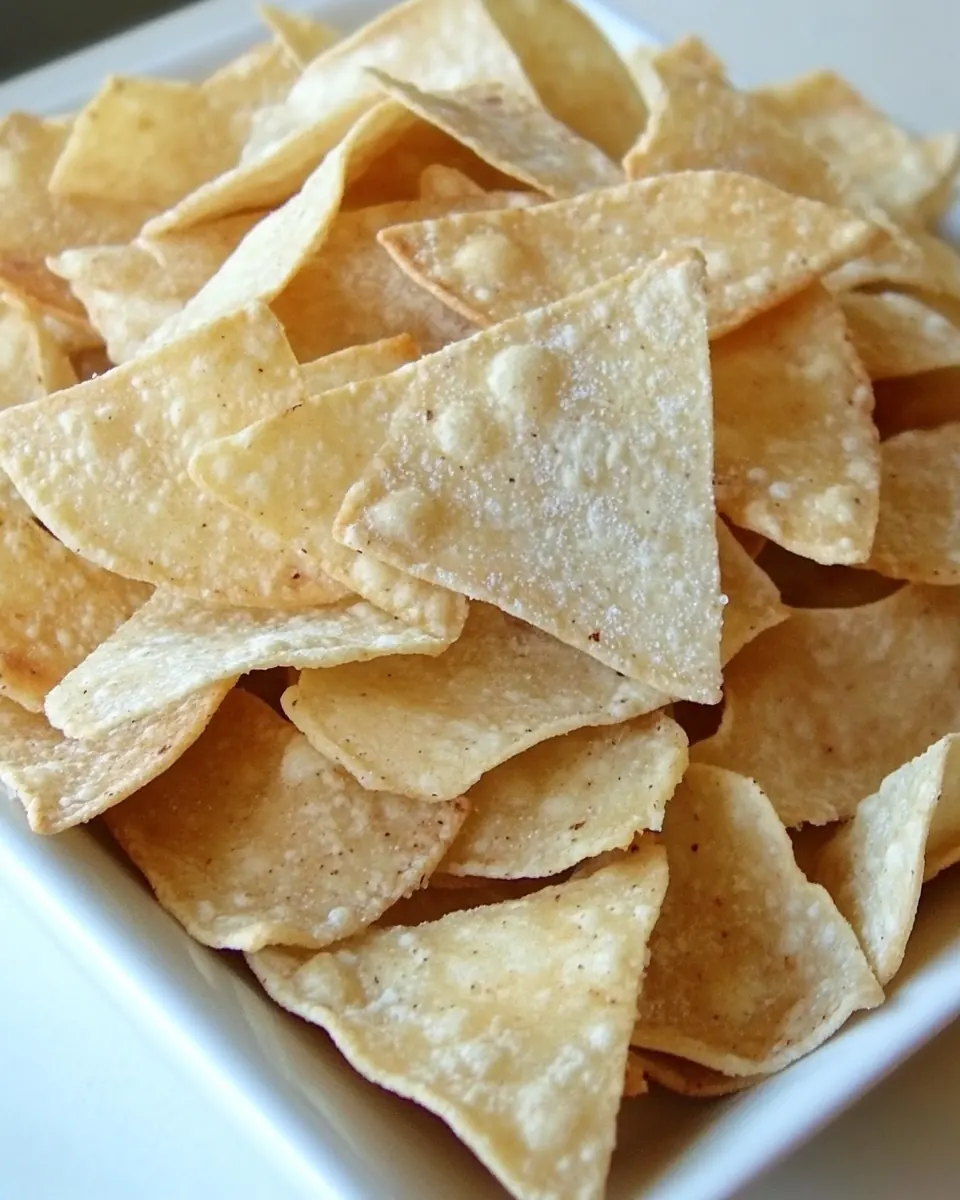
Preheat the oven to 400 degrees F. Brush the tortillas lightly with oil. Make sure both sides are brushed. Place the tortillas in a stack and cut into triangles with a sharp knife.: The oven should feel warm and steady, and you may notice a faint dry heat as you open and close the door. Preheating ensures that the chips begin to crisp immediately, promoting even browning rather than slow, soggy drying. If the oven is cooler than expected, the chips will take longer and may dry unevenly, so use an oven thermometer if you suspect your oven runs hot or cold. A common slip is putting chips into an oven that has not fully reached temperature, which leads to longer bake times and inconsistent results.
Place the tortilla triangles on two large baking sheets. Make sure they are in an even layer and aren't overlapping. Sprinkle with salt, to taste.: Light brushing should leave a sheen without pooling, and the surface will look slightly glossy. The oil helps conduct heat and encourages caramelization of the tortilla surface, adding color and crunch. If you see puddles, you used too much oil, which can cause uneven frying instead of baking. To fix it, blot excess oil with a paper towel before cutting and baking.
Bake until golden brown and crisp, rotating the baking sheets once, about 7 to 11 minutes. Watch closely because once they start to brown they will brown quickly.: Both sides should show an even coating, which promotes balanced browning as the chips bake and flip. When both faces get that oil, you will notice a more uniform golden color and a satisfying snap. Missing one side can lead to a chip that browns on one face but remains pale and limp on the other. If that happens, rotate and flip the chips earlier to encourage evenness.
Cool completely, the chips will crisp up as they cool. Serve with guacamole, salsa, or eat them plain.: The sound of the knife through the stack is clean and decisive, and the triangles should have straight edges for even baking. A sharp blade ensures quick, neat cuts without compressing the tortillas. If your knife is dull, you may tear the tortillas, creating irregular pieces that bake unevenly. Use a steady, confident motion when cutting, and wipe the knife if it becomes gummy from oil.
Place the tortilla triangles on two large baking sheets: Arrange the triangles in a single layer so they bake evenly, and space them so hot air circulates between pieces. When arranged well, the sheets will look airy, and each chip will brown uniformly. Overcrowding leads to steaming, which prevents crisping and yields limp chips. If your baking sheet is too small, work in batches rather than piling pieces together.
Make sure they are in an even layer and aren't overlapping: An even layout allows consistent heat exposure, and you will notice that chips in the center of a crowded pan will often be paler and softer. Floating those triangles in a single layer keeps edges crisp and allows for predictable timing. A common mistake is overlapping, which traps moisture and results in soggy centers; remove overlaps before baking to correct this.
Sprinkle with salt, to taste: The salt should glint on the surface, and a small sprinkle brings out toasted corn richness. I prefer to season lightly before baking so the salt adheres, but you can also finish after cooling for larger flakes. Over seasoning early can make chips overly salty; taste a single chip first before salting the entire batch more heavily.
Bake until golden brown and crisp, rotating the baking sheets once, about 7 to 11 minutes: As they bake, the oven will produce a toasty aroma, and you should see edges turn a warm gold while centers become firmer. Rotating the sheets promotes uniform color because oven hot spots can brown one tray faster than another. Stay vigilant near the end, as they can go from golden to too dark quickly. A typical error is leaving them unattended during the final minutes, which often results in overbrowning; set a timer for the lower end of the range and check frequently.
Watch closely because once they start to brown they will brown quickly: When the first chips show color, the pace accelerates, and you may hear tiny crackles as moisture leaves. This is the critical visual cue to check every minute or so. If you miss this stage, chips will move from perfectly toasted to bitter, so be attentive. If some pieces brown faster, remove them first and allow the others a bit more time.
Cool completely, the chips will crisp up as they cool: After removing them, the chips will transform from warm and somewhat flexible to crisp and brittle as residual heat evaporates moisture. Lay them on a rack to cool evenly and prevent steam from softening the bottom. Stacking hot chips traps steam and leads to limpness, which is a common mistake. Let them rest until they snap audibly when bent.
Serve with guacamole, salsa, or eat them plain: The final presentation invites dipping and sharing, and you will notice the contrast between the crunchy chip and creamy dips. Serving immediately ensures the best texture, though cooled chips store well for snacking. A frequent misstep is storing chips while still slightly warm in a closed container, which will create condensation and soften them; always cool fully before storing.