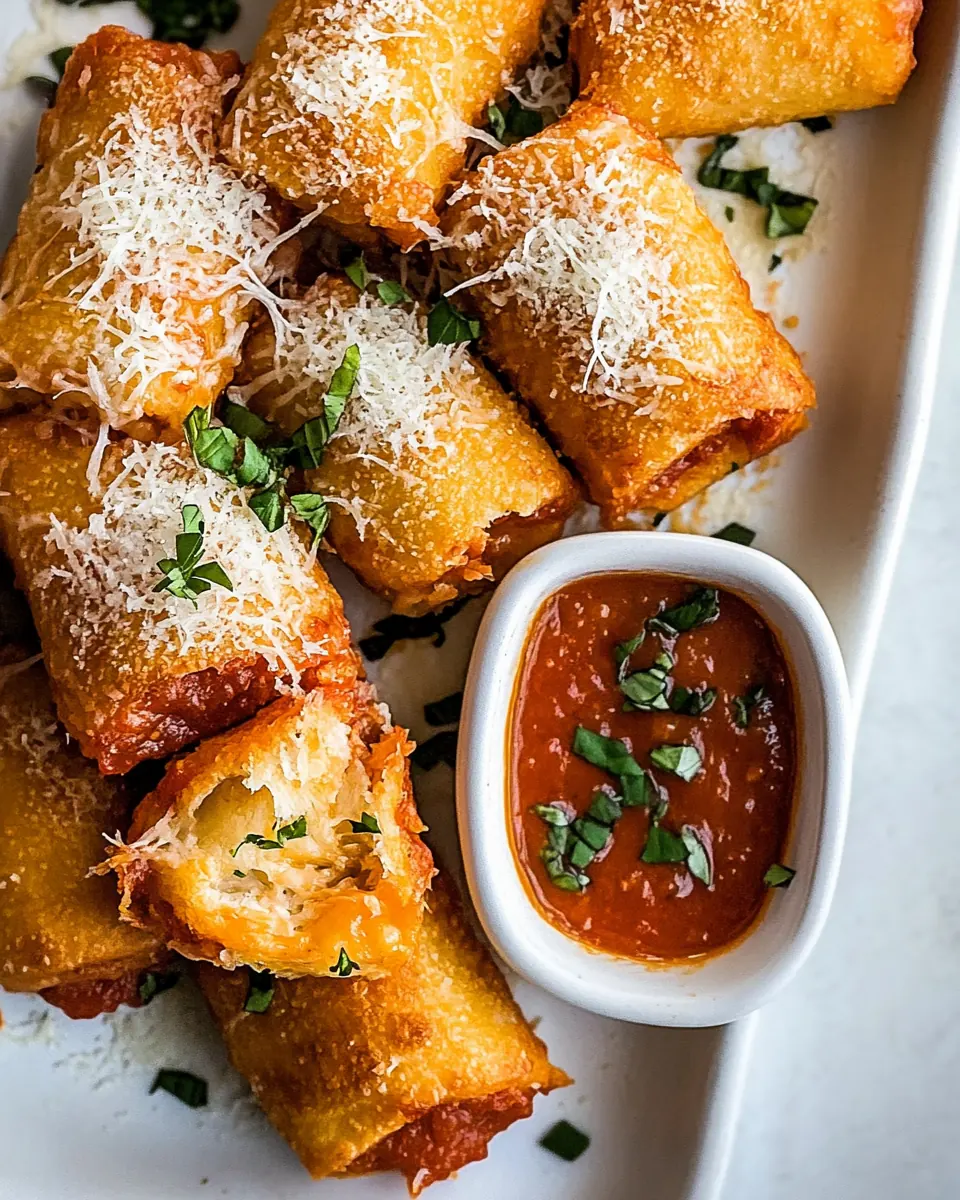
Preheat the oven to 425° F. Lightly grease 2 baking sheets. In a bowl, combine the mozzarella, provolone, 1/4 cup parmesan, marinara, pepperoni, garlic, basil, oregano, thyme, fennel, and a pinch each of red pepper flakes, salt, and pepper. In a shallow bowl, combine the breadcrumbs and a half cup parmesan. Fill a bowl with water. Brush 4 wrappers with water, dampening them. Add 1 scant tablespoon of the cheese mix to the center of each wrapper. Fold both sides of the wrapper over the filling (like a letter) overlapping them and pressing gently to seal. Then, flip the 2 ends of the wrapper over the fold, press to seal. Repeat with the remaining wrappers and filling. Dip each roll in water, letting the excess water drip off back into the bowl, then dredge the roll through the breadcrumbs, tossing to coat. Place the rolls on the prepared baking sheets. Drizzle each roll with olive oil. Bake for 10-12 minutes, until golden and toasted. Serve the rolls warm, along with warmed marinara sauce for dipping. Enjoy!: The oven should be hot enough so the wrappers crisp quickly while the cheeses melt into a cohesive, gooey filling. You'll notice a warm, dry heat that browns the edges, and as the tray goes in a faint toasty scent will rise. Why this matters, the high temperature creates contrast between a crunchy exterior and a molten interior, ensuring the rolls are not rubbery. Common mistake to avoid, do not preheat to a lower temperature or the wrappers will absorb moisture and become soggy rather than crisp.
Lightly grease 2 baking sheets: Greasing prevents sticking and encourages even browning across the bottom, producing a crunchy underside. You should feel the slight resistance of oil on a spatula when you slide a roll, and the finished rolls will come away cleanly. Why this matters, direct contact with a lightly oiled surface encourages uniform heat transfer. Troubleshooting tip, avoid heavy oiling which can pool and make the bottoms greasy instead of crisp.
In a bowl, combine the mozzarella, provolone, 1/4 cup parmesan, marinara, pepperoni, garlic, basil, oregano, thyme, fennel, and a pinch each of red pepper flakes, salt, and pepper: The filling should be homogenous, with cheese strands and herb flecks visible, and a slight tomato sheen from the marinara . When mixed, press a small amount between your fingers to check texture, it should be cohesive but not runny. Why this matters, even distribution ensures every roll has balanced flavor and melty texture. A common error is over wetter filling which leaks; if it seems too loose, add a touch more shredded mozzarella or some of the parmesan to firm it up.
In a shallow bowl, combine the breadcrumbs and a half cup parmesan: This coating should be noticeably granular and fragrant with parmesan nuttiness. Toss to mix so the salty cheese evenly coats the crumbs. Why this matters, the breadcrumb mix creates the crunchy contrast and adds a seasoned crust. Mistake to avoid, do not use sweetened or flavored crumbs, as they will clash with the Italian seasoning profile.
Fill a bowl with water: Use the water to dampen wrappers for sealing and to moisten rolls before dredging, you will see a thin film of moisture on the wrapper when tapped. This small amount of water acts like an edible glue, ensuring tight seals. Why this matters, a proper seal prevents filling leakage during baking. One troubleshooting note, avoid submerging the wrapper or it will become too floppy and tear while folding.
Brush 4 wrappers with water, dampening them: Dampening should make the wrapper slightly translucent at the edges and pliable to fold. The surface will feel tacky but not soggy. Why this matters, tacky wrappers seal better and hold their shape as you fold. Pitfall to avoid, over wetting will make the wrapper fragile and prone to ripping when you lift or fold.
Add 1 scant tablespoon of the cheese mix to the center of each wrapper: Place the portioned filling as a small mound in the center so the wrapper can fold around it without bulging. You should see the cheeses and herbs, and the mound should not be so large that it forces seams open. Why this matters, correct portioning ensures a good seal and even cooking. Common mistake, overfilling leads to leakage and uneven cooking, so err on the side of slightly less filling if unsure.
Fold both sides of the wrapper over the filling overlapping them and pressing gently to seal: As you fold, the wrapper edges should join cleanly without gaps, and you will hear a faint tack when they meet. Press firmly along the seam to remove trapped air. Why this matters, removing air prevents steam pockets that can burst the wrapper. Troubleshooting, if the seam does not stick, dab a bit more water to the edge and press again.
Then, flip the 2 ends of the wrapper over the fold, press to seal: The finished shape should resemble a small parcel with all edges sealed, and the surface should feel uniform. Proper folding keeps the filling secured and creates neat, consistent bites. Why this matters, a fully sealed roll prevents filling from escaping and ensures even browning. A common error is uneven folding that leaves thin spots which can tear during baking.
Repeat with the remaining wrappers and filling: Work methodically, keeping assembled rolls on a lightly floured or parchment lined surface so they do not stick together. You will notice a rhythm as your hands become quicker and the rolls more uniform. Why this matters, consistent size ensures even bake times for all rolls. Pitfall to avoid, stacking wet rolls will cause them to stick; place them spaced on a tray or single layer until dredging.
Dip each roll in water, letting the excess water drip off back into the bowl, then dredge the roll through the breadcrumbs, tossing to coat: The roll should emerge with a thin, even breadcrumb layer that clings to the surface, creating a textured finish. You will hear a light pat as excess water drips and feel the crumb adhere when you roll it between palms. Why this matters, the breadcrumb coating browns and crisps, delivering that signature crunch. Troubleshooting, if crumbs clump, tap gently to remove loose pieces before baking.
Place the rolls on the prepared baking sheets: Arrange them with space between so hot air can circulate and each surface crisps uniformly. The rolls should sit flat and stable, not crowded. Why this matters, spacing prevents steaming and ensures an even golden color. Common mistake, overcrowding the pan will cause uneven browning and soggy spots.
Drizzle each roll with olive oil: A light, even drizzle promotes deep color and a glossy finish, and the oil will sizzle faintly when the rolls hit the oven. The aroma will become more pronounced as they bake. Why this matters, oil encourages the Maillard reaction on the wrapper for better flavor and texture. Troubleshooting, too much oil will pool and create greasy bottoms, so use sparingly.
Bake for 10-12 minutes, until golden and toasted: Watch for a deep golden hue at the edges and a toasted breadcrumb crust, and you will hear a faint crisping sound when you lift the tray. The cheeses inside should be fully melted and slightly bubbling when you peek into a seam. Why this matters, proper baking time produces the desired contrast between crunchy exterior and molten interior. A frequent mistake is leaving them in too long which can dry out the filling and burn the wrapper edges.
Serve the rolls warm, along with warmed marinara sauce for dipping: Serving hot ensures maximal cheesiness and aroma, and the warm marinara enhances the tomato notes. The texture contrast is at its best right out of the oven, and you will hear the light crunch as you bite. Why this matters, heat intensifies flavors and ensures the cheeses are luxuriously gooey. Troubleshooting, if the rolls cool and the interior firms, reheat briefly in a hot oven to restore texture rather than microwaving which can make the wrapper soggy.
Enjoy!: Savor the combination of crunchy breadcrumb exterior, crisp wrapper, and molten, herbed cheese center along with a tangy dip of warm marinara . Take care to serve on a heat safe platter, and watch the smiles around the table grow. Why this matters, the sensory experience is what turns these into memorable bites. A common oversight is serving them cold, which diminishes the sensory impact, so time them close to serving.