Place the cherries in a strainer set over a bowl to capture the excess juices. Measure 1 cup of the cherry juice. Save any remaining juice for another use. Transfer the cherries to a large bowl.: The moment you let the thawed cherries sit in a strainer, you start noticing a deep, dark red syrup pooling beneath them, with a faint fruity aroma that sharpens as it collects. Use a flexible rubber spatula to gently press a few cherries, but avoid crushing them, because you want whole fruit in the filling, not a mashed mixture. Measuring exactly 1 cup of juice is important because the thickening step is calibrated to that volume, and too little liquid will make the cornstarch mixture overly thick while too much will leave the filling runny. A common mistake here is squeezing the cherries too aggressively which releases extra pulp and makes the filling unevenly textured. If you find you have less than 1 cup, follow the notes about gently warming the cherries to coax more juice out. Make sure the bowl stays steady and that you transfer the drained cherries to a large mixing bowl so they have room for the thickened syrup to coat them later.
In a small bowl, stir together the cornstarch and 1/4 cup of the water until smooth. Set aside.: When you whisk the cornstarch into the cold water, you create a slip that should look silky and without lumps, a pale slurry that promises a glossy finish when cooked. This cold slurry prevents the cornstarch from clumping when it hits hot liquid, so take a few extra seconds to smooth any tiny bits with a fork. Setting it aside keeps it ready to add at just the right moment while you bring the reserved juice to a boil. The sensory cue to watch for is a uniformly smooth batter like a thin paste; if you see lumps, press them through a fine sieve. Folks sometimes skip this and add dry cornstarch directly to hot liquid, which causes gritty pockets in the filling, so avoid that pitfall.
Place the 1 cup cherry juice in a small saucepan and bring to a boil. Add the sugar, stir, and return the mixture to a boil. When the sugar is dissolved, add the cornstarch mixture and stir until the juices thicken and become clear and glossy. Remove from the heat and pour over the cherries. Stir in the cinnamon, ginger, almond extract, and salt. Allow to cool completely.: As the reserved juice heats, an aromatic steam will rise, and the surface will shimmer as it approaches a boil, releasing the pure cherry scent. Stir the sugar in so crystals fully dissolve, otherwise you may get a grainy mouthfeel. Once you add the cornstarch slurry, the mixture will thicken rapidly, changing from watery red to a deep, translucent glaze that coats your spoon. That glossy clarity tells you the starch has activated. Pouring the hot glaze over the drained cherries lets each fruit get an even, shiny coating. When you stir in the spices and almond extract , there is a short burst of warm, nutty perfume; this is where the filling becomes complex. Cool it fully so the lattice assembly does not melt the dough or make the crust soggy. A common error is skipping the full cool down which leads to a weepy pie; patience here yields a set filling and a cleaner slice.
Make the bottom crust. Follow the instructions in the pie crust recipe to roll out the bottom crust, leaving a 1/2-inch overhang on all sides of the pie plate. Loosely cover with plastic wrap and chill for 30 minutes. Arrange an oven rack in the bottom third of the oven. Place a baking sheet on the rack and preheat the oven to 425°F with the baking sheet inside it.: Rolling the bottom pie crust until it just reaches the pie plate keeps it tender and flaky, and leaving a 1/2 inch overhang gives you enough dough to crimp and seal. After you place it in the chilled refrigerator, the dough firms up and the visible butter pockets stay intact, so when baked they create those beloved flaky layers. Preheating a baking sheet in the oven ensures the pie starts with an immediate burst of heat that helps the bottom crust set quickly, preventing a soggy center. The oven should smell faintly of warmth as it nears temperature. Avoid overworking the dough while rolling because too much handling will make the crust tough instead of tender.
Meanwhile, make the top crust. Use the same method to roll out the remaining pie dough. Transfer it to a baking sheet, loosely cover it with plastic wrap, and place in the fridge until the bottom crust has chilled for 30 minutes.: Rolling the top crust the same way keeps thickness consistent so both layers bake evenly, and chilling it on a baking sheet maintains its shape while you prepare the filling. The colder the dough, the less it will shrink in the oven, and you will notice a firmer feel when you lift it. Resting the top crust reduces the chance of tearing during lattice assembly. One mistake is leaving the top dough at room temperature where it becomes sticky and difficult to cut neatly into strips.
Assemble the pie. In a small bowl, whisk together the egg and the remaining 1 tablespoon water. Set aside.: The egg wash glistens pale gold when whisked, and it is the finishing touch that creates that bakery shine once baked. Whisk until homogeneous so the wash brushes on smoothly and does not pool in crevices. Keep it at hand while you weave the lattice because you will brush it on right before the pie enters the oven for a uniformly golden top. A common oversight is overwhisking or leaving bits of shell in the bowl, so check for those and remove them before using.
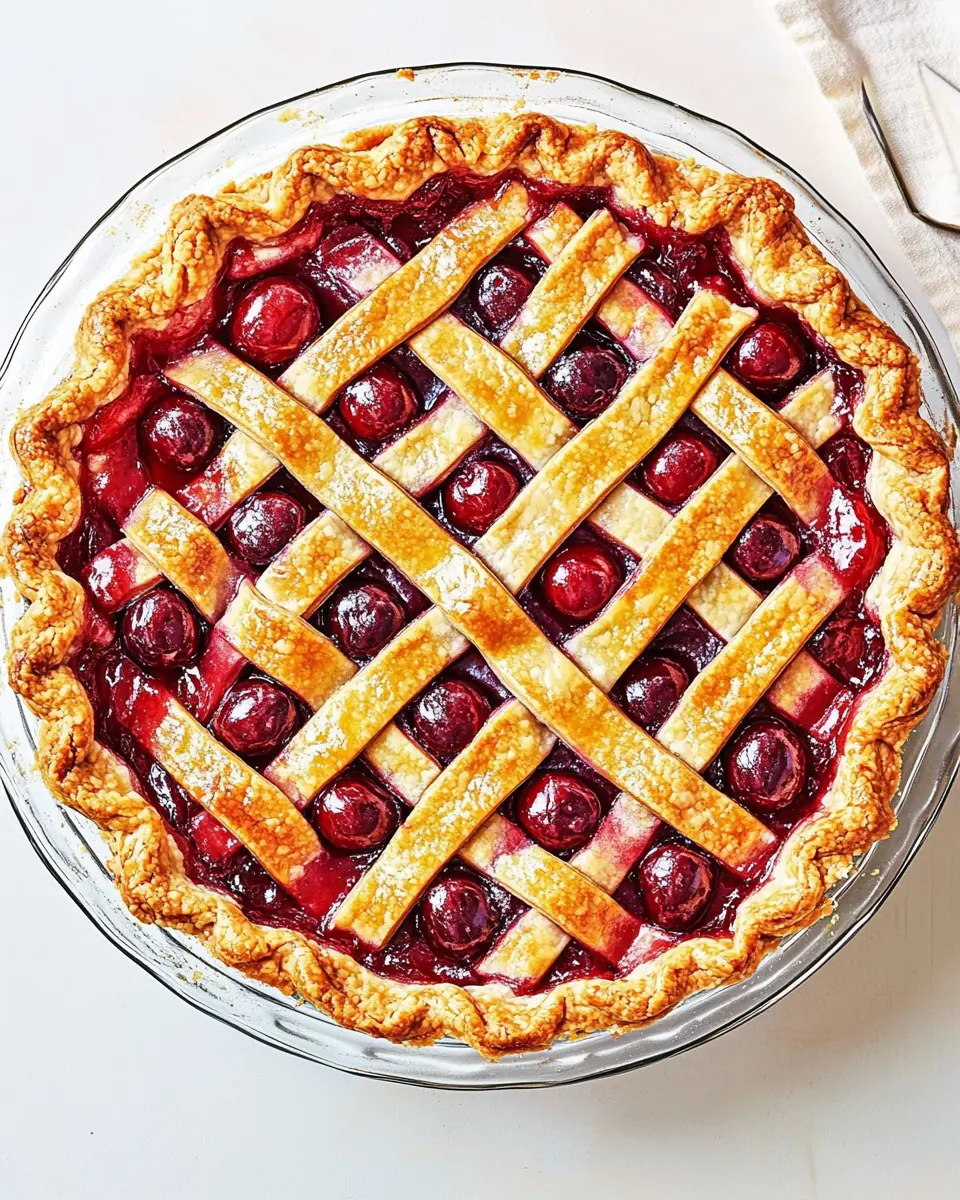
Remove the bottom crust from the refrigerator and pour in the cooled filling. Transfer the top crust to a cutting board and use a sharp knife or pizza cutter to cut it into 1-inch strips. Evenly space 4 to 5 strips crosswise over the pie. Weave 4 to 5 more strips through the crosswise strips to create a lattice, pulling back the original strips as necessary to weave. Trim the edges of the lattice, then fold the edges of the bottom crust up and over it so that the edge of the dough is in line with the edge of the pie plate. Crimp the dough with your fingers or a fork to seal.: Pouring the cooled, glossy filling into the chilled bottom crust creates a satisfying thunk as the filling settles, and the cherries should glisten under a thin film of syrup. Cutting the top dough into 1 inch strips with a very sharp tool yields clean edges, and the weave itself should look tidy and rhythmic, producing a visually appealing checkerboard. Trimming and folding the edges yields a neat rim that browns evenly. When crimped well, the pie feels secure and less likely to leak. People sometimes overfill or underfill the pie; aim for a level that reaches just under the crust rim so it can bubble without overflowing.
Brush the lattice with the egg wash and sprinkle with coarse sugar, if using. Place the pie on the hot baking sheet in the oven. Bake for 20 minutes, then reduce the heat to 375°F and bake for 40 to 50 minutes, or until the crust is golden brown and the filling has been bubbling for several minutes. If the edges of the crust start to brown too much before the filling is bubbling, tent them with foil and continue baking until the filling bubbles.: Brushing the lattice creates a wet sheen and the coarse sugar adds granular sparkle that caramelizes lightly in the oven, creating tiny, crunchy highlights. Sliding the pie onto the preheated baking sheet gives the bottom immediate heat so the crust sets quickly, and you will hear a faint crackle as butter pockets begin to steam. After the initial high heat, lowering the temperature encourages even browning while allowing the filling to cook through and bubble. Watch for a steady bubbling in the filling and a deep golden color on the crust as your visual cues. If you see edges darkening too fast, a tent of foil protects them while the center catches up. A typical mistake is removing the pie too early, which results in a runny center, so be patient until you see steady bubbling.
Allow to cool completely before slicing and serving, about 4 hours.: Cooling seems long but it is essential because the filling needs time to set into a sliceable gel; cutting too soon will lead to a weepy, unstable slice. As it cools, the glossy filling will dull slightly and firm, and the crust will settle into a crisp texture that contrasts with the jammy interior. I like to let the pie rest on a wire rack so air circulates and the bottom does not get soggy. If you rush this step, you risk messy portions and lost texture, so give it the full set time for clean slices.
Serve with vanilla ice cream.: The last flourish is a scoop of cold vanilla ice cream , which melts slowly into the warm fruit if you serve immediately, creating pleasurable ribbons of cream that cut through the tart filling. The contrast of temperatures and textures is what makes the bite unforgettable, and the aroma of warm fruit rising around the cold ice cream is a sensory high note. Serve on sturdy plates and watch how the first spoonful draws appreciative sounds from the table. Avoid placing the ice cream inside the pie until it cools sufficiently, or it will accelerate sogginess in the bottom crust.