In a small saucepan, combine milk, cinnamon, nutmeg and vanilla. Slowly bring mixture to a low boil over low heat.: As the spices warm in the milk , a fragrant steam will rise, smelling like a warm bakery counter. You should see tiny bubbles form at the edges as the mixture comes to temperature, not a rolling boil. The low heat allows the spices to bloom into the liquid, enhancing aromatics. If the pot gets too hot you risk scalding the milk , which gives a slightly cooked scent, so keep the flame low and stir gently to distribute heat evenly.
In a medium sized bowl, separate egg yolks from the whites. Add sugar to egg yolks and whisk until light and pale in color, about 2-3 minutes.: Watch for a gentle simmer, with small pearls of steam at the surface and a faint hissing sound, rather than violent bubbling. This stage develops flavor without tightening the proteins too quickly. A common error is turning up the heat to rush things, which can create a scorched flavor or make the later tempering more hazardous.
Begin by adding a very small amount of the heated milk mixture to the eggs, whisking constantly to temper the eggs. Do not add the hot milk too quickly or it will cook the eggs.: The yolk and sugar mixture will thicken and take on a ribbon like quality as you lift the whisk, reflecting light like satin. This aeration lightens texture and helps the custard hold together. If you do not whisk long enough the mixture will be denser, and if you overbeat at very high speed you can incorporate too much air, making settling uneven.
Continue adding small amounts of the milk to the eggs, whisking constantly until all the milk is incorporated and well combined.: As you drizzle, the egg mixture will warm and become glossy rather than grainy. The sound is quiet, just a steady whisking. Tempering avoids curdled bits by slowly equalizing temperatures. A frequent mistake is pouring too fast, which causes strands of cooked egg to form and ruins the custard.
Return the saucepan to stovetop and cook over medium heat until slightly thick and mixture coats the back of a spoon. Do not boil.: The bowl will feel warm and the mixture will begin to take on a uniform color and sheen. Maintaining a slow, steady stream is key so that the eggs adjust without seizing. If you pause too long between additions the temperature can fluctuate and risk partial curdling, so keep a rhythm and stay focused.
Remove the saucepan from heat and stir in heavy cream until mixed thoroughly.: You will notice the custard slowly thicken, and when a finger drawn across a spoon leaves a clear trail, it is ready. The aroma intensifies, smelling richer and almost custardy. Boiling will break the emulsion and cause separation, so once you reach the coat the spoon stage remove it promptly.
Chill for several hours before serving.: Off the heat, adding the heavy cream builds silk and softens the temperature, making the texture more lush. The surface may appear glossy and slightly thicker. If you add the cream too cold it can create a slight chill, so bring it close to room temperature for the smoothest incorporation.
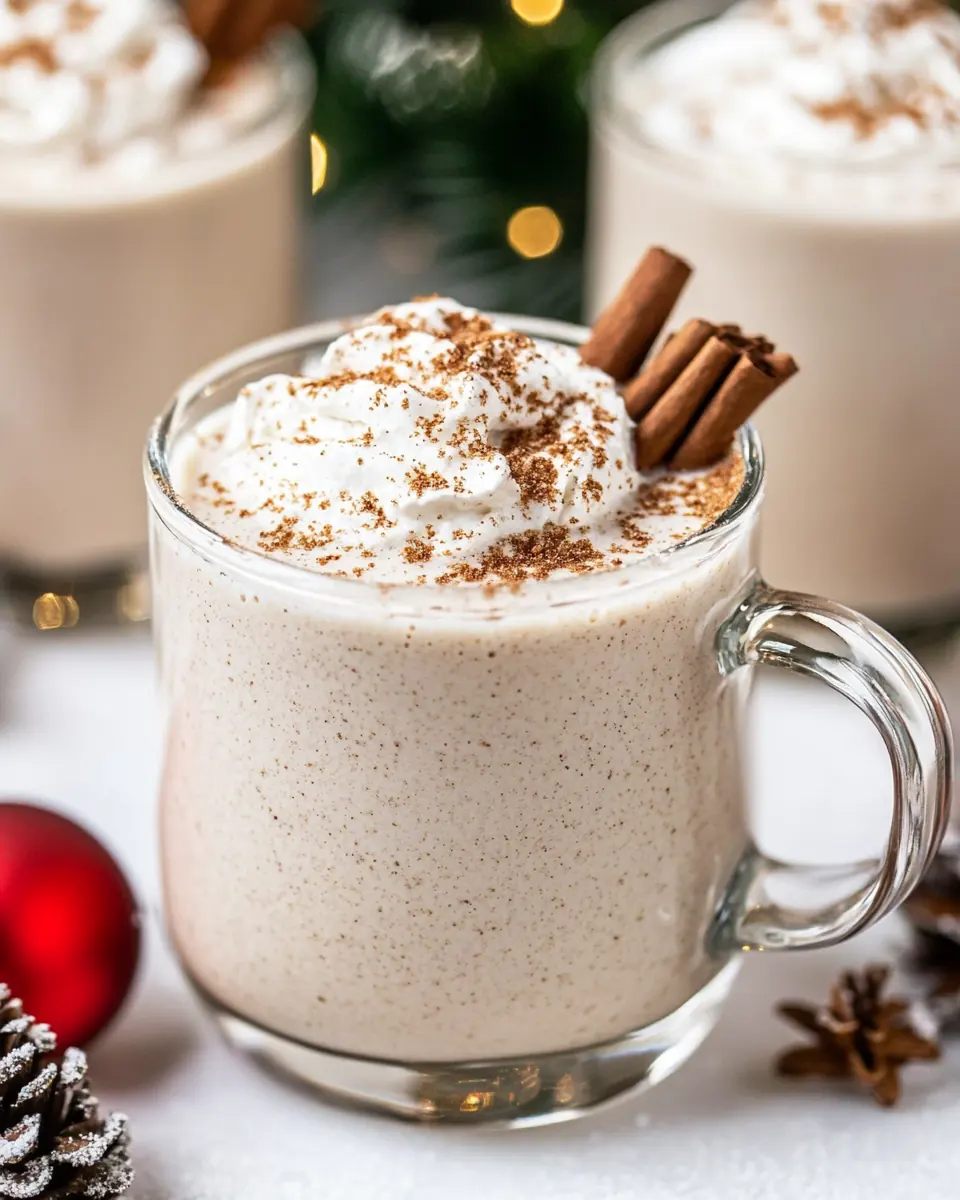
To serve, add whipping cream, ground cinnamon, cinnamon stick or star anise if desired.: As it cools, the flavors settle and the texture tightens into a cohesive, velvety body. You will notice the spice notes deepen and blend rather than appearing as separate hits. Rushing to serve warm will give a different experience, less rounded and slightly thinner, so allow adequate chilling time for the best results.
Store leftovers in refrigerator.: Topping each cup with a soft dollop of whipping cream gives a bright, airy contrast to the rich base, and a dusting of ground cinnamon adds an immediate aromatic lift. The cinnamon stick or star anise acts as both garnish and aroma carrier. Be careful not to overload garnishes, which can overpower the delicate custard flavors.
Store leftovers in refrigerator: Chilled, the eggnog keeps its texture and flavor for a few days if sealed well. You may notice slight thickening on standing, which is normal. Avoid leaving it at room temperature for extended periods as that invites spoilage, and always use clean utensils to prevent contamination.