Prep Stale Bread: Remove the bread from the package and let it rest on the counter, uncovered, for one day. Alternatively, place a baking rack inside a baking sheet and arrange the bread in a single layer. Bake at 300°F 10-12 minutes, until the bread dries out. (The staler the bread, the stiffer the sticks/won’t be floppy.): The air smells faintly of toasted starch as the bread dries, and you will notice the slices become slightly firm at the edges, which is the cue they have lost excess moisture and will soak custard without collapsing. This step matters because staler bread soaks more evenly, giving you sticks that are custardy inside but not floppy. A common slip up is skipping drying time, which often leads to soggy results; if you are short on time, use the oven method at a low temperature and watch carefully so the bread does not brown, just dry. When you bake at 300°F for about 10 to 12 minutes, the aroma will turn pleasantly toasty, and the surface will feel drier to the touch.
Prep Oven: Preheat the oven to 200°F to warm the sticks between batches. Place a baking rack inside a baking sheet and place in the middle rack of the oven.: You will feel the oven heat and see the rack ready to cradle your trays, and that gentle warmth keeps cooked sticks from losing crispness as you finish the batch. Keeping them warm at 200°F prevents steam from re-softening the coating while you continue to cook. This step is important because it preserves texture between batches. Avoid placing the sticks directly on a hot pan, which can overcook bottoms; instead use a rack on a sheet to allow air circulation.
Cinnamon and Sugar: Whisk together in a medium bowl (large enough to toss 4-6 French Toast Sticks in), then set aside.: When you whisk the granulated sugar and cinnamon together, you release a spicy sweet scent that signals the coating is ready. Tossing warm sticks in this mix yields a fragrant crust that shimmers slightly with sugar. The why is simple, the sugar melts a touch on contact and adheres to the warm surface, giving that classic crunch. A mistake to avoid is making the mixture too coarse or too fine; keep it balanced so it clings but does not become powdery.
Cut Bread: Slice the crust off of the bread slices. Cut each slice into 3 equal thick batons (slice lengthwise; for me, this created 1-inch thick slices - see pics in post).: As you slice the crust and cut each piece into batons, you will notice uniform pieces cook more evenly and look invitingly consistent on the plate. Slicing into three equal sticks creates about 1 inch thick pieces for me, which is a perfect size for dipping and frying. Proper sizing ensures even cooking; if pieces vary wildly in thickness, some will burn while others remain undercooked. Use a sharp knife and steady pressure to keep edges neat and avoid tearing the loaf.
Make Custard: Add the milk and flour to a shallow bowl and whisk until thoroughly blended. Whisk in the remaining custard ingredients (eggs, brown sugar, vanilla, salt, nutmeg).: Whisking together the milk and flour first smooths out lumps, and then adding the eggs , light brown sugar , vanilla , salt , and nutmeg creates a fragrant, even custard that clings to the bread without weighing it down. You will see the mixture thicken slightly and take on a soft golden hue from the eggs and brown sugar. This technique ensures the custard cooks to a creamy interior rather than curdling or separating. A common error is overheating eggs when whisking with hot liquid, so keep the temperature room temp and combine gently.
Prep Skillet: Melt one tablespoon of butter with one tablespoon of oil in a large nonstick skillet over medium heat.: When the butter melts and the oil shimmers, the skillet gives off a warm, nutty scent and slight sizzling as you test a breadcrumb. This blend of butter and oil prevents burning while delivering flavor. Use medium heat so the surface browns gradually and the interior has time to set. The wrong move is turning the heat too high; you will get a dark crust and an undercooked center. Keep a spatula ready to turn pieces gracefully without tearing.
Batter Bread: Roll 4-6 sticks in the custard (do not soak them longer than 3 seconds, or they can become soggy), shake off the excess, and transfer to the HOT skillet.: As you dip sticks, they should be dampened but not dripping; you will feel the custard coat the surface in a thin film. Limiting soak time to about three seconds prevents over-saturation, which causes limp, greasy sticks. The short dunk_time ensures the exterior will crisp and the middle stays tender. If you soak longer, the bread will collapse; use a quick roll and a gentle shake to remove excess before hitting the hot pan.
Cook: Cook until golden brown, turning to cook each side. Adjust the heat as needed to cook without burning. If your sticks are soggy (and you’ve used the correct, stale bread), you’re soaking the bread too long or not cooking long enough.: When the sticks hit the skillet they give a faint sizzle and the edges begin to turn an inviting golden brown, that visual cue tells you it is time to flip. Turning every side ensures even caramelization and a pleasant crust all around. Cooking at medium heat allows the egg matrix to set slowly, yielding a creamy interior. If your pan is too cool, the sticks will absorb more oil and remain soggy; if too hot, they will char. Adjust the flame and watch for a deep golden color.
Coat: Immediately transfer to the cinnamon and sugar and roll to coat (do this while they’re still warm, or the coating won’t stick).: Rolling the hot sticks in the cinnamon sugar while they are still warm allows the sugar to melt slightly and adhere, creating a crunchy, spiced shell. You will see the sugar cling and form a faint glaze that sparkles under light. Doing this immediately is important, because as the sticks cool the coating will not stick as well. A frequent mistake is waiting too long to coat, which results in loose sugar that falls off when served.
Keep Warm: Transfer the French Toast Sticks to the baking sheet in the oven to keep warm until ready to serve. Repeat until the custard or bread is gone, adding butter and oil as needed.: As you place sticks on the rack in the 200°F oven, they stay crisp and ready to serve without steaming each other. You will notice the surface maintains its crunch and the interior remains tender when you plate them. This holding method prevents sogginess between batches. Avoid stacking the sticks, because trapped steam will soften the crust and ruin the texture.
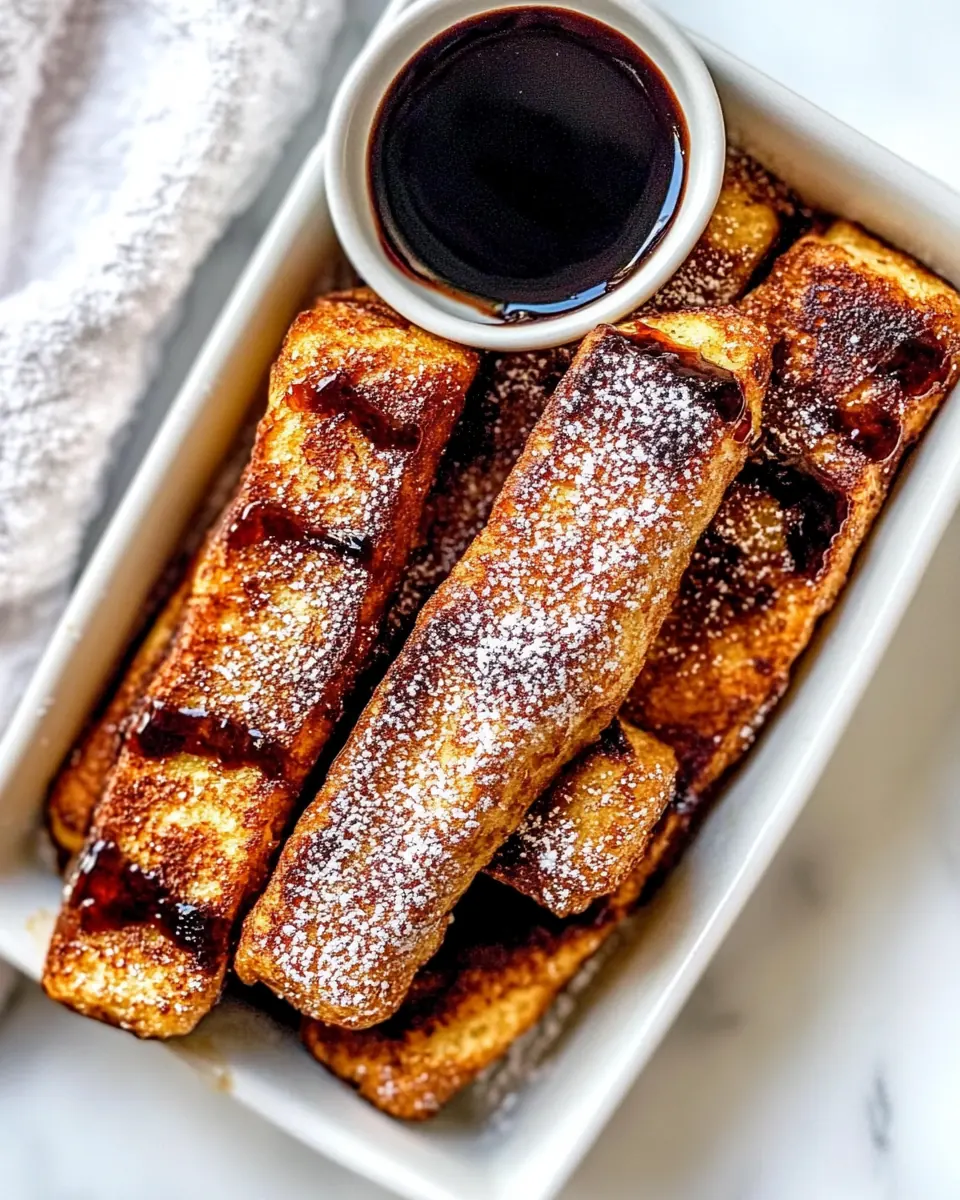
Serve: Serve warm with maple syrup or desired dippers.: Serving warm with maple syrup or other dippers makes each bite lively and communal, and the aromas of butter and spices invite immediate tasting. Lay them out with small bowls of sauces so guests can choose their favorite dip. Serving hot ensures the contrast between crisp coating and soft center is at its peak. A poor choice is serving them cold, which flattens flavors and softens the crust.